Impact of Portland's aging residents on the economy


Add Axios as your preferred source to
see more of our stories on Google.
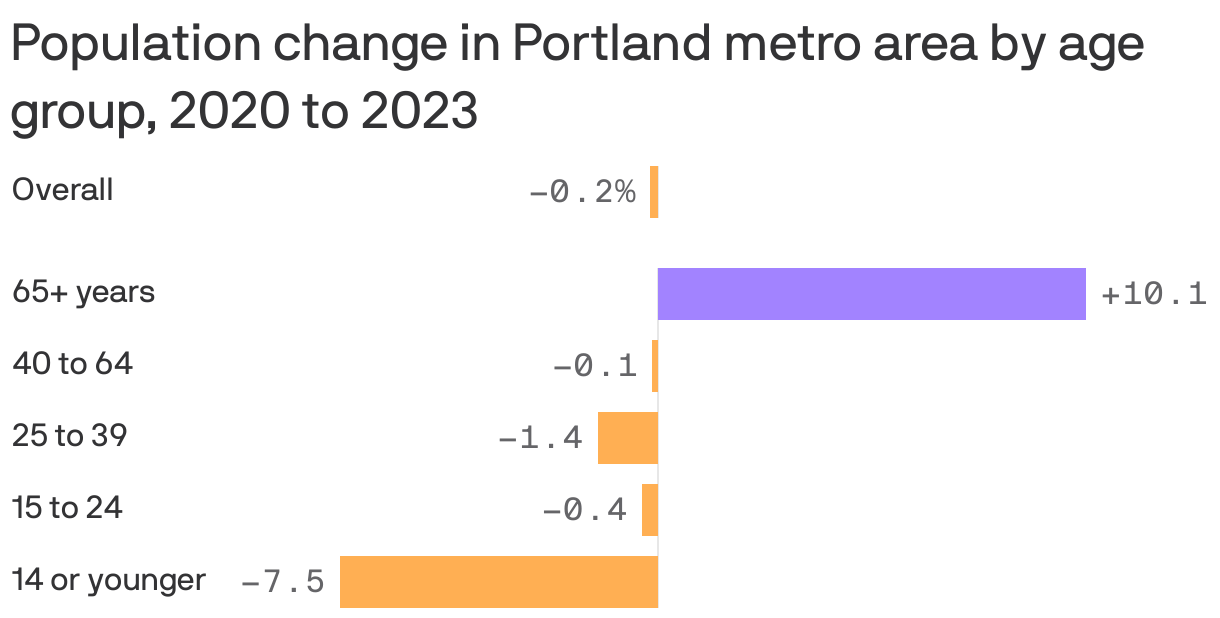
The only age group in Portland metro that grew between 2020 and 2023 was those over 65, according to the latest Census Bureau estimates.
Why it matters: An aging senior population is likely to put specific demands on cities in the near future to accommodate the needs of older people, like affordable housing, transportation and health care.
- It also affects local economies — when people retire, they reduce the number of individuals in the labor market and make it harder for businesses to replace highly skilled workers.
What they're saying: "By 2034 there are going to be more people 65 and over than under 18 forevermore," Bandana Shrestha, AARP Oregon's state director, told Axios. "This is a significant and permanent demographic shift that's happening."
By the numbers: Portland's 65-plus population didn't grow as fast as some regions during the same three-year stretch — growing just over 10% while some U.S. cities saw increases of nearly 20%, per census data.
- But every other age group shrunk during those years, led by a 7.5% decrease among people 14 and younger.
Zoom in: None of this is new or unexpected, state economist Josh Lehner told Axios.
- The aging baby boomer population first impacted Oregon's labor market in the 2010s, when an increase in retirements began and shrunk the state's overall growth in available workers.
- The number of Oregonians not in the labor force due to retirement reached 786,000 last year — the highest it's ever been, according to a recent report from the state employment department.
- Plus: Oregon has struggled with a falling birth rate for years, while out-migration has caused Portland metro's overall population to rapidly shrink since the start of the pandemic.
The intrigue: After accumulating wealth over their lifetimes, Oregon's 65-plus population is now spending more than they earn — on everyday items like groceries, travel, charitable giving and inheritance for family, Lehner said.
- By 2050, those over age 50 will account for an estimated 44% — or $341 billion — of the state's total GDP, according to AARP's Longevity Economy Outlook.
What's next: Lehner predicts Portland's aging population will start to affect the state's housing market and health care infrastructure in about another decade because "it's only in one's 80s or older that we really move into residential care facilities."
What we're watching: According to Shrestha, the majority of care we receive as we age is provided by those related to us.
- "So the issue of infrastructure is not necessarily, 'Are we going to have enough institutions like nursing homes or independent living facilities,' but really, 'Are we going to have the social infrastructure that supports family caregivers?'"