Tariffs brew uncertainty for Portland's coffee scene

Add Axios as your preferred source to
see more of our stories on Google.
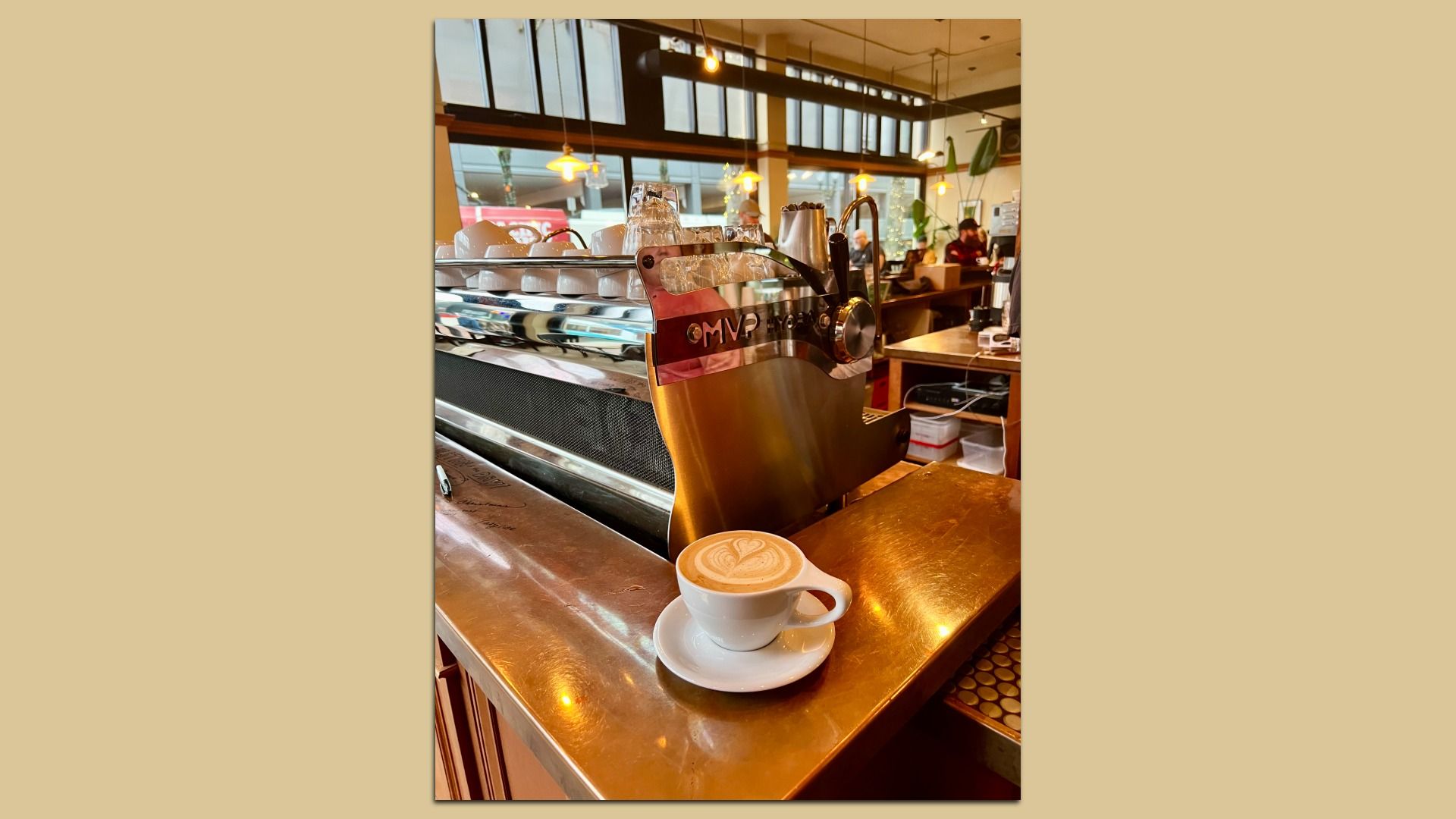
Lattes like this one at Case Study Coffee could be getting pricier. Photo: Courtesy of Christine Herman
With some tariffs still in effect, coffee shops in Portland are contemplating raising prices.
Why it matters: Portland has long been known as one of the nation's best coffee cities, but tariffs — along with other factors driving up the price of beans — mean your favorite latte could soon be more expensive.
The latest: President Trump announced a 90-day pause in "reciprocal" tariffs on many countries on Wednesday, but the universal 10% tariffs remain in effect.
The big picture: Trump has said tariffs are intended to force businesses to do more of their production domestically, but beyond some marginal production in Hawaii and Puerto Rico, the U.S. doesn't grow coffee beans, instead importing 99% of its coffee, per the National Coffee Association (NCA).
- And most of us consume it. Nearly two-thirds (63%) of adults in the U.S. drink coffee daily, according to the NCA.
Zoom in: Portland has at least 80 micro-roasters and is considered a leader in fourth-wave coffee service, being more inclusive and less snobby.
- Local shops were feeling the pressure of price increases even before the recent tariffs.
What they're saying: Nalani McFadden, operations manager at Deadstock Coffee, said she's seen the price of unroasted coffee beans rise steadily over the last few years "due largely to agricultural difficulties imparted by climate change."
- "All of these things result in higher costs for us as roasters and cafe owners, which the customer then feels as price increases on their daily cup," McFadden told Axios.
- "We do the best we can to prevent raising our prices, but there does come a point where it's unavoidable," she said.
Context: Despite the industry's headwinds, consumer demand for coffee continues to grow, with an economic impact of more than $343 billion in 2022, up more than 50% from 2015, according to the NCA.
- The U.S. is the second-largest importer of coffee beans in the world, with about 80% of unroasted beans coming from Colombia and Brazil, according to the U.S. Department of Agriculture, where the 10% tariffs still apply.
Yes, but: Christine Herman, co-owner of Case Study Coffee, said she did not "anticipate a huge impact to our business due to the tariffs and their potential effects on coffee prices."
- Still, "if the tariffs increase the price of coffee significantly, we will raise our prices," Herman told Axios.
Between the lines: Price hikes for many industries may not show up until the summer, as companies work through pre-tariff inventories, a top Federal Reserve official told Axios.
The bottom line: Both McFadden and Herman said they hope the tariffs are short-lived, but McFadden said economic pressure on the industry could turn your daily cappuccino into "more of a luxury good than a commodity."
- "Many people rely on their daily cup of coffee and expect it to remain available regardless of climate change, politics, etc.," she told Axios. "I think that dogma may be forced to shift soon."