Life expectancy slips in Oregon


Add Axios as your preferred source to
see more of our stories on Google.
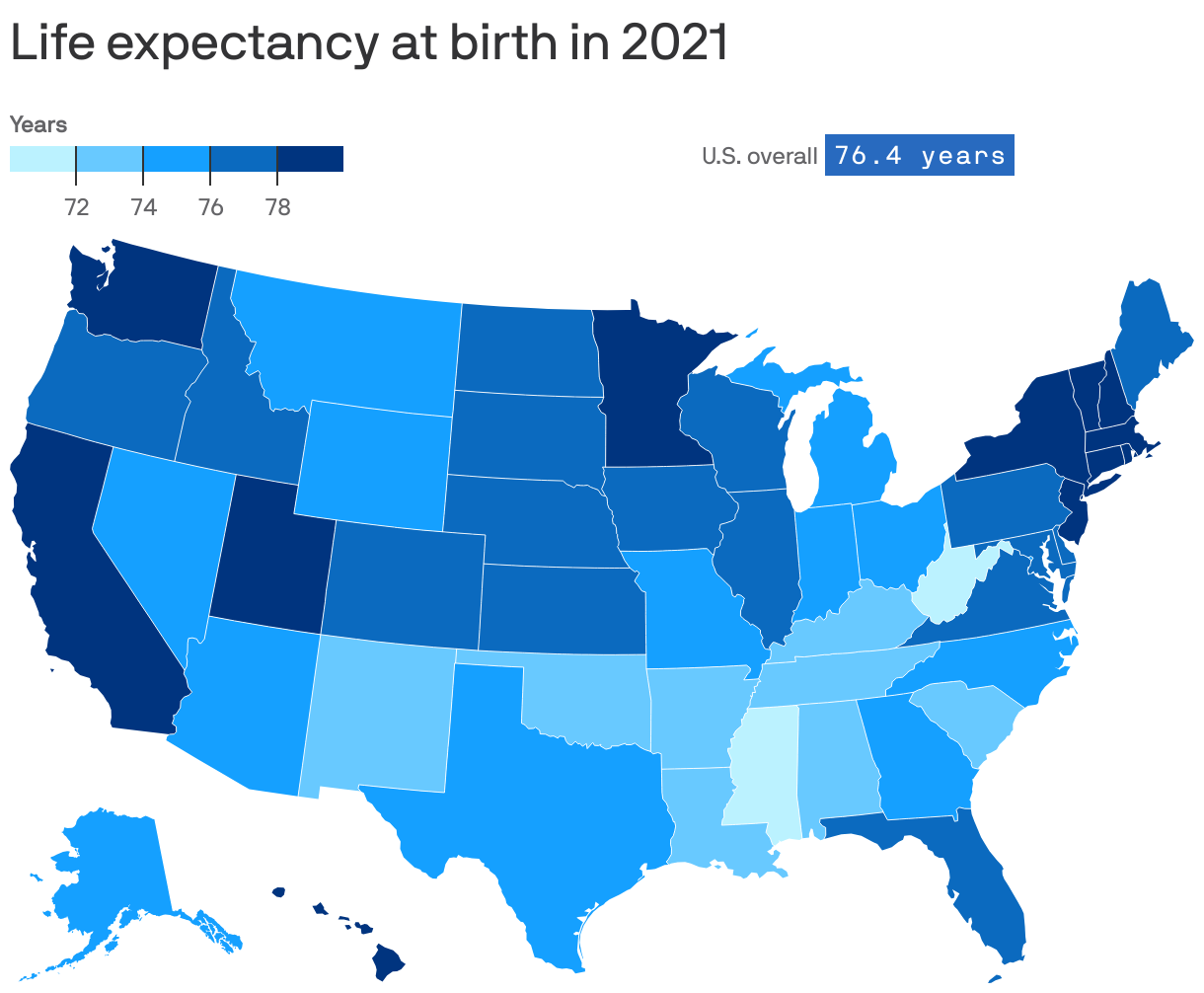
Oregon experienced one of the greatest decreases in life expectancy at birth from 2020 to 2021 in all of the U.S., according to a new Centers for Disease Control and Prevention analysis — declining from 78.8 to 77.4 years.
Why it matters: While Oregon's life expectancy still ranks among the top half of states in the nation, the dramatic drop highlights just how hard the state was hit by the COVID-19 pandemic and rising drug overdoses, per the report.
Zoom in: From 2019 to 2023, there was a five-fold increase in opioid overdose deaths, from 280 to 1,392, according to the latest data from the Oregon Health Authority.
- "What we're seeing can be attributed to the increase in fentanyl in our drug supply," Todd Korthuis, head of Oregon Health & Science University's Addiction Medicine Section, told Axios.
The latest: To address skyrocketing deaths, lawmakers rolled back a key component of voter-approved Measure 110 earlier this spring, which decriminalized possession of small amounts of illicit drugs back in 2020.
- Starting Sunday, possession will once again be a misdemeanor.
What they're saying: However, COVID had a "50% bigger impact on 2021 life expectancy than did drug overdoses," Ethan Sharygin, director of Portland State University's Population Research Center, told Axios in an email.
- COVID mortality has since waned, whereas "drug overdoses overtook cancer as the most significant cause of premature deaths in 2021 and remained there in 2022," Sharygin added.
The big picture: Nationwide, life expectancy nationwide fell by 0.6 years between 2020 and 2021. The U.S. average is 76.4 years as of 2021.
- Hawaii (79.9 years), Massachusetts (79.6) and Connecticut (79.2) have the longest life expectancy at birth.
- Mississippi (70.9 years), West Virginia (71.0) and Alabama (72.0) have the shortest. In general, southern states had the lowest life expectancy.
Between the lines: Women are expected to live longer than men across the country.
- In Oregon, women are expected to live 80.2 years, while men are at 74.8 years.
How it works: The findings are based on a combination of mortality statistics and census and Medicare data.
The bottom line: With the worst of the COVID-19 pandemic behind us, these numbers will likely improve in future reports — as earlier preliminary data suggests.
- Still, both COVID and drug overdoses remain serious public health challenges.