Oregon's wildfire season already worse than last year

Add Axios as your preferred source to
see more of our stories on Google.
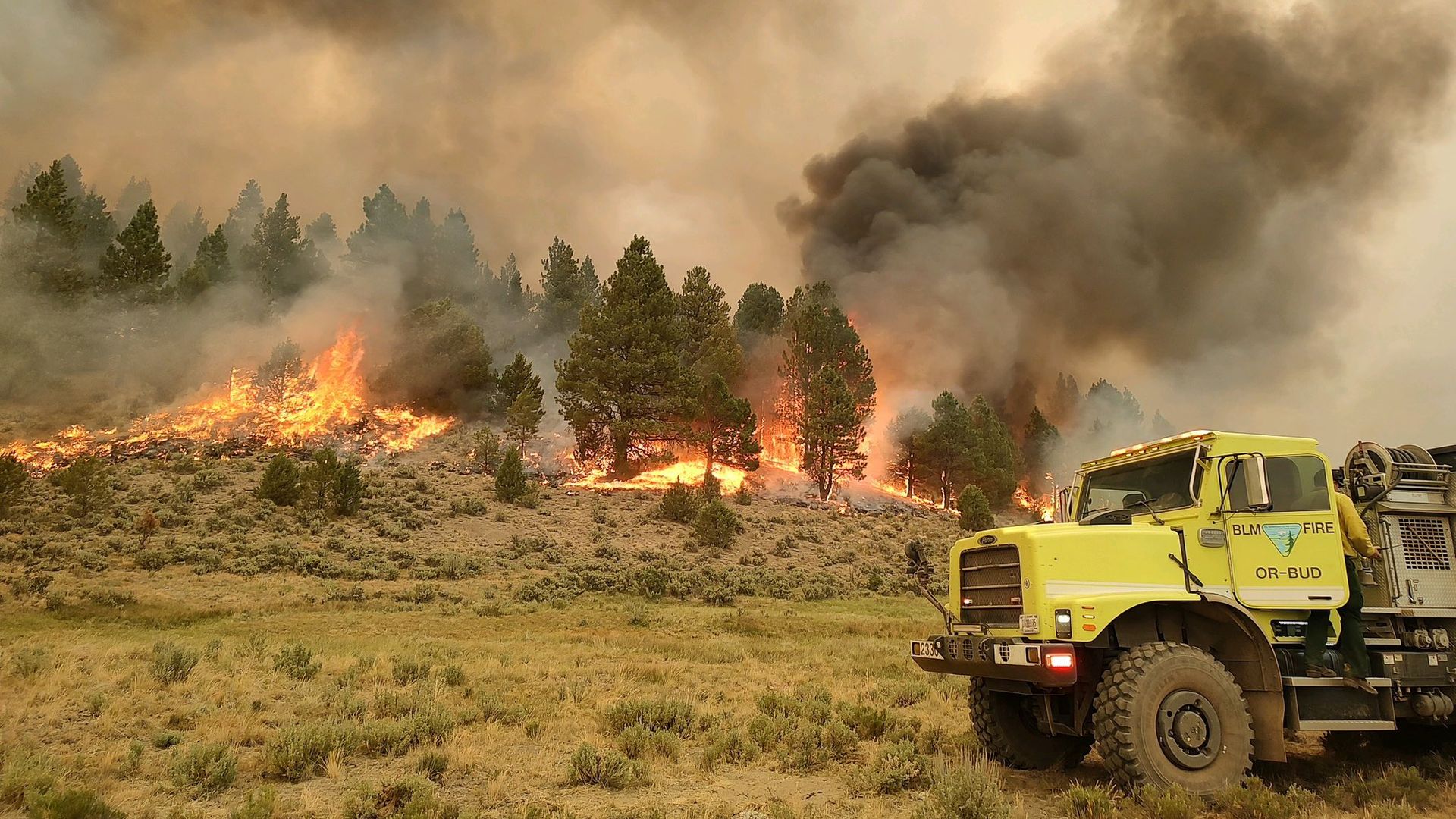
The Falls Fire burns in southeast Oregon last week as the season starts. Photo: Courtesy of the USDA Forest Service
Wildfires across Oregon — many fueled by recent record-breaking heat waves in the region — have burned more acreage so far this year than the entire 2023 season, state and federal fire officials tell Axios.
Why it matters: Oregon's wildfire season started early this year, in April (it typically gets going in June and peaks in mid-August), and as the warm, dry weather continues, the more intense season is straining resources and fire-fighting personnel.
- "We still have a long ways to go," Carol Connolly, a spokesperson for Northwest Interagency Coordination Center, which handles fire suppression across Oregon and Washington, tells Axios.
Threat level: Dry lightning is forecast for Tuesday and Wednesday, meaning more wildfires are likely to pop up this week, according to Jessica Neujahr, a spokesperson for Oregon Department of Forestry.
- This could lead to additional evacuations and poor air quality across larger swaths of the state due to wildfire smoke.
What they're saying: "Our wildfire season is off to a very aggressive start," Gov. Tina Kotek said at a press conference Friday as she declared five emergency conflagrations, which allow the state to pull in additional resources to protect property and life.
- Kotek also extended a state of emergency until October due to wildfires "growing at a concerning pace."
By the numbers: Over 694,000 acres have burned since the beginning of the year in Oregon, per Connolly — more than all of 2023.
- The Durkee Fire near the eastern border with Idaho is the largest active fire in the state and has burned more than 173,000 acres since it started just last week.
- There are 26 other large wildfires, defined as fires bigger than 100 acres in timber or 300 acres in grass and brush. That includes the Cow Valley Fire outside of Ironside (134,000 acres), the Falls Fire in Harney County (132,000 acres) and the Larch Creek Fire near Dufur (18,300 acres).
The intrigue: Of the nearly 22,000 firefighters and support personnel working fires in the nation, over a third (7,500) are fighting fires in Oregon and Washington, Connolly said.
Between the lines: Studies show human-caused climate change is increasing wildfire risks, particularly in the West.
What we're watching: The threat of a wildfire breaking out in a metropolitan city like Portland is low, but we are not immune to harmful, lingering smoke.
- When, or if, smoke from these fires will affect us depends on the wind, which is largely unpredictable.
- Consider an air purifier if you haven't got one already.