Study: Portland's not ready for more climate disasters

Add Axios as your preferred source to
see more of our stories on Google.
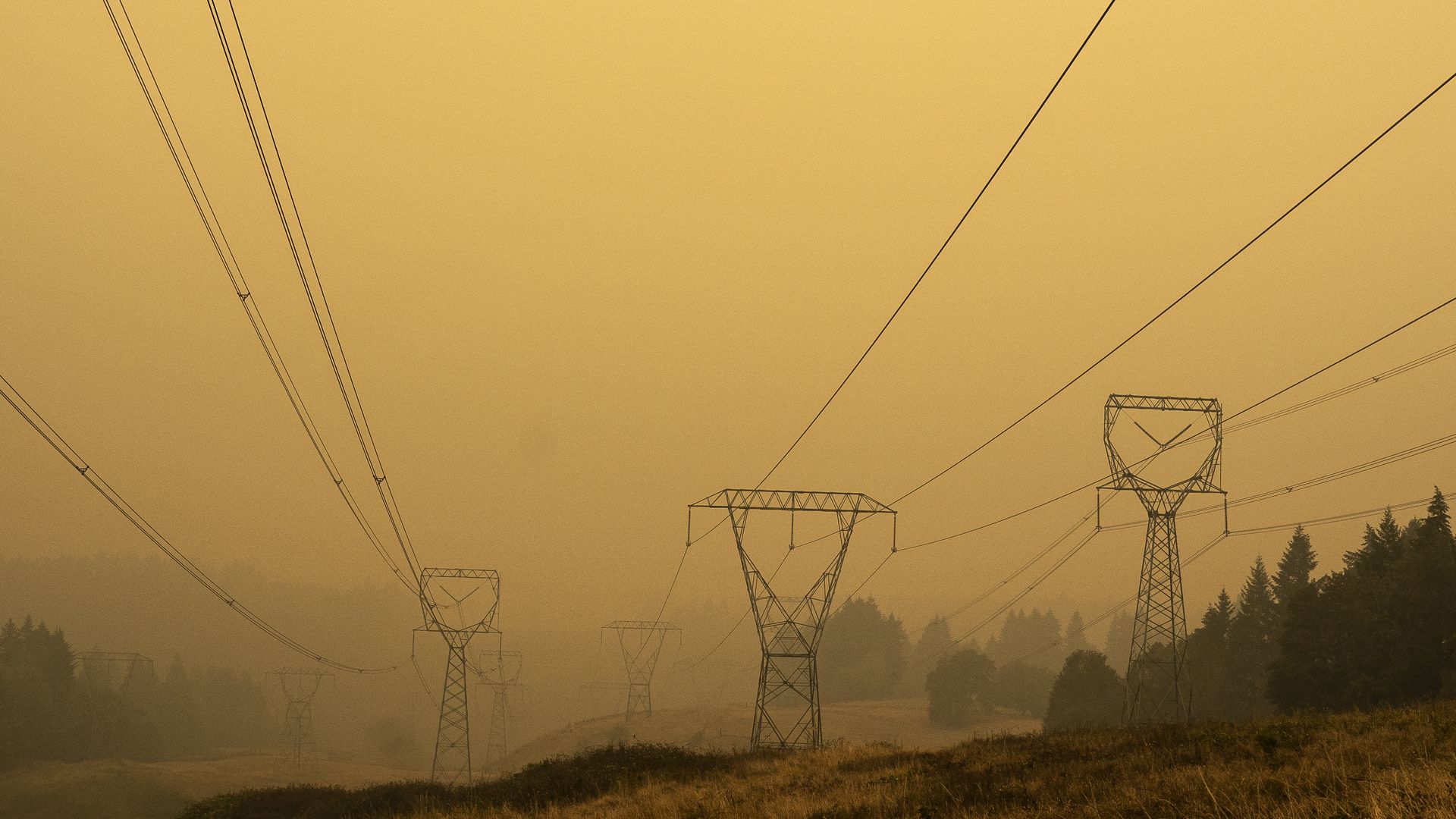
Power lines extend through heavy wildfire smoke in September 2020 in Clackamas County. Photo: Nathan Howard/Getty Images
Oregon is one of the worst states for climate disasters and Multnomah is the least prepared county in the state to handle them, a recent study finds.
Why it matters: Wildfires have burned closer to Portland in recent years, and with power outages caused by historic levels of winter wind and ice downing trees, climate impacts have become a major concern for people thinking of buying homes in the state.
By the numbers: Multnomah ranked 45th least-prepared county in the nation according to homeowners insurance resource ClaimGuide's risk assessment.
- The county has an expected annual loss of $262 million from natural disasters, the report said.
- Risks include floods and landslides, wildfires and smoke, severe weather such as extreme heat, winter storms, wind storms and drought, and the threat of earthquakes and volcanoes, according to the county.
- Lane, Washington and Clackamas also are relatively high-risk Oregon counties, with Clackamas having a similar range of risks as Multnomah.
Zoom in: Annual climate costs in Oregon are expected to be $1.4 billion, per ClaimGuide's study. That includes impacts on buildings, people and agriculture.
- Oregon declared 62 disasters from 2014-2024, faring better than its neighbors to the north and south: Washington had 88 disasters in that period; California had 155.
The fine print: ClaimGuide's analysis is based on data from FEMA's National Risk Index, which determines an overall risk score for 18 different natural hazards.
- Key metrics include expected annual loss, community resilience and social vulnerability.
The big picture: In the past year, several major insurers decided to stop offering new homeowner policies in central, southern and eastern Oregon as climate change-related threats ramped up, according to Oregon Capital Chronicle.
- The 2020 Labor Day fires were Oregon's most expensive natural disaster in history, according to state and federal emergency response agencies, and the devastation can still be seen around Detroit and Talent.
- A recent survey found most Americans now believe climate change is a major threat and are open to making lifestyle changes, such as drinking recycled wastewater.
What we're watching: Rising sea levels are now a big concern for those buying waterfront property.
- The National Oceanic and Atmospheric Administration's new interactive map lets users see how Oregon could look as sea waters rise.