Philadelphia signals cautious approach to second Trump administration

Add Axios as your preferred source to
see more of our stories on Google.
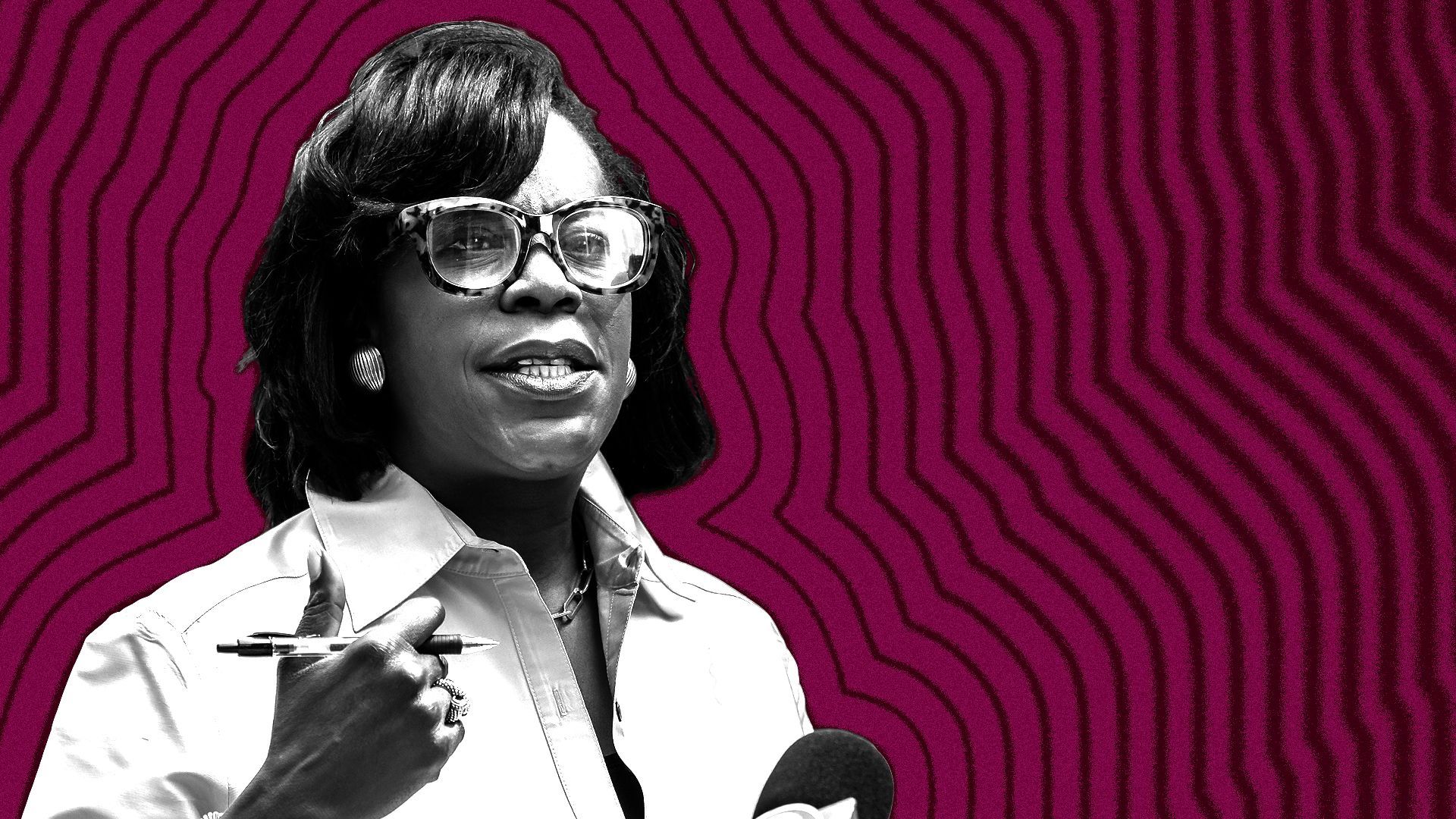
Photo illustration: Axios Visuals. Photo: Gilbert Carrasquillo/GC Images
Philadelphia's had a combative relationship with President-elect Trump, but that could be changing.
Why it matters: Former Mayor Jim Kenney put Philadelphia at the forefront of the anti-Trump movement among big Democrat-run cities during the first Trump presidency.
- But for the second, the city has a new tough-on-crime mayor who's facing exhausted federal pandemic funding and a resurgence of Republican voters.
Driving the news: Mayor Cherelle Parker took a cautious approach to addressing how the city will work with an incoming Trump administration during a post-election news conference last week.
- She said she was unsure how the city's relationship would change under Trump compared with the Biden administration, which has funneled more than $1 billion in federal funding to Philly this year alone.
Yes, but: Parker stressed "nothing gets in the way" of her commitments to improving the safety, cleanliness and prosperity of the city.
The intrigue: Parker wavered about whether she would fight to preserve Philly's "sanctuary city" status to protect undocumented immigrants.
- "I don't know what will happen in the future," the mayor told reporters. "We will make sure that we are prepared to address issues that will come before us."
- Trump has vowed to crack down on immigration and start mass deportations on day one of his presidency.
Parker spokesperson Joe Grace tells Axios the administration stands "on everything that the mayor said at [last week's] press conference."
The big picture: Some Democrat-led states and cities are girding for battles against the incoming Trump administration.
- That includes California, where Gov. Gavin Newsom has called a special legislative session to safeguard against potential Trump policies.
Flashback: Kenney, who took office in 2016, was a vocal Trump critic, calling the then-president a "tyrant" and a "punk."
- Kenney repeatedly sparred with Trump despite the threat of losing federal funds, particularly over Philly's sanctuary city status and cooperation with federal immigration agents.
Behind the scenes: Philly has relied on federal money to keep it afloat, so any drop in funding could threaten Parker's expansive agenda.
- She's already boosted the city budget 3% over last year, while not raising taxes and promising to clean up city streets, shut down open-air drug markets, and build a $100 million "wellness village" in Northeast Philly to serve people in addiction.
- Meanwhile, Parker padded her first budget with around $450 million of pandemic-era federal funding, which is now depleted.
Between the lines: The red wave has caught many Philly Democrats flat-footed. Now they risked being perceived as among Trump's growing list of "enemies from within."
What they're saying: If Trump pursues his revenge agenda, he could shortchange or starve Philly of federal aid as long as Democrats control City Hall, Linn Washington, a Temple University journalism expert who has followed Philly politics for decades, tells Axios.
- "Expect insufficient assistance from the Trump administration to address basic needs like aging infrastructure and affordable housing," he says.
"The local Republican Party is fractious, leaving few solid GOP surrogates who the Parker administration can turn to to ensure Philly's interests are heard, former GOP mayoral candidate David Oh tells Axios.
- For the city's sake, Oh says Parker, one of Harris' biggest supporters, must swallow her pride and make nice with Trump.
- "Go meet with the man and say … 'Yes, we were on the other side of this, going for the jugular. … We truly need your help.'"