Louisiana's climate anxiety, mapped


Add Axios as your preferred source to
see more of our stories on Google.
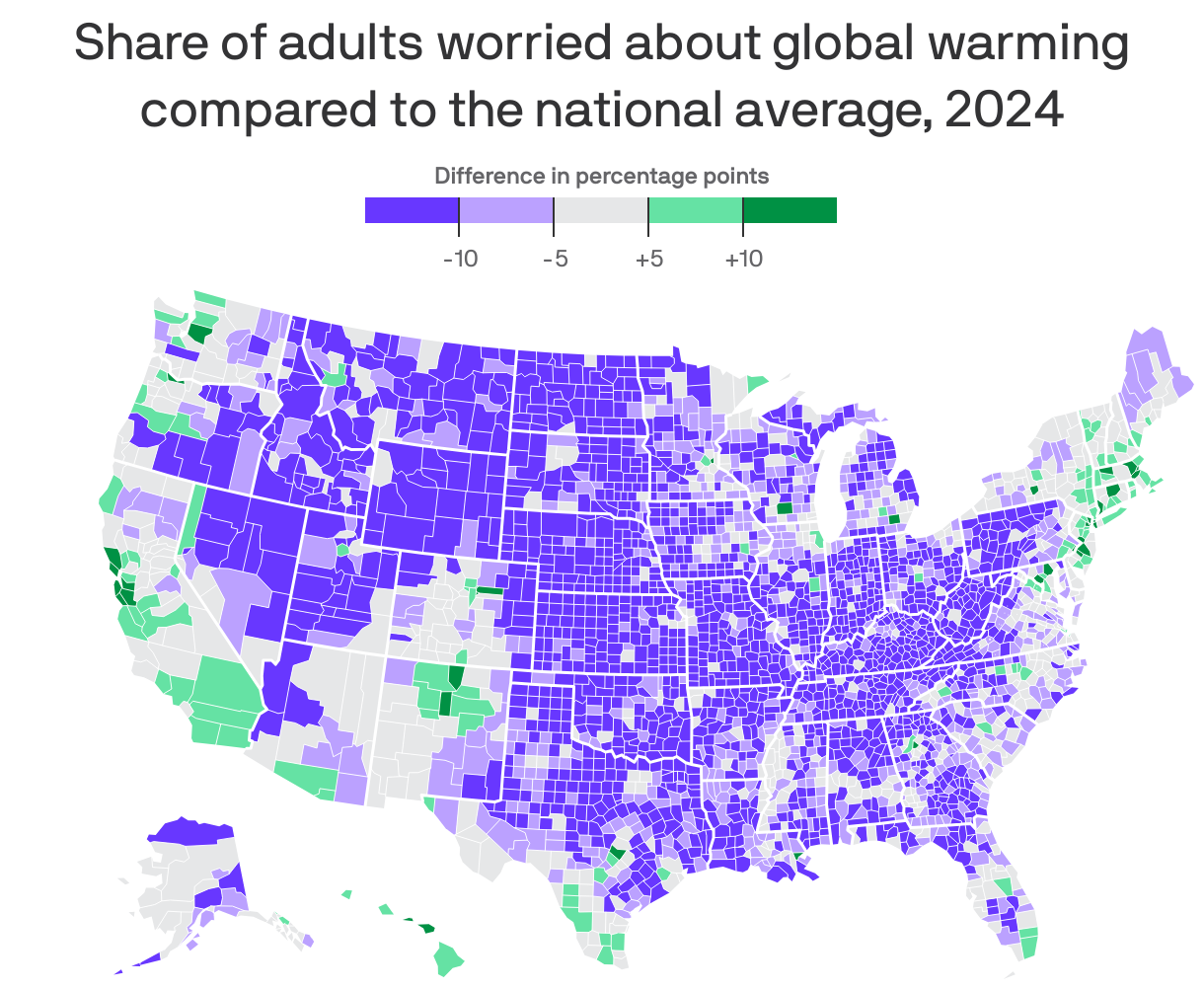
New Orleanians are stressed about climate change, recent estimates find.
Why it matters: The rest of Louisiana isn't as anxious.
The big picture: 74.1% of adults in New Orleans say they are "somewhat" or "very" worried about climate change, per estimates from the Yale Program on Climate Change Communication based on survey data.
- In Jefferson Parish, it's 64.3% of adults.
- The national average is 63.3%, with higher anxiety levels in coastal communities and large cities.
- The findings paint a stark picture of how attitudes toward climate change vary nationwide.
Zoom in: About 53% of adults in Louisiana's coastal parishes, which face the brunt of hurricanes and coastal erosion, report feeling anxious about climate change.
- Cameron Parish had the lowest rate of concern (44.4%), with Jefferson Parish having the highest.
Catch up quick: South Louisiana has endured one extreme weather event after another in recent years.
- Residents have dealt with saltwater intrusion, extreme drought, super fog, flooding, tornadoes and marsh fires.
- Hurricane Francine made landfall here last year, and the region was battered by Hurricane Ida in 2021.
- The historic snowfall was magical, but it was a nightmare for the region's infrastructure.
What they're saying: While the map above may look like a sea of purple, "it's crucial to remind people that the vast majority of the population exists in some of these green places," says Jennifer Marlon, executive director of the Yale Center for Geospatial Solutions and senior research scientist at the Yale School of the Environment.
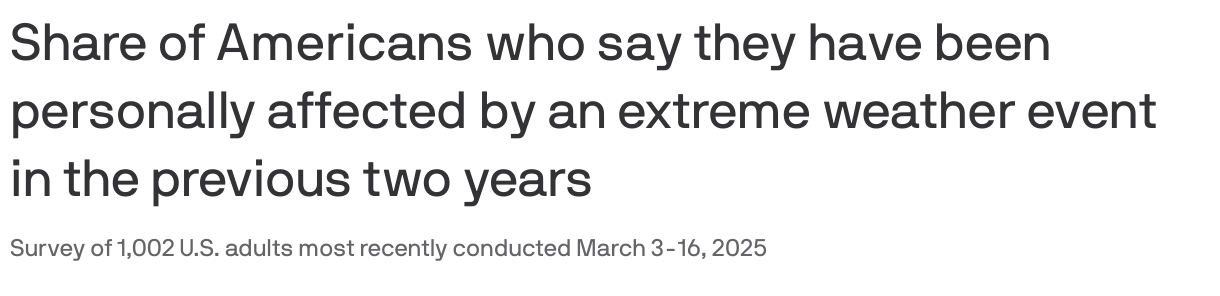
Zoom out: A Gallup survey this month showed an uptick in the number of Southerners who have experienced an extreme weather event where they live, writes Axios' Andrew Freedman.
- 28% of respondents said they experienced a hurricane in the past two years, up from 18% in 2023, the survey showed.
- Climate change is projected to lead to more frequent occurrences of severe hurricanes (though not more frequent hurricanes overall) and is already showing a tie to increased instances of rapid intensification of storms.
- Climate change is also causing these massive storms to deliver more rainfall than they used to, leading to inland flooding disasters.
How it works: The findings are based on statistical modeling using data from nationally representative Ipsos surveys.
Between the lines: Individual attitudes about climate change are not based entirely (or perhaps even primarily) on local risk, with politics, education, and other factors playing big roles.
- Many of the areas with relatively lower climate anxiety are vulnerable to various kinds of extreme weather that could be amplified by climate change, like hailstorms.
Go deeper: Yale's interactive page features an array of local climate opinion data, with questions ranging from whether global warming is happening at all to thoughts on drilling for oil in the Arctic National Wildlife Refuge.