New Orleans' heat island effect, mapped


Add Axios as your preferred source to
see more of our stories on Google.
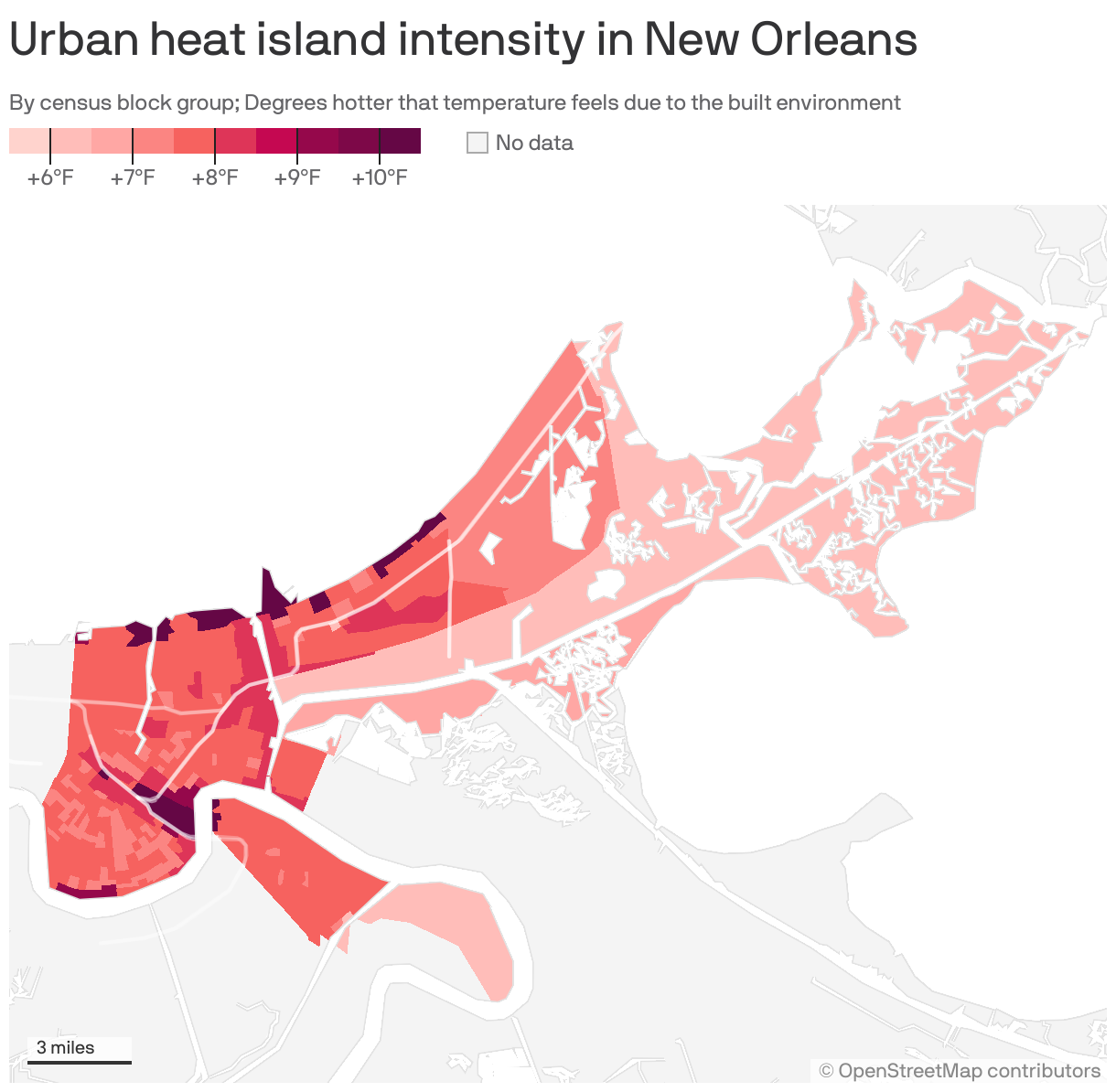
Nearly 80% of New Orleans residents live in areas that act as urban heat islands and make it feel at least 8°F hotter, according to Climate Central's analysis.
Why it matters: Extreme heat is a serious health risk, leading to exhaustion and heat stroke as well as longer-term complications such as reduced air quality.
The big picture: Heat islands — urban hotspots with higher temperatures compared to surrounding areas — are created when roads, buildings, parking lots and so on "trap" heat.
- Often such neighborhoods, which tend to be poorer, lack trees and plants that would otherwise help cool the area.
- Urban heat islands are boosting temperatures within 65 major U.S. cities that are home to 50 million people, or 15% of the total U.S. population, according the analysis.
- New Orleans ranks as the 17th worst heat island city in the group.
Between the lines: Low-income neighborhoods tend to be more vulnerable to heat islands than wealthier ones, making this a key climate equity issue.
- Heat islands can also lead to increased energy usage and costs as residents keep cool with air conditioning, writes Axios' Alex Fitzpatrick.
Zoom in: The worst heat intensity is downtown, along the lakefront and in part of Uptown near the Port of New Orleans, Climate Central says.
- 5% of New Orleans' population lives in blocks that feel at least 10°F hotter due to heat island effects.
Threat level: As of July 13, seven people have died across the state this year from heat-related causes, according to the Louisiana Department of Health.
- Last year, 69 people died during the city's hottest summer on record.
- Officials have reiterated concerns about the extreme heat during any storm-related power outages.

State of play: "The entire planet is warming due to human-caused climate change, but the built environment further amplifies both average temperatures and extreme heat in cities," per a Climate Central statement announcing the new data.
- Scientists factor the heat island effect into their climate change monitoring and projections, but it does not explain the sharp uptick in global average temperatures, melting glaciers, record ocean warmth and more.
- Cities are increasingly understanding the need to combat the heat island effect through means such as adding more green space, using reflective paint on roads and buildings, and opening cooling centers.
What's next: New Orleans' officials are in the process of making the city's first-ever heat mitigation plan.
- They are seeking a consulting firm to create a strategy with actionable items to help the city prepare "citizens and infrastructure for increased extreme heat events."
- The request for proposals says the plan must work with other goals, such as improving the city's greenhouse gas emissions, reducing exposure to urban heat and addressing extreme heat threats on a neighborhood basis.
- The bids are due by Thursday.
Go deeper: