Jul 8, 2024 - News
New Orleans heat waves got longer than any other U.S. metro, EPA data says


Add Axios as your preferred source to
see more of our stories on Google.
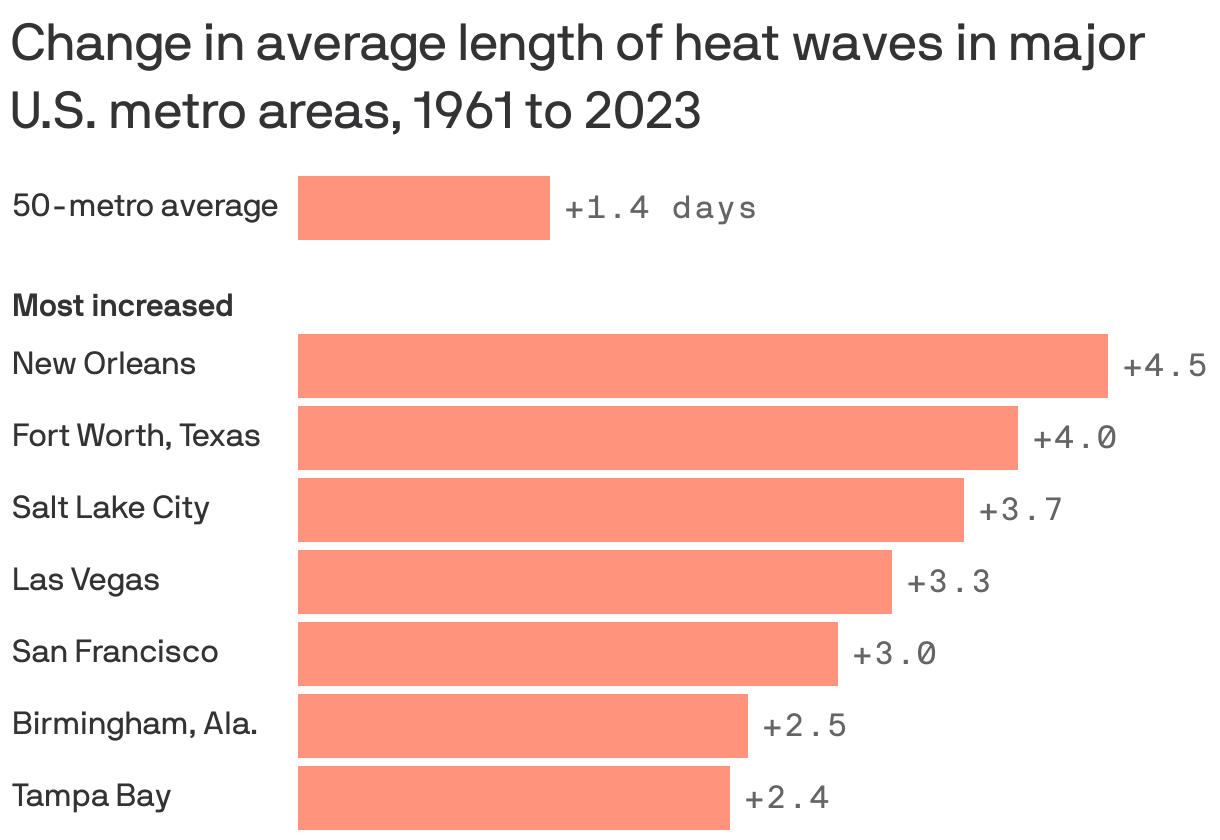
New EPA data shows that the length of New Orleans' heat waves has increased the most out of every major U.S. metro between 1961 and 2023.
Why it matters: We are absolutely cookin'.
By the numbers: The average New Orleans heat wave increased 4.5 days by 2023.
- That's significantly more than the metro-area average of a 1.4-day increase.
Threat level: New Orleans had its hottest summer on record last year, and Department of Health data shows that 69 people died as a result.
- This year isn't expected to be any better, experts say.
- And it's getting increasingly harder to just air condition our way out of this mess as a recent Guardian report says.
Zoom in: The data comes from a broader EPA report on climate metrics.
Go deeper: