Driverless Waymos still not a reality in Chicago

Add Axios as your preferred source to
see more of our stories on Google.
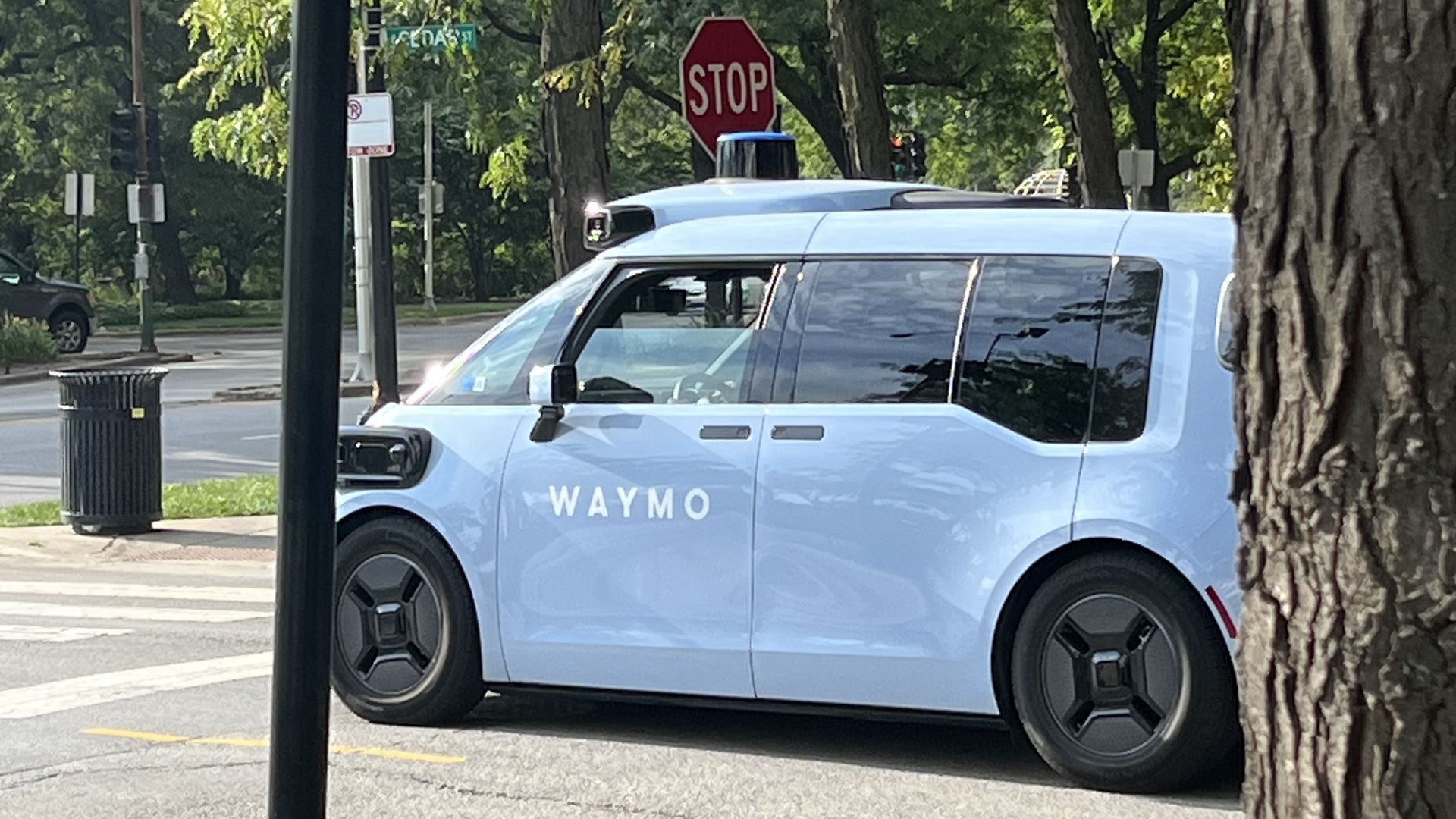
A Waymo van in the Gold Coast last summer. Photo: Carrie Shepherd/Axios
Humans still drive Waymo robotaxis in Chicago. Legislation to change that is stuck in the Illinois House.
Why it matters: State lawmakers face a consequential choice over whether to allow robotaxis to operate in Illinois while still protecting rideshare drivers and unions who oppose the technology.
Driving the news: The fall veto session kicks off Tuesday when the Illinois General Assembly may consider autonomous vehicle (AV) legislation.
Context: State Rep. Kam Buckner introduced a bill earlier this year to launch an AV pilot to test how the cars might operate in the state.
- The legislation is sitting in the House Rules Committee.
The latest: Buckner recently wrote a letter to NITA, the new umbrella agency of the CTA, Metra and Pace, emphasizing how AVs and public transit can work together to provide more equitable transportation.
What they're saying: "What we're asking for is a very controlled program with a certain number of cars on the road," Buckner told Capitol News Illinois last month. "We can actually take that data and figure out what's the best way to implement the policy."
- Axios reached out to Buckner but did not hear back.
- "We continue to have productive conversations with city and state officials, organized labor, and other relevant parties to establish appropriate regulation and enable Waymo to invest locally in hundreds of full-time, first-generation autonomous vehicle jobs," a Waymo spokesperson tells Axios.
State of play: While it waits for movement on the legislation, Google's self-driving car company Waymo isn't sitting in the garage. Human drivers have been behind the wheel of robotaxis since February, mapping city streets.
- Waymo's Ojai, which look a little like vans, are currently surveying Chicago roads as the model is built for winter weather conditions.
The other side: Unions strongly oppose AVs in Illinois. SEIU estimates each AV replaces about four human jobs.
- The union helped push legislation last spring that allows rideshare drivers to form a union.
- "The thousands of working-class, Black, Brown, and immigrant drivers whose livelihoods are on the line are not labor costs to be automated away," Genie Kastrup from the App Drivers Union tells Axios in a statement.
In the middle: Biking, walking and transit advocacy group Active Transportation Alliance sees how AVs could fill the gaps where public transit falls short.
- That's especially true on the South and West sides, where Chicagoans live on long stretches without trains or buses.
Yes, but: The group raises concerns about more traffic with robotaxis and stresses the need for cities to have some regulatory control over AVs rather than a one-size-fits-all state law.
- "While AVs offer carbon-free transportation, we want to ensure that we have the right guardrails in place in Illinois to ensure safe transportation choices for all modes of travel on our streets," an Illinois Environmental Council spokesperson says.
The bottom line: For the near future, Chicagoans will probably have to rely on human cab drivers and rideshares.
What's next: The fall veto session takes place Tuesday through Thursday in Springfield.