What Chicago riders can expect from driverless Waymos

Add Axios as your preferred source to
see more of our stories on Google.
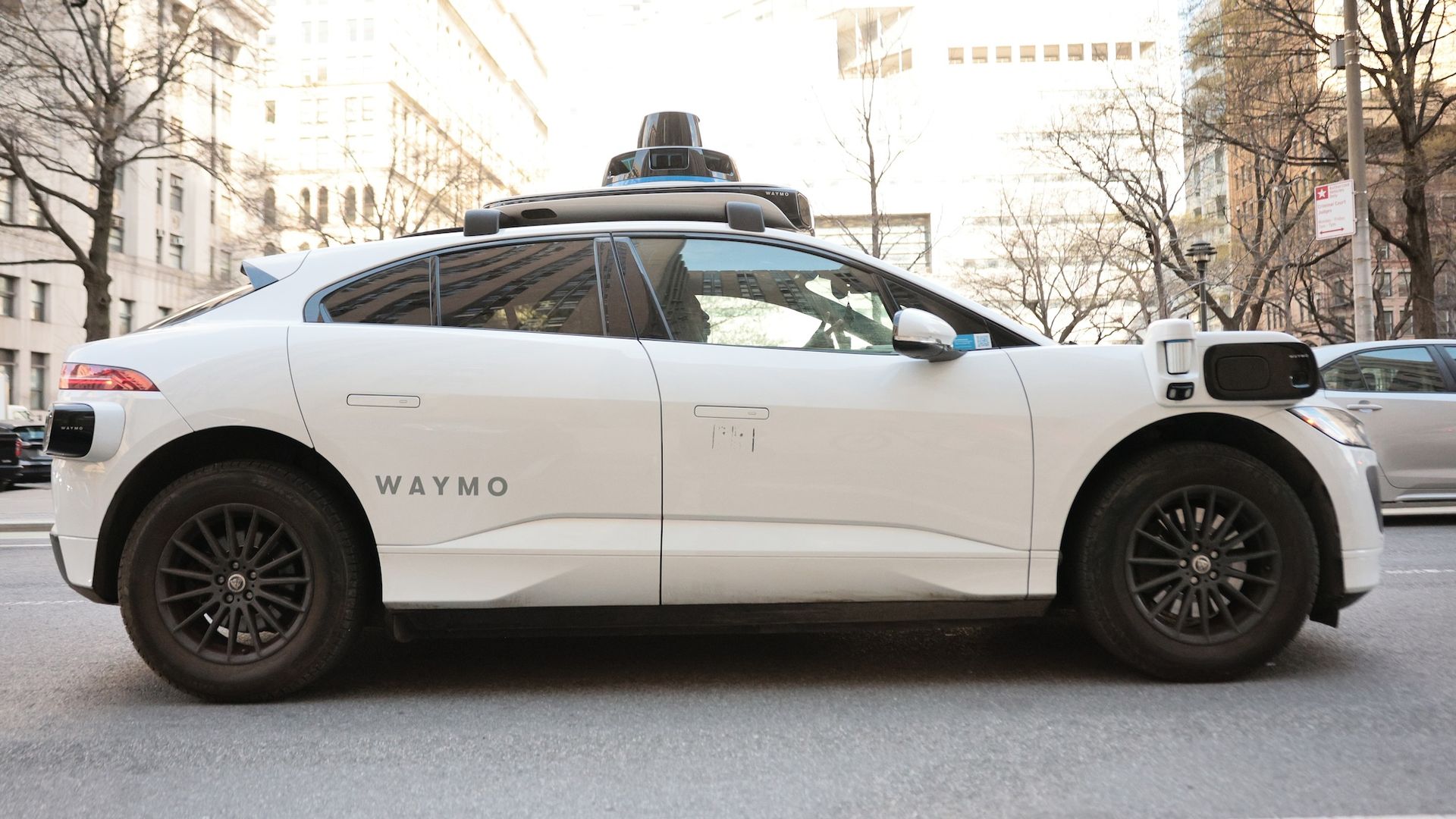
Waymo robotaxi driven by a safety specialist on April 9 in New York City. Photo: Michael M. Santiago/Getty Images
Waymo's cars still have human drivers in Chicago — but a bill in Springfield could change that.
Why it matters: Lawmakers in Springfield are considering a bill to launch an autonomous vehicle pilot in several Illinois counties, including Cook County.
- If it passes, the cars would have to meet safety benchmarks over three years, with the state — not cities — overseeing the program.
The latest: Waymo dispatched AVs in Chicago in February to map the streets so the company is ready to unleash the robotaxis if lawmakers clear the path for the pilot.
The big picture: Waymo operates in 11 U.S. cities and, in addition to Chicago, is trying to launch in more cities, including in the United Kingdom and Japan.
- We asked our Axios colleagues living where Waymo currently operates what they like and don't like about the robotaxis, and why some people are throwing pizza boxes at the cars.
The good: Reporter Carly Mallenbaum in Los Angeles is "such a Waymo fan!" Carly tells us she even thanks the human-less vehicle after a ride.
Reality check: She really appreciates Waymo when she's outside the car.
- "As a pedestrian often pushing a stroller or walking a dog, I feel safer crossing in front of a Waymo than most human-driven cars — I know it'll stop."
- "My husband and I have a tradition: Every L.A. visitor gets walked to their first Waymo ride — like we're sending them off to prom."
Flashback: Waymo rolled out robotaxis to riders in suburban Phoenix in 2020, but reporter Jessica Boehm didn't give them a spin until 2023. She was impressed. "Rides were typically $3-$5 less than a comparable Uber trip, and there was no driver to tip."
- "In the morning, I never waited more than seven minutes for a ride," Jessica added in her review.
The other side: Waymos "are fully autonomous and drive like grandmas," San Francisco reporter Nadia Lopez tells us.
- "It's also really annoying when they get confused and stop moving [because] they always want the other car to take the right of way, except if it's two Waymos, then there's a standstill and it blocks traffic."Compared to an average human driver over the same distance in Waymo-operating cities, the Waymo driver had 92% fewer serious crashes in its vehicles than in human-driven cars, the company said.
Some riders forget that they're solo in a soulless machine pretty quickly, but others, like Asher Price in Austin, miss the human interaction. "I personally have found taking them weird because I can't kibitz/argue with the driver about the route they're taking, which is sometimes idiosyncratic in a way that makes me think they're not supposed to take risks."
- Specifically, Asher points to maneuvers a savvier driver might make, such as a legal left-hand turn.
The in between: Austinites, at least in Asher's neighborhood, have a little fun with Waymos. "I have a neighbor who throws empty pizza boxes in the street to see if they'll swerve out of the way. His takeaway advice was not to let my kids wander into the street," Asher jokes.
- Compared to an average human driver over the same distance in our operating cities, the Waymo Driver had 92% fewer serious crashes in its vehicles than in human-driven cars, the company said.
Reality check: More seriously, a Waymo AV blocked an ambulance in Austin after a mass shooting in March, but an EMS spokesperson told Nicole Cobler that it did not affect overall response to the shooting.
State of play: A hurdle for AVs in Illinois, specifically Chicago, is union opposition. The Illinois Teamsters and the Labor Alliance for Public Transportation (LAPT) publicly opposed AVs this month, contending that jobs are at risk, a common concern in the AI era.
- Chicago Gig Alliance, which represents rideshare drivers, also sees AVs on the roads as a potential job killer, telling us last December that "nothing can replace the common sense, professionalism and knowledge of the city's geography that drivers have."
What they're saying: "Waymo vehicles are designed to follow the speed limit. That may seem 'too slow' given the status quo, but research shows speed compliance significantly reduces serious injury in the event of a collision," spokesperson Ethan Teicher tells Axios.
- "We continuously improve the Waymo Driver," Teicher adds. "Waymo vehicles appropriately handle challenging right-of-way scenarios and things like flashing red lights appropriately every single day."
What's next: The Waymo pilot legislation was referred to the Rules Committee in March, and Republican Rep. Brad Stephens, a supporter of AVs, told Capitol News this month he doesn't think the legislation will pass this session, which wraps on May 31.