White Sox stadium plan sparks backlash in Bridgeport

Add Axios as your preferred source to
see more of our stories on Google.
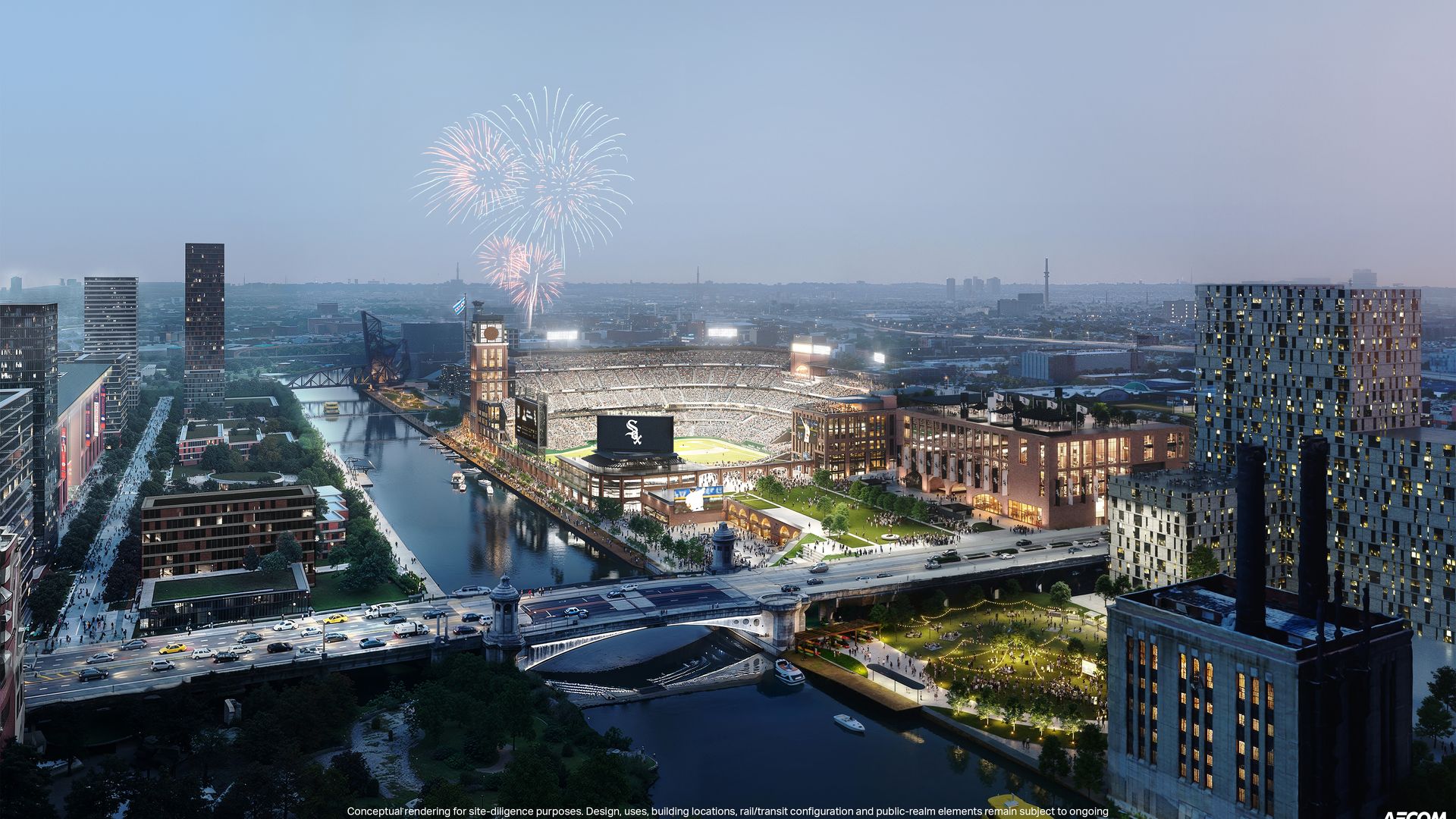
A rendering of a proposed White Sox stadium in the South Loop. Rendering: Courtesy of The Railyards project
The White Sox's latest stadium proposal has fans fighting over neighborhoods, mirroring the Bears' stadium drama over state lines.
The latest: Future White Sox owner Justin Ishbia shared renderings Saturday of a new ballpark that would anchor "The Railyards," a megadevelopment on the Amtrak train yard south of Roosevelt Road along the Chicago River.
Why it matters: Bridgeport could lose the baseball team that has called the neighborhood home for 116 years — and gain an Amtrak train yard in its place.
The intrigue: To make the project a reality, Ishbia is investing in relocating the railyard. Amtrak said it would move it to Bridgeport, which Ald. Nicole Lee (11th) says would bring a host of new problems to the neighborhood.
What they're saying: "If approved, this would drive a knife into the heart of this community, sticking us with an empty stadium and 24/7 Amtrak maintenance facility in a residential neighborhood, with no protections against the environmental impacts, not to mention the economic ones," Lee and Cook County Commissioner John Daley said in a statement.
Flashback: In the early 1990s, the White Sox chose to build their current stadium across the street from Comiskey Park, which had stood in Bridgeport/Canaryville since 1910.
Zoom in: The proposed stadium isn't that far from Bridgeport. In fact, it would sit less than 2 miles from Rate Field.
- But losing the stadium and gaining a train yard isn't sitting well with residents.
- "This is a residential community and you guys are building an industrial facility. You don't care about the neighborhood," a resident said at an Amtrak presentation in August covered by Block Club Chicago.
The other side (of the river): The Chicago Fire's new stadium is planned for the east side of the river at The 78 — the same megadevelopment the Sox previously explored before backing away over public funding.
- Infrastructure challenges remain, but the Sox could theoretically benefit from the Fire's ambitious plans to raise the land near the river and Roosevelt Road and build new roads and other infrastructure.
What's next: Because even if Ishbia and the Sox control the land, they'll eventually need the city to help build the infrastructure necessary to bring roughly 40,000 baseball fans into the area on game days.
The bottom line: The Sox are looking toward a future beyond Bridgeport — and the neighborhood they've called home for 116 years isn't happy about it.