Gary power outages highlight disparities in storm recovery

Add Axios as your preferred source to
see more of our stories on Google.
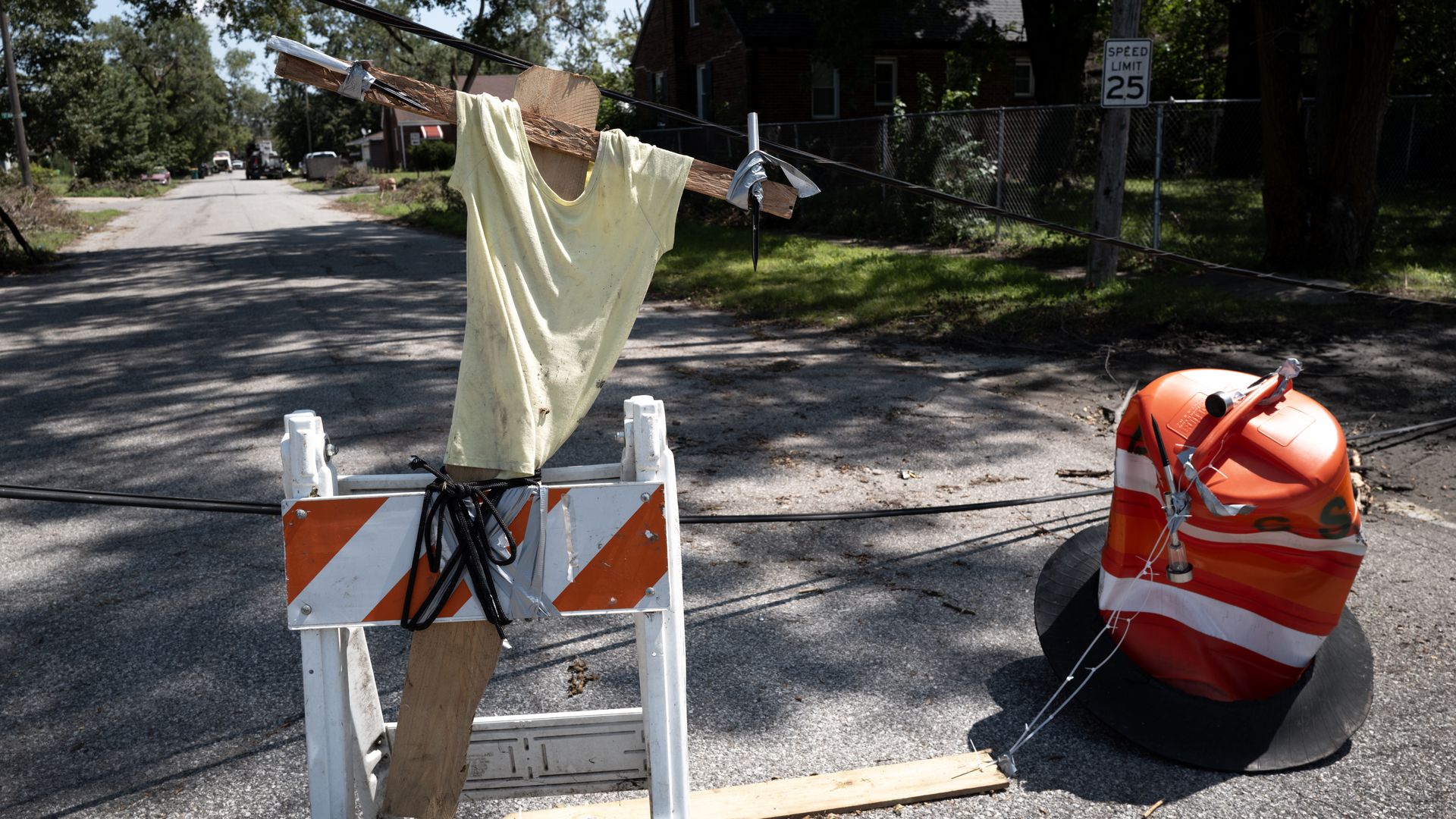
A makeshift roadblock prevents drivers from driving through downed utility lines stretching across a street in Gary, Indiana. Photo: Scott Olson/Getty Images
Nearly two weeks after a powerful derecho tore through the Chicago area, some residents of Gary, Indiana, are still without power, raising questions about who bears the brunt when critical infrastructure fails.
The latest: NIPSCO says Gary residents should have their power restored by 11:59pm Tuesday, after extending that deadline from last Friday.
Why it matters: Gary is predominantly Black and roughly a third of residents live below the poverty line, leaving many with fewer resources to endure a prolonged outage.
State of play: The lengthy restoration has fueled questions about NIPSCO's response and the resilience of Gary's power grid, especially as neighboring communities recovered sooner and ComEd restored nearly all customers across the state line within days.
What they're saying: "This is bigger than a power outage in Gary, Indiana," Bernice King, civil rights organizer and daughter of Martin Luther King Jr, said on social media. "It is part of a pattern. Black communities have too often been expected to endure conditions that would be treated as intolerable somewhere else."
- "It's not OK for us to continually be in survival mode," Gary resident Shatiya Hardin told CBS News.
Friction point: Gary residents have also called out state leaders, including Gov. Mike Braun, who said over the weekend that it was unacceptable that NIPSCO was taking so long to restore power while Illinois communities across the border had already been restored.
Yes, but: The Illinois-Indiana comparison isn't apples-to-apples. The National Weather Service says the derecho intensified as it moved into Northwest Indiana, with a 99 mph gust recorded at Gary/Chicago International Airport, a speed that falls within the range of Category 2 hurricane winds.
- NIPSCO says it has experienced about 374,500 customer outages since Aug. 11. As of Monday morning, about 3,878 customers remained without power because of the storms.
The big picture: Federal help is already flowing to Gary through FEMA's emergency declaration, but direct assistance to residents — food, supplies, cooling and other necessities — is largely coming from charities and local and state efforts.
- FEMA individual disaster assistance, which could provide direct financial help to affected households, has not been approved.
- Several charities are on the ground, including José Andrés' World Central Kitchen and the Salvation Army, plus TikTok star Keith Lee and NBA player Tyrese Haliburton are handing out emergency supplies.
Reality check: The utilities themselves don't offer a simple explanation for the disparity. ComEd has spent heavily to modernize its grid, but so has NIPSCO.
- ComEd finished enough of its own restoration work that it is now sending Illinois crews across the state line to help NIPSCO finish the job.
- One potential fix is also among the most expensive: burying more power lines underground.
What they're saying: "Grid modernization is expensive and there isn't one price tag or solution that works everywhere: undergrounding lines, for example, can cost millions of dollars per mile, and the overall effort can reach billions over multiple years for a large utility," Danny Freeman of utility consulting firm West Monroe tells Axios.
Flashback: Chicago has faced similar concerns about inequity after extreme weather.
- In July 2023, a severe storm dumped several inches of rain on the city, flooding thousands of homes, with predominantly Black neighborhoods on the West Side among the hardest hit.
- Federal disaster aid was approved about six weeks later, but recovery stretched on for years, with additional programs created to help residents repair flood-damaged homes.
The bottom line: Gary's prolonged outage is exposing a larger challenge for the region: Building a more resilient grid is expensive, but so is leaving vulnerable communities without power for days or weeks.
- "With our growing dependence on electricity and connectivity as a part of our personal and professional lives, the stakes have never been higher," Freeman says.