Is Chicago prepared for more powerful storms? Derecho puts region to the test

Add Axios as your preferred source to
see more of our stories on Google.
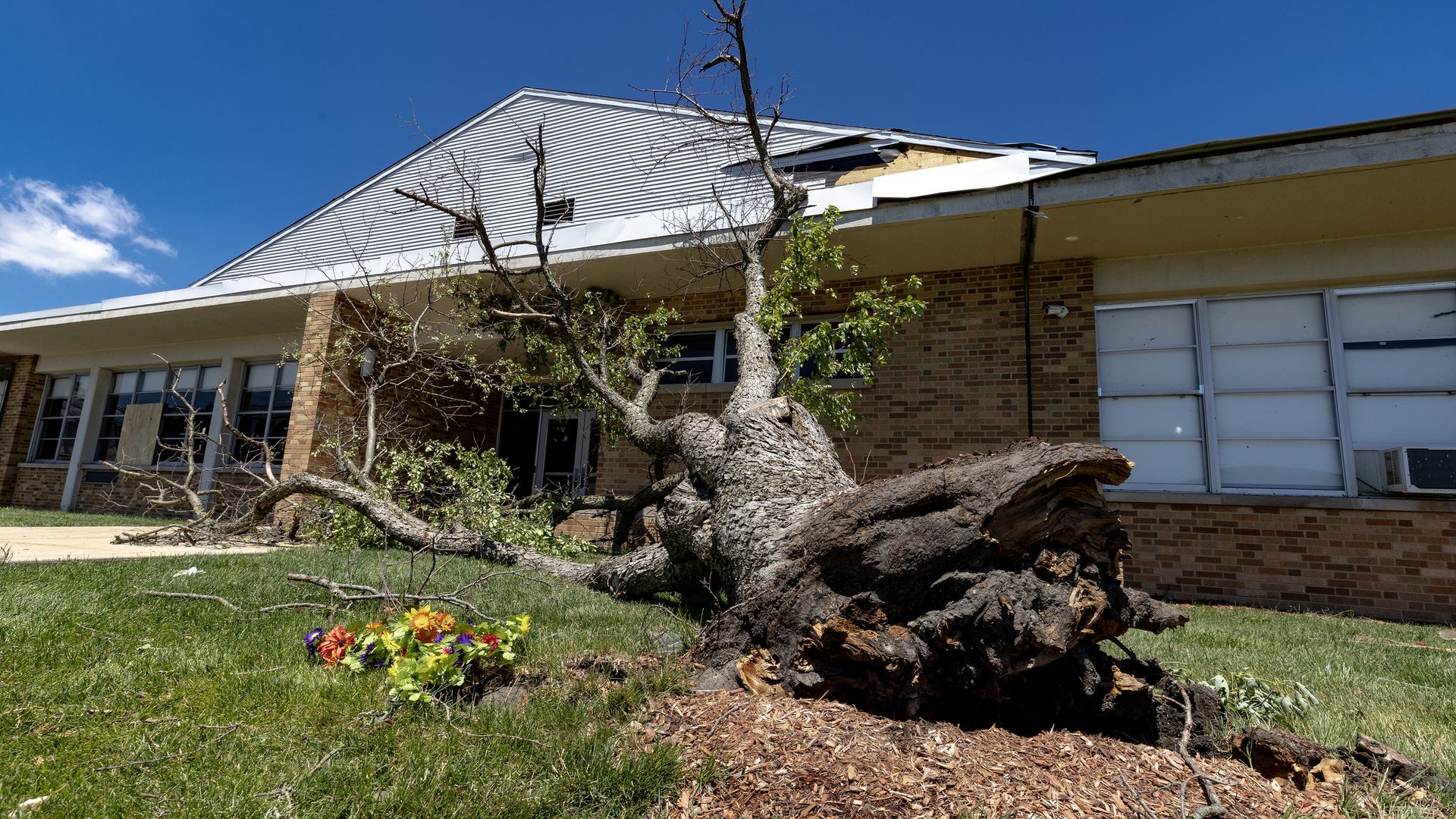
A large tree is uprooted from a recent tornado in Northwest Indiana. Photo: Jim Vondruska/Getty Images
Tuesday's derecho wasn't just a storm; it was a stress test.
The latest: The fast-moving, powerful storm produced three tornadoes and battered several south suburban and Northwest Indiana communities.
- The storm has been blamed for a house explosion that killed a person in Portage, IN.
- Power is still out in several area suburbs and a fuel shortage is affecting Lake and Porter counties in NWI.
- With the three tornadoes from Tuesday, Illinois has become the second state on record to surpass 200 tornadoes in a single year.
Why it matters: Chicago and Illinois have invested in preparing for a wetter, hotter climate, but increasingly destructive wind and rain events are exposing vulnerabilities across systems.
State of play: "The Governor has been briefed and continues to monitor conditions following the last few days of severe weather across Illinois and remains in touch with IEMA and local officials as damage assessments get underway," The governor's spokesperson tells Axios.
- Pritzker issued a disaster declaration earlier this summer after storms and tornadoes ravaged 11 counties.
- The declarations allow the state to mobilize resources, coordinate recovery efforts and access emergency funds.
Yes, but: While this year's storm season is historic, a new analysis ranks Cook County as the nation's second-least-prepared large county for natural disasters.
Flooding has become a lightning rod for criticism.
- Mayoral candidate Joe Holberg said the city needs to rethink flooding mitigation with the new strength and severity of thunderstorms.
- "Flooded streets and backed-up sewers aren’t inevitable. With better maintenance and smarter stormwater planning, we can reduce flooding across our neighborhoods," Holberg said in a viral video. He wants the city to treat heavy rain like snowstorms, deploying crews to keep sewer grates clear.
- In July, the 7.9 billion-gallon Thornton Reservoir reached 94% capacity, the closest it's ever been to being full in its history.
For ComEd, this week's storms marked the utility's 19th major weather event of 2026 — the most in more than two decades.
- More than 370,000 customers lost power after Tuesday's storms, with ComEd and NIPSCO crews still working to restore electricity on Wednesday.
- Restoration has been complicated by widespread tree damage, including trees and limbs tangled in power lines.
- ComEd says increasingly severe storms underscore the need for continued grid investments, including stronger equipment, tree management and technology that can automatically reroute power around outages.
- “Utilities increasingly have to plan for extreme weather as a recurring stress on the grid, not an exception,” West Monroe's Danny Freeman tells Axios. West Monroe is a Chicago-based business and technology consulting firm. “The goal isn’t a grid that never loses power during a major storm, but one where severe weather doesn’t repeatedly create widespread, prolonged outages.”
Friction point: Illinois and local governments can tap state resources after disaster declarations, but major disasters have traditionally brought another potential source of help: Washington.
- Federal help is no longer something Illinois officials assume they'll receive. The Trump administration has repeatedly denied the state's recent FEMA requests, including Illinois' appeal seeking assistance for residents affected by the August 2025 storms.
- "Despite Illinois' substantial investments in emergency management, the cumulative effects of summer flooding incidents across Illinois in 2025 exceeded local and state capacities and underscore the ongoing need for additional federal support to bridge critical resource gaps," the governor's office explained.
Between the lines: Pritzker has called the denials politically motivated. FEMA has said the disasters didn't meet the threshold for supplemental federal assistance.
What's next: State and local officials are still calculating the cost of this week's cleanup — and how much of it taxpayers, utilities and potentially Washington will ultimately cover.
The bottom line: This year's historic storm season is testing whether the region can adapt faster than the weather is changing.