Shifting weather patterns could put Chicago at risk

Add Axios as your preferred source to
see more of our stories on Google.
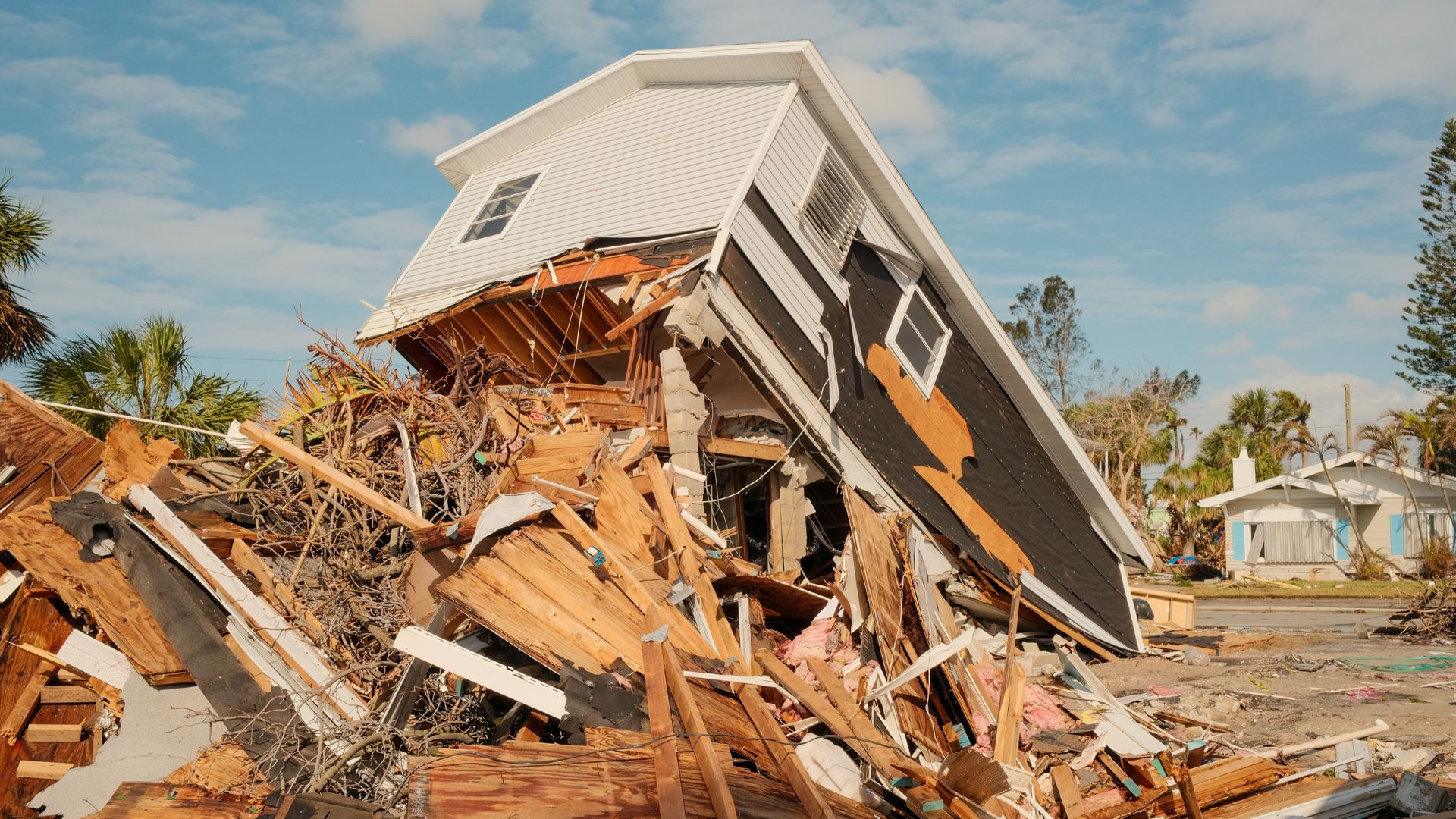
A home destroyed by Hurricane Milton in St. Pete Beach, Florida. Photo: Tristan Wheelock/Bloomberg via Getty Images
The devastation caused by Hurricane Milton and Hurricane Helene may be a wake-up call that shifting weather patterns caused by climate change could become a concern for places like Chicago.
Why it matters: The recent hurricanes caught many off guard and unprepared because they hit places that rarely experienced that weather pattern before.
The big picture: In the Midwest, climatologists and municipalities have grappled with tornadoes, heavy rain and even fires. But now, should they be concerned about shifting weather patterns bringing hurricanes up north?
Reality check: Yes and no.
What they're saying: "There are a lot of different types of extreme weather events," meteorologist Rick DiMaio tells Axios. "Hurricanes and tropical storms can move up into the Chicagoland area. We haven't seen a lot of those in the past, but I think you will definitely see more of them in the future."
Zoom in: Hurricanes feature heavy rain, flash flooding, tornadoes and gusts, which are similar to some of the weather events that rocked the Midwest this summer.
Yes, but: In Chicago, storms mostly move through quickly. Hurricanes and other tropical storms move much more slowly.
Flashback: Powerful hurricanes have already hit the Chicago area. In 2008, Hurricane Ike dropped 12 inches of rain in Northwest Indiana, causing massive flooding.
- "Tropical weather systems can produce winds up to 130 miles per hour," says DiMaio. "We used to think we'd never get there, but in 2020 we had a derecho come through with winds hitting close to 100 mph."
- "Those fast-moving systems are really the worst-case scenario for our area."
The latest: First responders from several Chicago suburbs have deployed to Florida, while many have just returned from North Carolina after helping with cleanup efforts there.
- The two hurricanes could cause an estimated $250 billion in damage.
The intrigue: Illinois can only prepare for so much weather. With resources already tight, Chicago has invested some cash into cleanup programs and has looked to the state and federal government to pitch in on recent storms.
- Over several decades, the city invested $3 billion for the infamous "Deep Tunnel" flood reservoir designed to mitigate local flooding. Some are concerned that it is already out of date due to climate change.
- "As a meteorologist, we've done geography profiles of our area and what it would look like in the year 2060," says DiMaio. "That seems far away, but right now it's only 35 years out. So cities have to bite the bullet and build out new flood systems or a flood prevention system soon."
The bottom line: Climate change is supercharging weather patterns, even moving them into areas that never experienced them before, forcing municipalities to find the resources to cope.