Chart of the day: Stubborn CPS segregation

Add Axios as your preferred source to
see more of our stories on Google.

Cook County hosts some of the most segregated schools in the country, driven largely by CPS, according to a new report looking at 2022 data.
Why it matters: Researchers have found school segregation disproportionately hurts Black and Latino students since those schools tend to have fewer resources, higher teacher turnover, and fewer advanced classes.
The big picture: Friday is the 70th anniversary of the landmark Brown v. Board of Education ruling — meant to end legal school segregation in the U.S.
- Yet new reports and an Axios review of federal data show that nationally many districts are catching up to CPS with dramatic segregation increases in K-12 public schools.
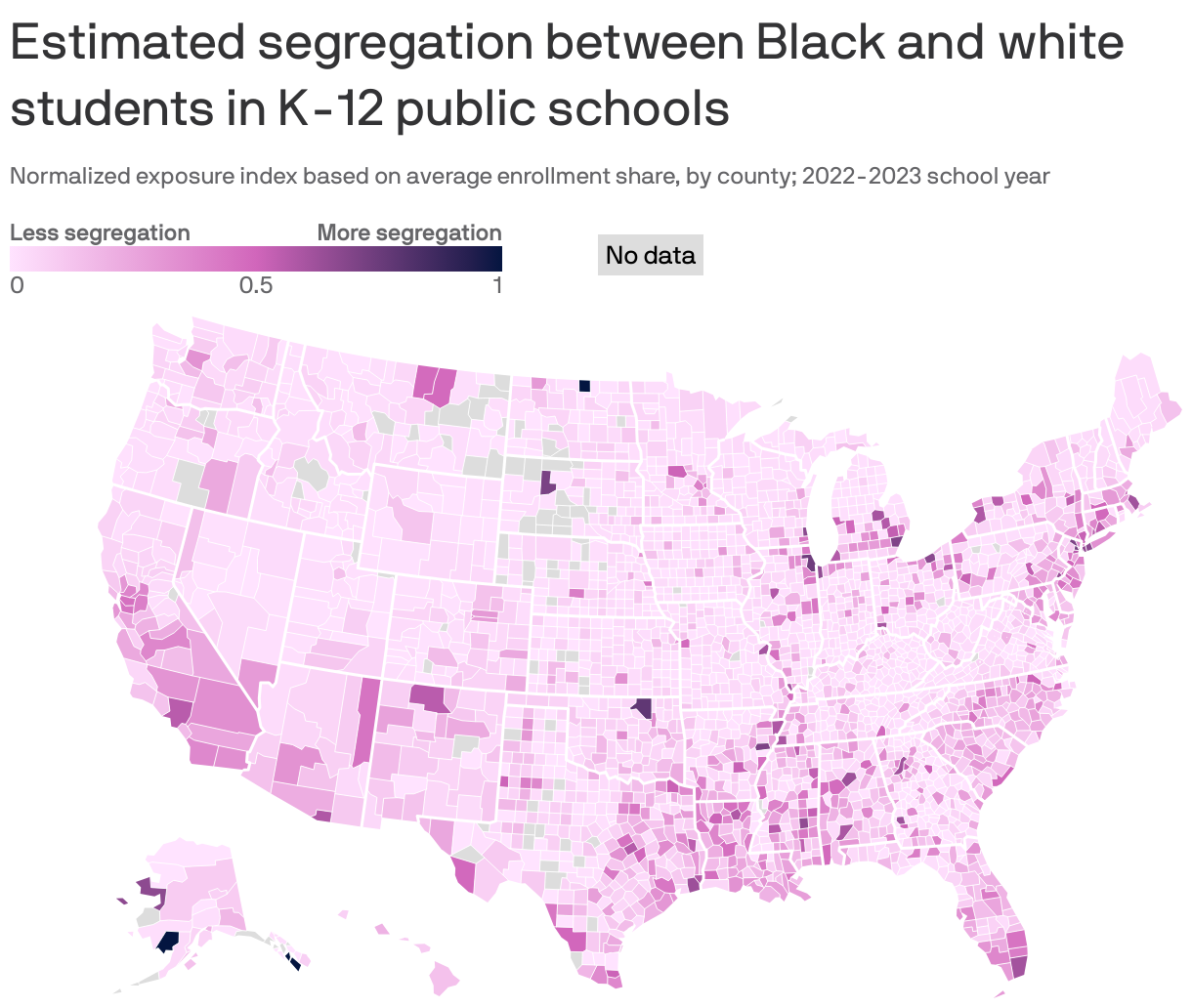
Zoom in: Segregation at CPS remained steadily high over the last three decades, peaking in 2013 and staying nearly the same rate through 2022, according to Stanford University researchers.
- Their analysis measures rates of exposure between students of different racial groups, showing the least exposure at CPS between white and Black students.
The intrigue: CPS magnet and selective enrollment schools were created, in part, to reduce segregation, but their demographics still don't reflect those of the district as a whole.
- Mayor Brandon Johnson and his new school board signaled they would try to change that with new funding formulas and shifting resources to neighborhood schools.
Yes but: State lawmakers are considering a bill that restricts selective funding cuts and freezes school closures, which could slow that process.