How Chicago will be impacted by the national Realtors lawsuit


Add Axios as your preferred source to
see more of our stories on Google.

Illustration: Sarah Grillo/Axios
The Chicago-based National Association of Realtors recently agreed to settle a big lawsuit that questions how real estate agents are paid — and who foots the bill.
The big picture: If approved, come summer, agents won't be able to make offers of compensation in the Multiple Listing Service, the database where agents post homes for sale.
Why it matters: The seemingly small change, which a court preliminarily approved last week, is causing major confusion.
How it works (currently): Sellers and their agent negotiate a fee, which is typically 5%-6% of the purchase price and is shared with the buyer's agent.
- That commission is advertised in the MLS listing, and the seller pays both agents from the home sale earnings.
- Many are concerned agents steer clients toward higher-fee deals.
Under the new rules, buyers and their agents would come to terms about payment upfront, antitrust lawyer Brian Schneider says.
- Illinois is already moving in that direction. A proposal to require contracts between agents and clients is working its way through the state legislature.
What they're saying: "Today's consumer wants more transparency, and they deserve that," says Laura Ellis, president of residential sales at Chicago-based Baird & Warner.
- It's one reason why the company's agents won't promote commission-sharing on their websites, or "anywhere, period," Ellis tells Axios.
- The brokerage is among several facing a copycat lawsuit over commissions, Crain's reported.
The big picture: Many industry professionals are worried about first-time buyers, most of whom can't afford to pay their agent out-of-pocket, says former Zillow exec and Tomo cofounder Greg Schwartz.
That means sellers aren't entirely off the hook. Buyers will likely ask sellers to make a concession so they can pay their agent at closing, according to Ellis, with Baird & Warner.
- Buyers' agents aren't going to work for free, Faron King, a VP with NAR, tells Axios.
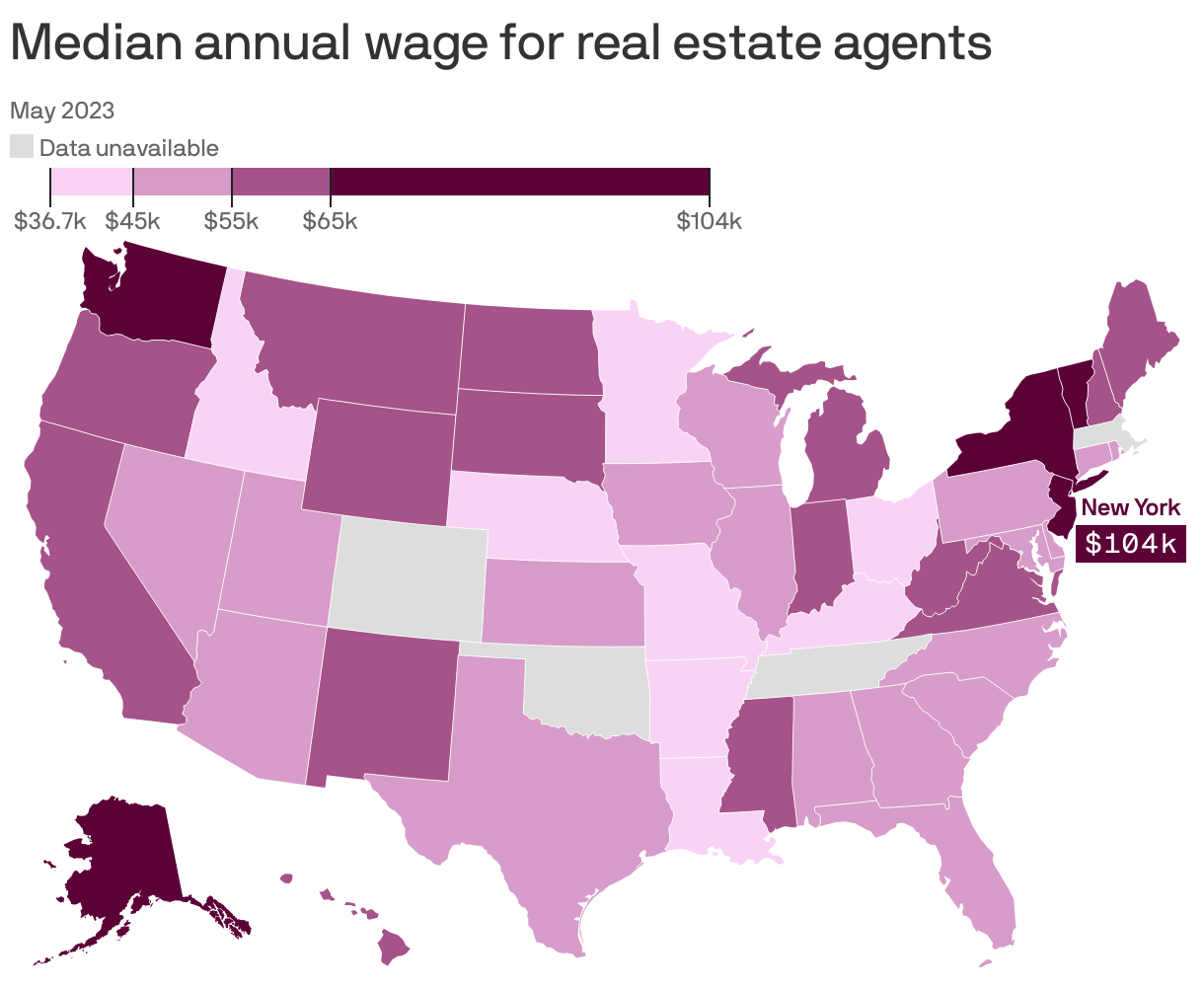
What's next: Most observers believe commissions will fall, possibly to 1%-1.5% per agent on each side, Axios' Emily Peck reports.
- Some see opportunities for new business models, from paying agents a flat fee to AI broker bots.
- Agents who can't demonstrate the value they bring clients, or those with less experience, might flounder.