Tuesday's health stories



WeightWatchers files bankruptcy amid weight-loss drugs disruption
WeightWatchers filed for Chapter 11 bankruptcy protection Tuesday, saying it plans to slash debt and stay in business.
Why it matters: The company has been grappling with sinking sales amid the surge of weight-loss drugs and changing health habits.

"Healthy" soda is popping, but not necessarily gut-friendly


Prebiotic soft drinks are popping off, but their "gut-friendly" health claims deserve a closer look.
Why it matters: Most prebiotic sodas contain the fiber inulin, which experts say can be hard to digest and — according to early animal studies and a case study — potentially carcinogenic.


RFK Jr. picks controversial doctor as top vaccine regulator
Vinay Prasad, a hematologist-oncologist known for at times scathing social media critiques of public health policy, will be the Food and Drug Administration's new top vaccine regulator, according to an email viewed by Axios.
Why it matters: The University of California San Francisco physician will succeed Peter Marks, who abruptly resigned as director of FDA's Center for Biologics Evaluation and Research in March, citing disagreements with Health Secretary Robert F. Kennedy Jr.

GOP faces Medicaid conundrum with clock ticking
Republicans in Congress want to make the biggest changes to Medicaid in its 60-year history. But politics and budget math are increasingly raising doubts about whether it's feasible to cut the program to pay for a giant tax package.
Why it matters: Medicaid's growth makes the program a prime target for federal funding cuts. But increased enrollment during the pandemic has also made the program popular enough with voters that it's become something of a political third rail, similar to Medicare.

Alzheimer's on the rise: Early signs to watch for in adults over 65
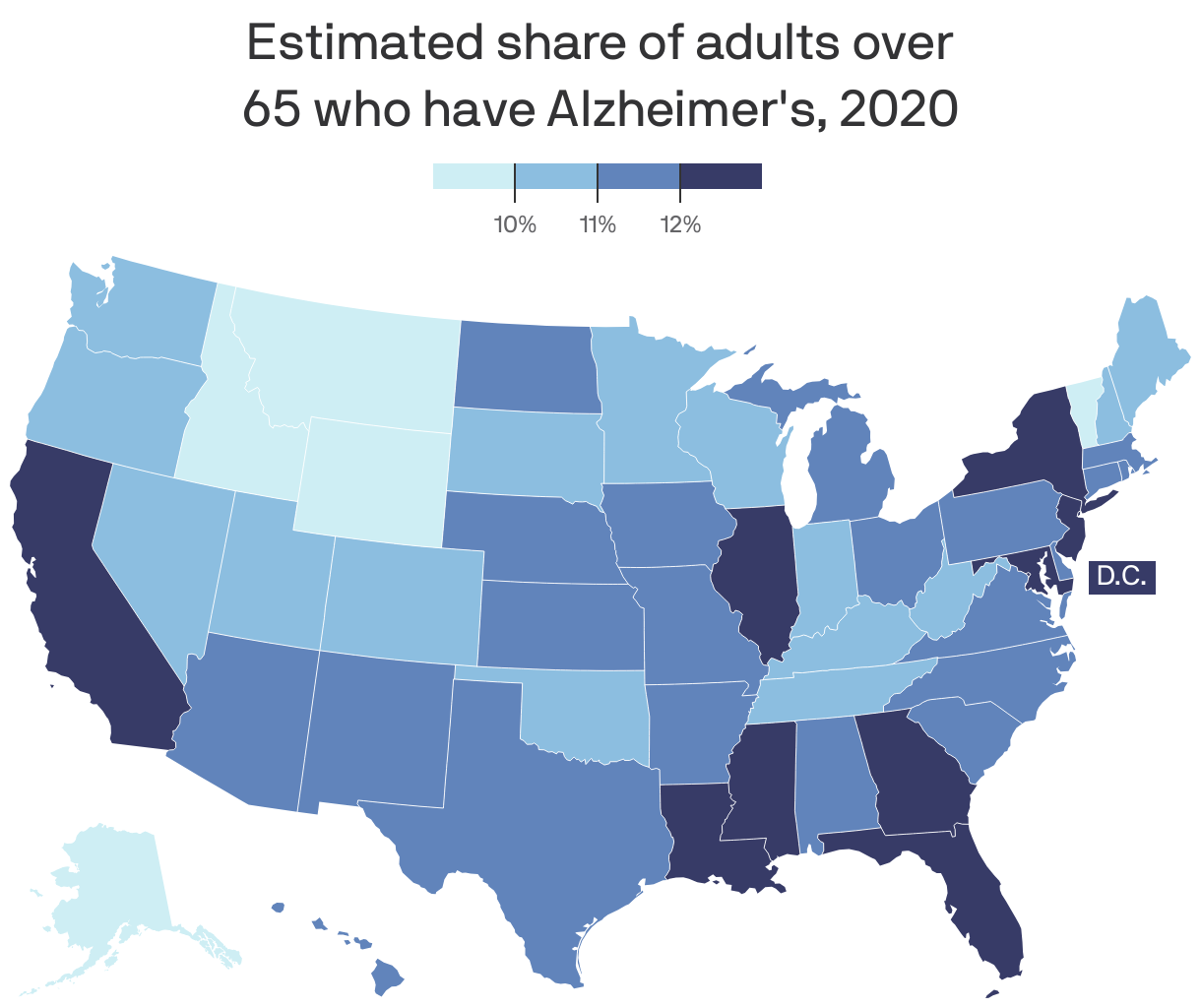
More than 7 million Americans over 65 are now living with Alzheimer's — the highest number ever recorded, per a new Alzheimer's Association report.
Why it matters: That means about one in nine people 65 and older (11%) have dementia believed to be caused by Alzheimer's — but addressing cognitive decline early can help stave off the disease.

Move over, oat milk: Lactose-free dairy is having a moment
The rising star of the dairy aisle: lactose-free milk, which is now more popular than plant-based alternatives.
Why it matters: Health-conscious consumers — many of them lactose intolerant — are redefining what "healthy milk" means and moving away from almond and oat drinks.
Trump order cuts funds for "gain-of-function" research
President Trump on Monday moved to cut off federal funding for so-called gain-of-function research and implied such work could have been responsible for triggering the COVID-19 pandemic.
Why it matters: A new executive order furthers the administration's theory that the virus originated from a lab leak in Wuhan, China. It specifically references "foreign research likely to cause another pandemic."
Trump administration urges court to dismiss abortion pill challenge
The Trump administration again defended the Food and Drug Administration's regulation of the widely used abortion drug mifepristone Monday, arguing in a legal filing that a case seeking to limit access to the pills should be dismissed.
Why it matters: It's the second time in two months the administration has defended FDA's regulation of the pills.

With millions in default on student loan payments, collections resume
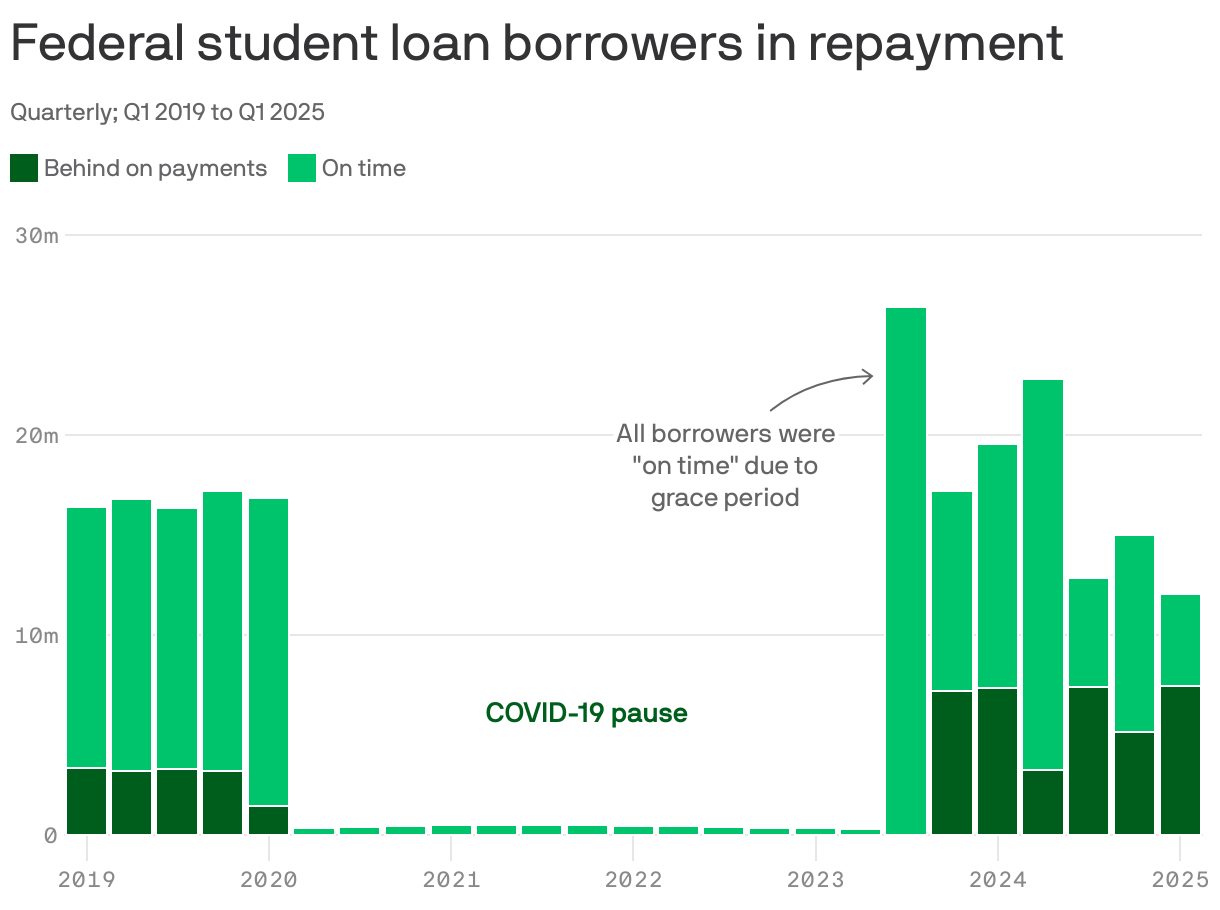
With millions of borrowers behind on student loan payments, the Department of Education on Monday will start referring those in default for debt collection.
The big picture: Some 5.3 million borrowers who are in default could see their wages garnished if they don't resume payments.

19 states sue RFK Jr. over HHS restructuring
Nineteen Democratic-led states plus the District of Columbia sued Health and Human Services Secretary Robert F. Kennedy Jr. on Monday, saying his ongoing reorganization of the federal health bureaucracy incapacitated core functions and deprived the states of federal funds and expertise.
The big picture: The lawsuit in U.S. District Court in Rhode Island alleges that Kennedy's structural changes stopped health agencies from carrying out legally required functions, including health hazard evaluations at workplaces, food safety inspections and infectious disease prevention.
- The attorneys general say HHS is violating the Constitution's requirements on separations of power and running afoul of administrative procedure laws.
- "Dismantling HHS by terminating the people necessary for it to meet its own mandates, and paralyzing it by means of a confusing reorganization, is an unlawful effort to undercut the will of Congress who ordered the agencies and programs to run," the complaint reads.
The complaint was filed by New York, Washington, Rhode Island, Arizona, California, Colorado, Connecticut, Delaware, Hawai'i, Illinois, Maine, Maryland, Michigan, Minnesota, New Jersey, New Mexico, Oregon, Wisconsin, Vermont and the District of Columbia.
Context: Kennedy in late March announced that he'd consolidate 28 HHS divisions into 15 offices, including a new office called the Administration for a Healthy America. He said the move would streamline functions and cut costs.
- The plan required placing on administrative leave and eventually firing 10,000 HHS employees, on top of about 10,000 who voluntarily left the agency since the start of the year.
- Some employees placed on leave have been asked back to work.
The complaint asks a judge to stop HHS from implementing Kennedy's restructuring plan.
- HHS did not immediately respond to a request for comment.
Zoom out: Twenty-three states in April separately sued HHS for clawing back more than $11 billion in public health grants to state and local health departments without warning.
- A federal judge in Rhode Island has temporarily blocked the grant moves while litigation continues.

Out-of-pocket drug spending hit $98B in 2024: report
Americans spent $98 billion out of pocket on prescription drugs in 2024, marking a cumulative 25% increase over five years, according to an annual report from analytics firm IQVIA.
Why it matters: Lowering prescription drug costs remains a priority for both Democrats and Republicans.
- The Biden administration led Congress in passing a landmark legislative package to negotiate select drug prices for seniors and redesign Medicare Part D. President Trump is continuing the focus, and recently signed an executive order aimed at further cutting drug prices.
What they found: Net spending on medicine rose 11.4% in 2024 to $487 billion. Prescription costs on average were flat compared with 2023, but there was greater use of medicines with significant clinical benefits, IQVIA said.
- More than one-quarter of new prescriptions were not filled in 2024, mostly because they aren't covered by insurers.
- Payer rejections may be driven by factors like prior authorization requirements or formulary decisions, but nearly half of those rejections are overcome either by the patient switching to a secondary insurer, paying cash, or adding a coupon, per IQVIA.
- Looking ahead, total net spending on medications in the U.S. will exceed $600 billion by 2029, with obesity and oncology drugs driving growth, IQVIA estimates.
Zoom out: Prescription medicine use increased 1.7% last year, the report found.
- The number of retail and long-term care prescriptions reached 7.1 billion, a nearly 1 billion increase since 2019. But growth in dispensed prescriptions in 2024 was slower than during the previous two years.
Stunning stats: Prescription opioid use fell to the lowest level since 1999, and overdose deaths decreased 29% in 2024.
- Separately, vaccination levels are between 15% to 39% lower than in 2019, depending on the vaccine.
- An investor note on the report from Leerink Partners said Health and Human Services Secretary Robert F. Kennedy Jr.'s agenda may further depress vaccine uptake.
The real longevity breakthroughs are already here
Silicon Valley billionaires like Sam Altman, Peter Thiel and Jeff Bezos are pouring billions into ventures trying to slow or reverse the aging process, wagering that reprogrammable cells and AI-driven drug design can deliver a fountain of youth — or at least ward off death.
- Physician-researcher Eric Topol offers this dose of reality: The real game-changers are already here.
The big picture: In "Super Agers," his new book due out Tuesday, the founder of the Scripps Research Translational Institute writes that the answer doesn't lie in turning back time, but in harnessing our improved capabilities to predict and prevent chronic diseases.