Abortion won't be on the Arkansas ballot this November.
State of play: The state Supreme Court blocked a proposed constitutional amendment when it ruled Thursday that Secretary of State John Thurston was justified in disqualifying petitions to allow the measure on the general-election ballot.
The big picture: This is the second time in just over two years that the WHO has declared mpox — previously known as monkeypox — to be a global emergency.
California lawmakers are debating whether to go where Congress won't and pass legislation that would give the state the ability to block private equity acquisitions of health care facilities or providers.
Why it matters: It's the latest example of states trying to regulate deals valued at $1 trillion over the past decade that critics have linked to staffing shortages and poorer patient outcomes.
Hospitals and other health providers will shift their attention to how states opt to police non-compete agreements now that a federal court has blocked a Federal Trade Commission ban on the widely used contracts.
Why it matters: The FTC's contentious effort had far-reaching implications for health care — and raised the profile of an issue that was already getting attention in statehouses, experts say.
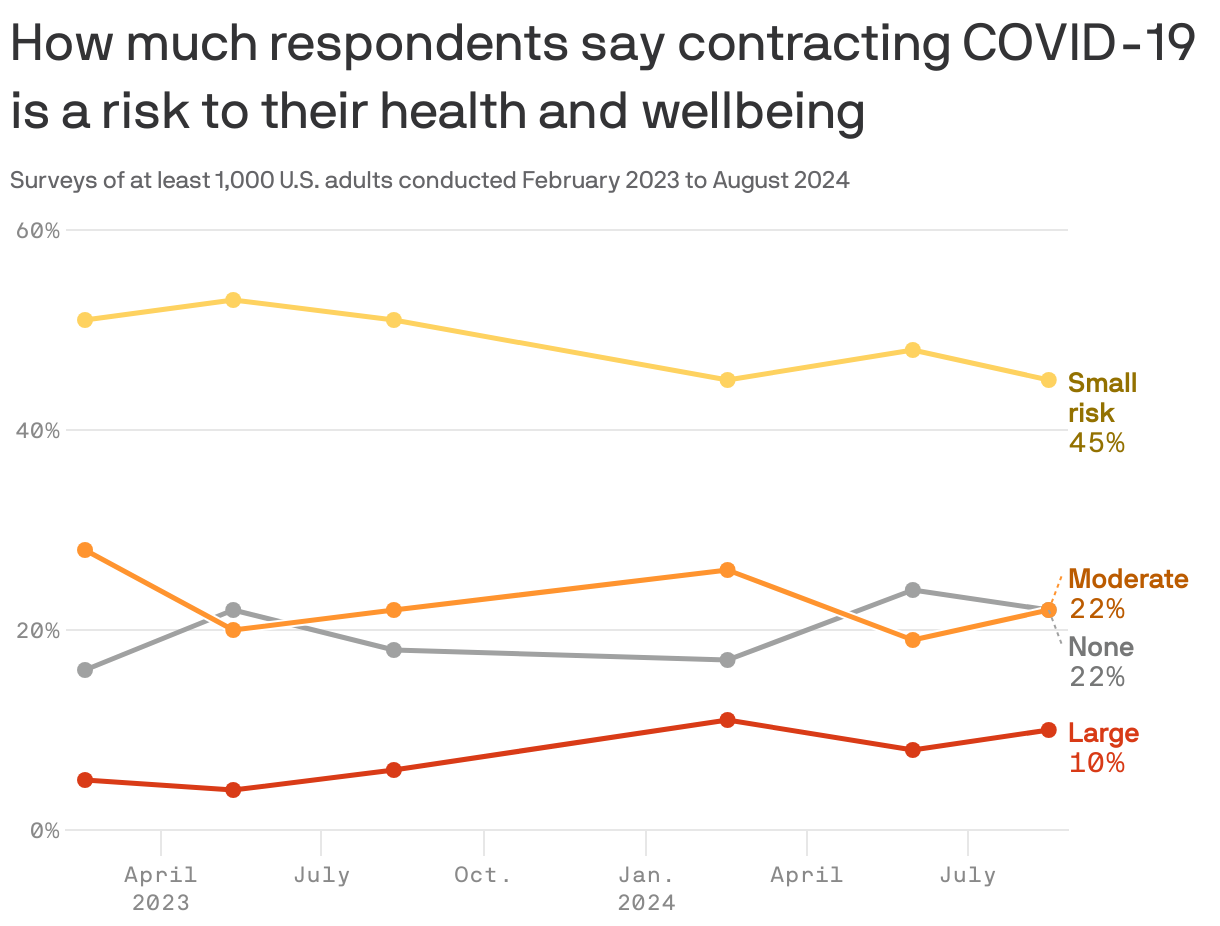
Nearly one-third of Americans see COVID as a threat to their health, but the summertime wave of infections hasn't changed the widespread belief that the virus is no worse than seasonal flu, according to the latest Axios-Ipsos American Health Index.
Why it matters: Comparing COVID to the flu was once an incendiary political talking point. Now, it's where many people have landed.
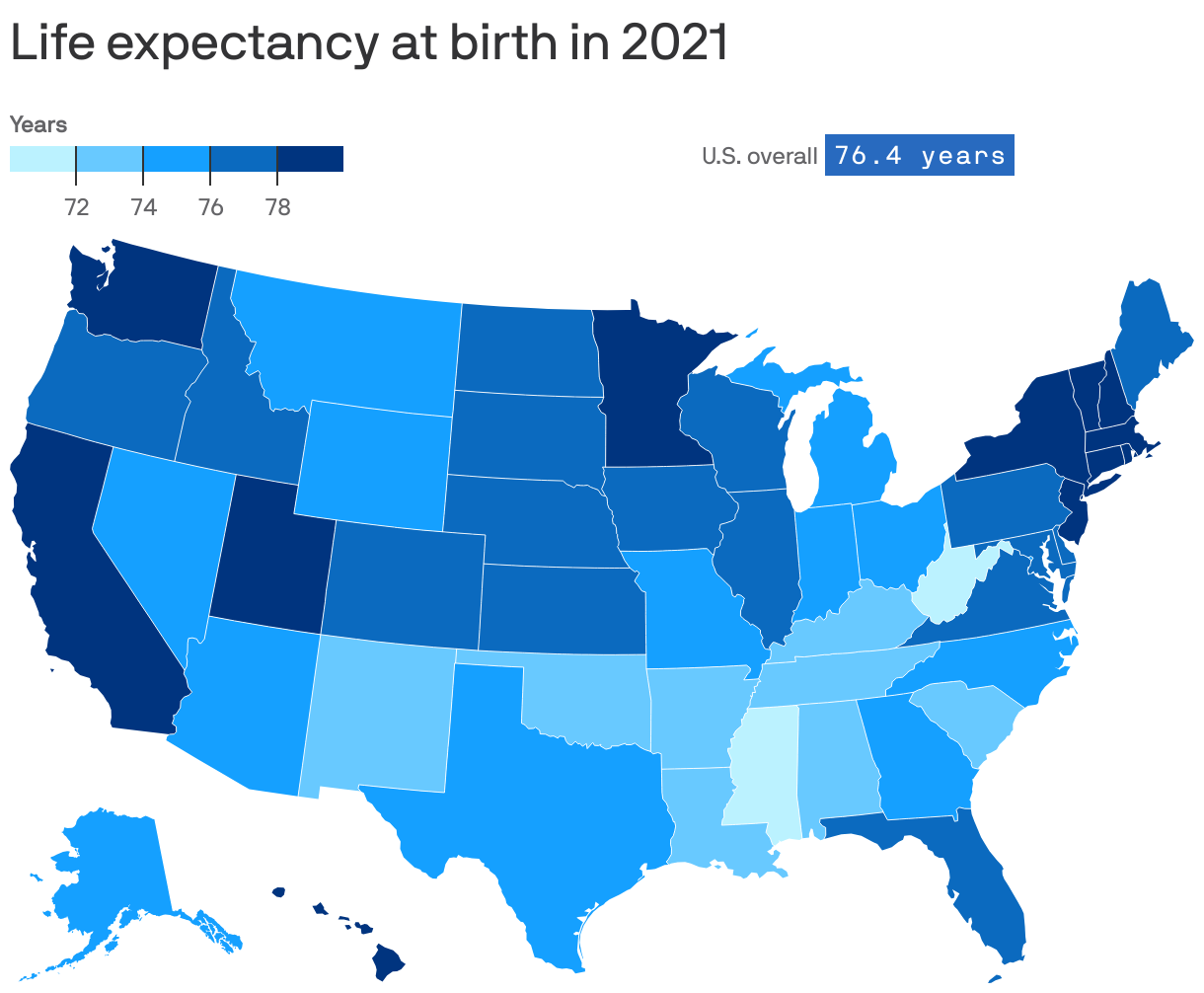
There's as much as a nearly 10-year difference in life expectancy between U.S. states, a new report finds.
By the numbers: Hawaii (79.9 years), Massachusetts (79.6) and Connecticut (79.2) have the longest life expectancy at birth as of 2021, per a new Centers for Disease Control and Prevention analysis.
A bipartisan group of House lawmakers is scrutinizing hundreds of clinical trials they say U.S. drug companies conducted with medical centers connected to China's military over the last decade.
Why it matters: An Aug. 19 letter the group sent to Food and Drug Administration commissioner Robert Califf about the collaborations broadens the scope of congressional inquiries into Beijing's role in drug development ahead of an anticipated vote on banning select Chinese biotech companies from doing work in the U.S.
Rising cancer rates among younger workers are a new factor clouding employers' health cost outlook, per a major benefits survey released Tuesday.
Why it matters: Cancer was the most reported condition driving up health care costs in 2024, followed by musculoskeletal and cardiovascular conditions.
Surging demand for blockbuster GLP-1 weight-loss drugs like Wegovy and Ozempic is helping drive up the cost of workplace insurance, leading some to predict pared-down benefits next year.
Why it matters: Employers have been reluctant to pass on health cost increases to workers in a tight labor market, but ever-rising demand for costly care could finally force a reckoning, experts say.
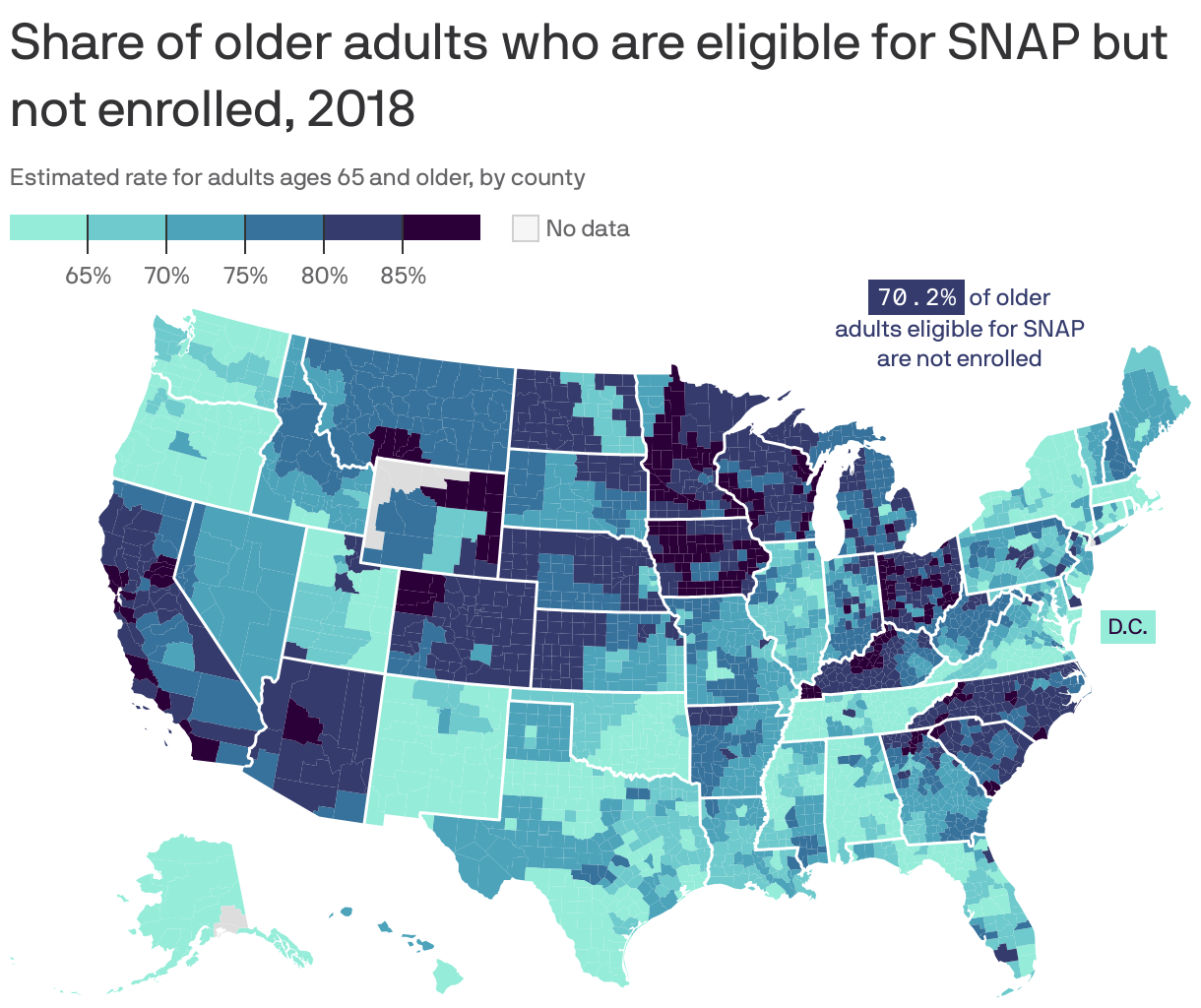
Data: National Council on Aging and Urban Institute; Map: Kavya Beheraj/Axios
Nearly three-quarters of older Americans eligible for a key federal food assistance program are not taking part, a new report finds.
Why it matters: TheSupplemental Nutrition Assistance Program (SNAP), formerly known as the Food Stamp Program, can help low-income Americans afford today's sky-high grocery bills — but those qualifying need to apply.
Montana voters will cast ballots on whether to enshrine abortion rights protections into the state's constitution in November, per an online post from the state's top election official Tuesday.