Medicare Advantage insurers could get hundreds of millions of dollars in bonuses this year after federal officials said they would recalculate the program's quality ratings.
Why it matters: The move is a win for insurers like UnitedHealth and Humana, who've threatened to cut benefits available to seniors next year in the face of rising costs and decreased base payments.
Abortion pill access saw a win at the Supreme Court this week, but the fight to curtail them likely isn't over.
Why it matters: Anti-abortion advocates know how to work the court system. The Supreme Court didn't rule on the merits of the high-profile case involving the pill mifepristone this term, leaving a path open for further challenges.
When I've asked CEOs what they see as the wild card that will shape health care's future, almost all of them have mentioned emerging technology, especially AI.
Why it matters: AI and other scientific and technological breakthroughs could radically change the care available to patients while solving some of the health system's most vexing or existential problems.
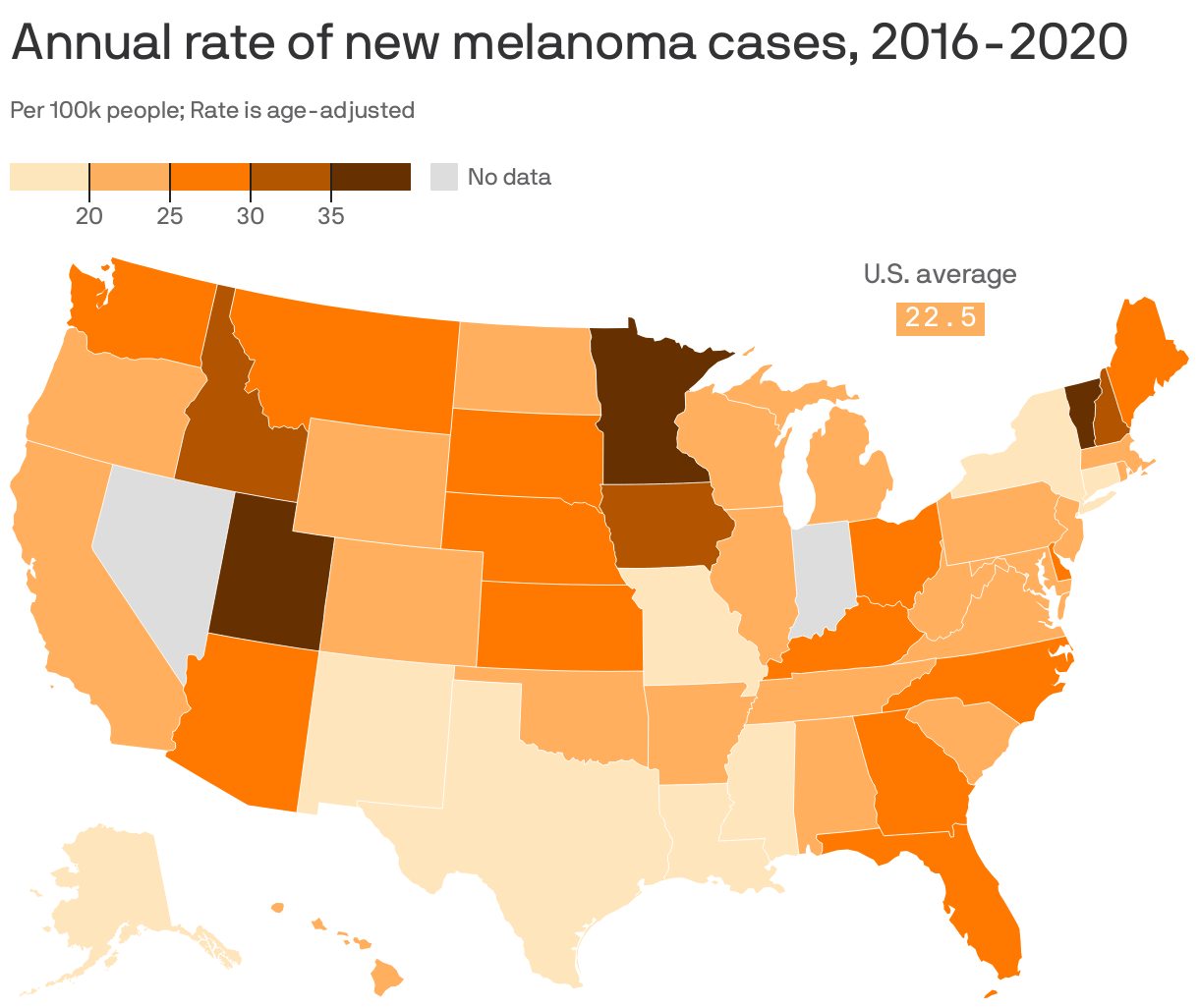
Why it matters: Although melanoma accounts for only about 1% of skin cancers, it's responsible for the large majority of skin cancer deaths, according to the American Cancer Society (ACS).
Senate Republicans on Thursday blocked a bill aimed at ensuring federal protections for in vitro fertilization (IVF), as Senate Majority Leader Chuck Schumer (D-N.Y.) forced them to take another difficult vote on a hot-button election issue.
Why it matters: Democrats are trying to hold Republicans' feet to the fire on reproductive rights two years after the Supreme Court overturned Roe v. Wade and ahead of the 2024 elections. The GOP is trying to dodge those bullets.
Why it matters: Rejecting the highly anticipated case preserves access to mifepristone but allowed the court to skirt making a ruling on the merits of the case.
Why it matters: Nearly two years after its seismic Dobbs decision, which ended the right to federal abortion in the U.S., the Supreme Court tossed a challenge aimed at curtailing mifepristone access.
Ransomware attacks against health care organizations surged following the hack of Change Healthcare that crippled much of the U.S. health care system, according to cybersecurity firm Recorded Future.
Why it matters: The uptick, first reported by Wired, suggests that the $22 million Change's parent, UnitedHealth Group, paid out to hackers to unlock its systems may have emboldened bad actors to further target the vulnerable industry.
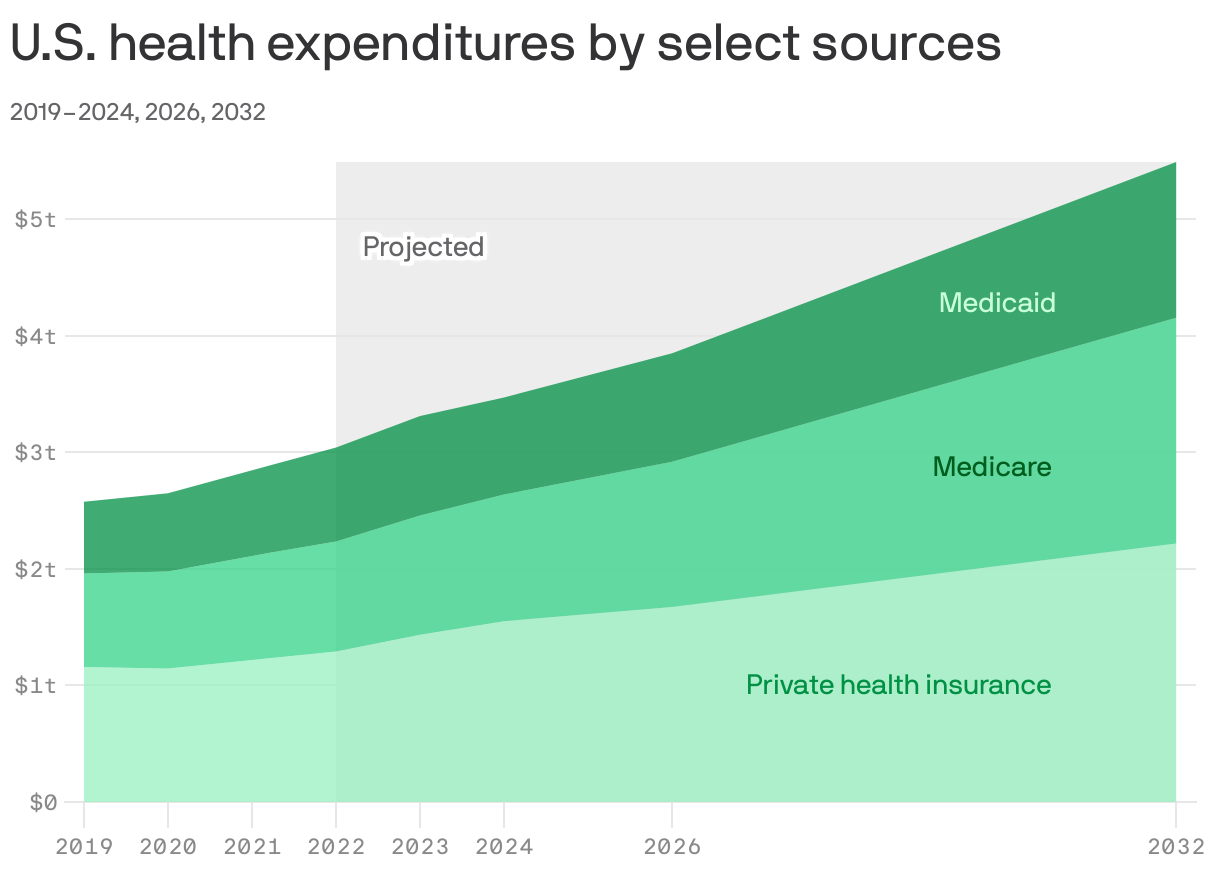
Growing demand for care, record levels of insured patients and swelling Medicare enrollment will drive up annual health care spending to $7.7 trillion by 2032, up from $4.8 trillion last year, according to new projections from federal actuaries.
Why it matters: Health care spending is projected to grow 5.6% per year over the course of a decade, outpacing expected annual inflation of 4.3%.
Congress is making another attempt at requiring Medicare insurers to speed up reviews of requests to cover treatments after an earlier effort was derailed by its high price tag.
Why it matters: A bipartisan bill taking aim at a practice detested by patients and doctors has a much better shot at passage after lawmakers made changes that will slash its cost to the federal government.

















/2024/06/12/1718211529199.gif?w=3840)