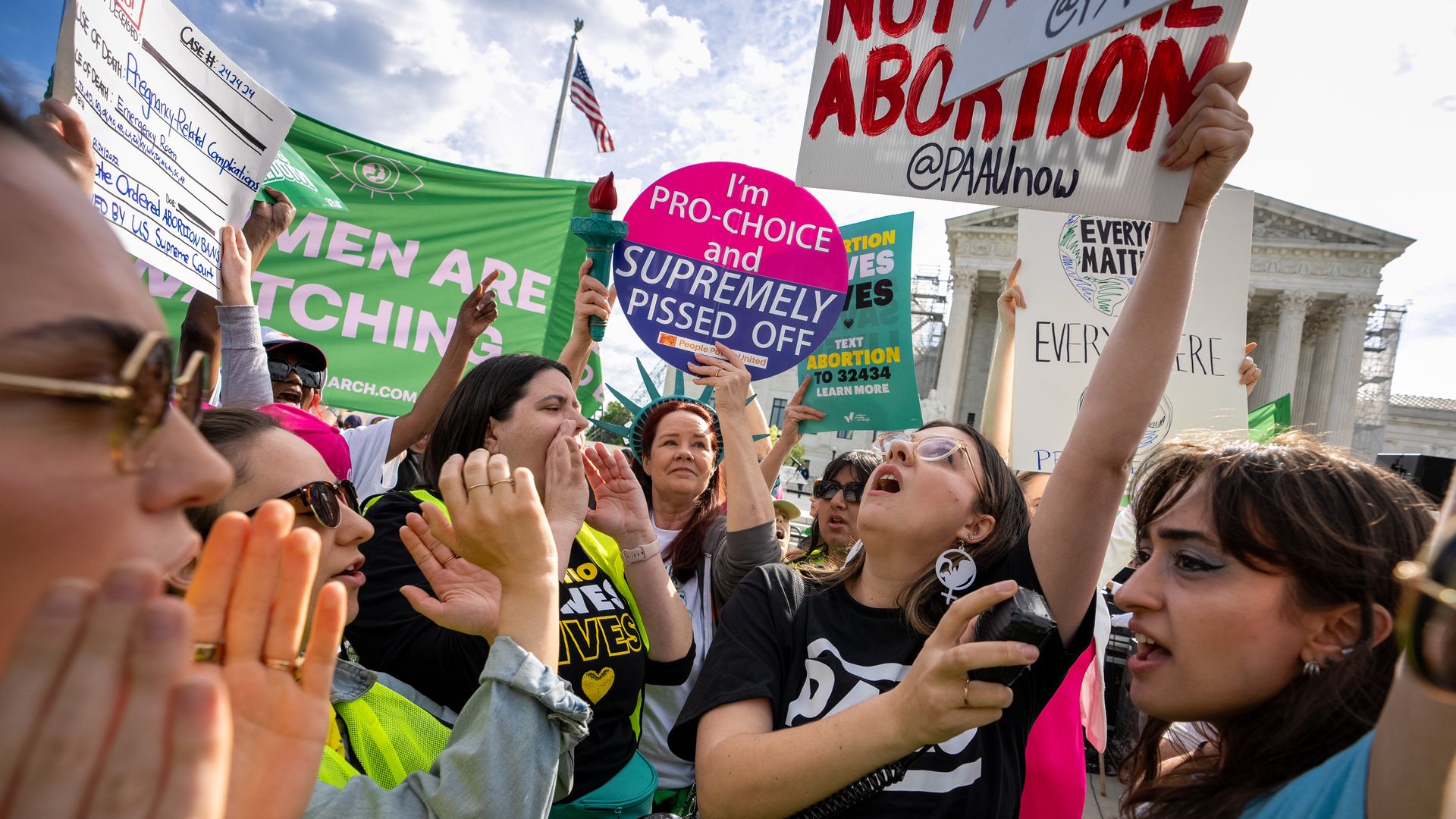
Senate Republicans on Thursday blocked a bill aimed at ensuring federal protections for in vitro fertilization (IVF), as Senate Majority Leader Chuck Schumer (D-N.Y.) forced them to take another difficult vote on a hot-button election issue.
Why it matters: Democrats are trying to hold Republicans' feet to the fire on reproductive rights two years after the Supreme Court overturned Roe v. Wade and ahead of the 2024 elections. The GOP is trying to dodge those bullets.
Why it matters: Rejecting the highly anticipated case preserves access to mifepristone but allowed the court to skirt making a ruling on the merits of the case.
Why it matters: Nearly two years after its seismic Dobbs decision, which ended the right to federal abortion in the U.S., the Supreme Court tossed a challenge aimed at curtailing mifepristone access.
Ransomware attacks against health care organizations surged following the hack of Change Healthcare that crippled much of the U.S. health care system, according to cybersecurity firm Recorded Future.
Why it matters: The uptick, first reported by Wired, suggests that the $22 million Change's parent, UnitedHealth Group, paid out to hackers to unlock its systems may have emboldened bad actors to further target the vulnerable industry.
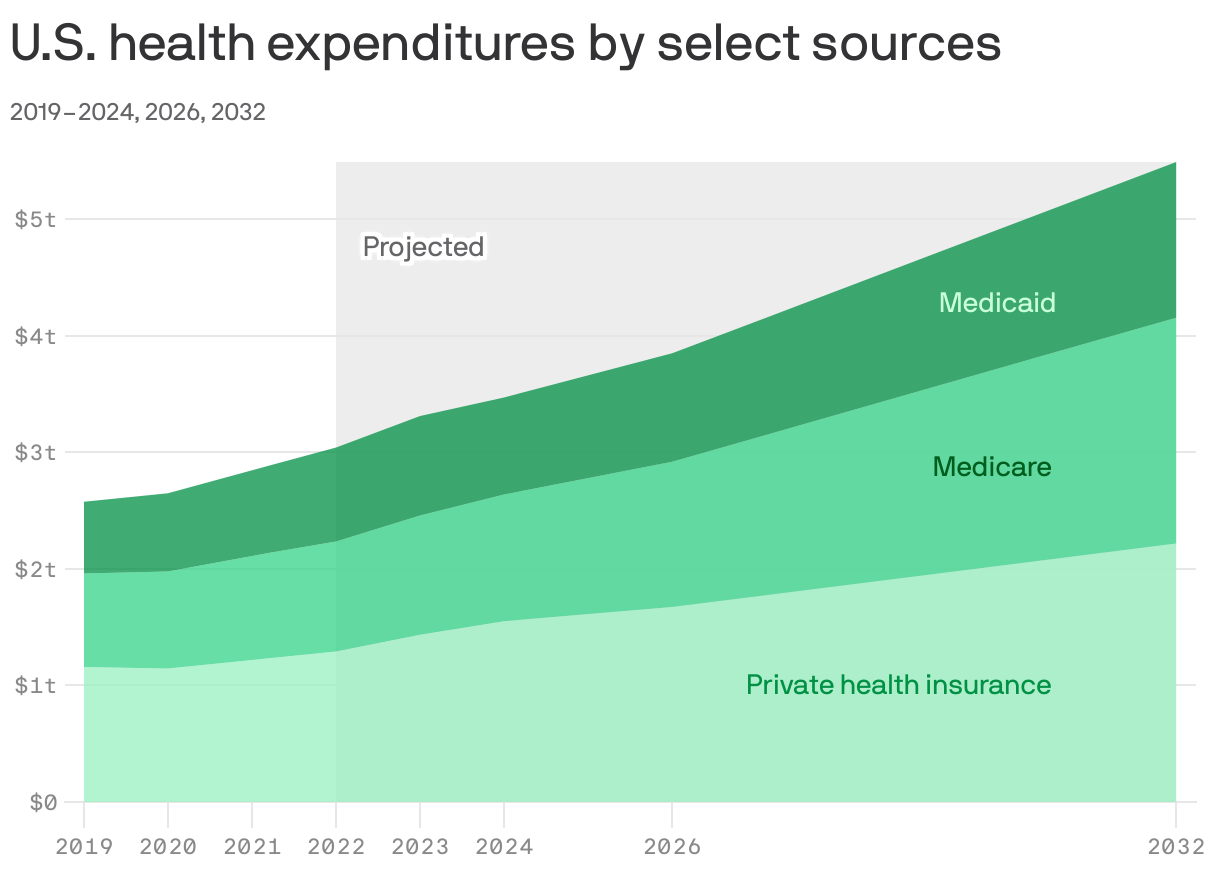
Growing demand for care, record levels of insured patients and swelling Medicare enrollment will drive up annual health care spending to $7.7 trillion by 2032, up from $4.8 trillion last year, according to new projections from federal actuaries.
Why it matters: Health care spending is projected to grow 5.6% per year over the course of a decade, outpacing expected annual inflation of 4.3%.
Congress is making another attempt at requiring Medicare insurers to speed up reviews of requests to cover treatments after an earlier effort was derailed by its high price tag.
Why it matters: A bipartisan bill taking aim at a practice detested by patients and doctors has a much better shot at passage after lawmakers made changes that will slash its cost to the federal government.
Baltimore said the new $45 million dealAllergan struck with the city to settle opioid claims validated its decision not to participate in the global settlement joined by thousands of other local governments and states.
Baltimore, whose devastation by the opioid epidemic has been spotlighted by the New York Times in recent weeks, said it would have received just $7 million over 7 years if it had joined the global settlement.
Instead, Baltimore said it's getting more than the $38 million Maryland is receiving from the company — and it will immediately get the money as a lump sum.
What's next: Baltimore said its remaining opioid lawsuits are with companies responsible for the vast majority of prescription painkillers in the city's pharmacies.
The Biden administration on Tuesday moved to prevent medical debt from affecting people's credit scores, potentially leading to $49 billion in liabilities being wiped from 15 million Americans' credit reports.
Why it matters: Officials said the proposed rule from the Consumer Financial Protection Bureau was linked to broader economic concerns, such as home ownership, and would prevent lending decisions from being based on a person's medical circumstances.
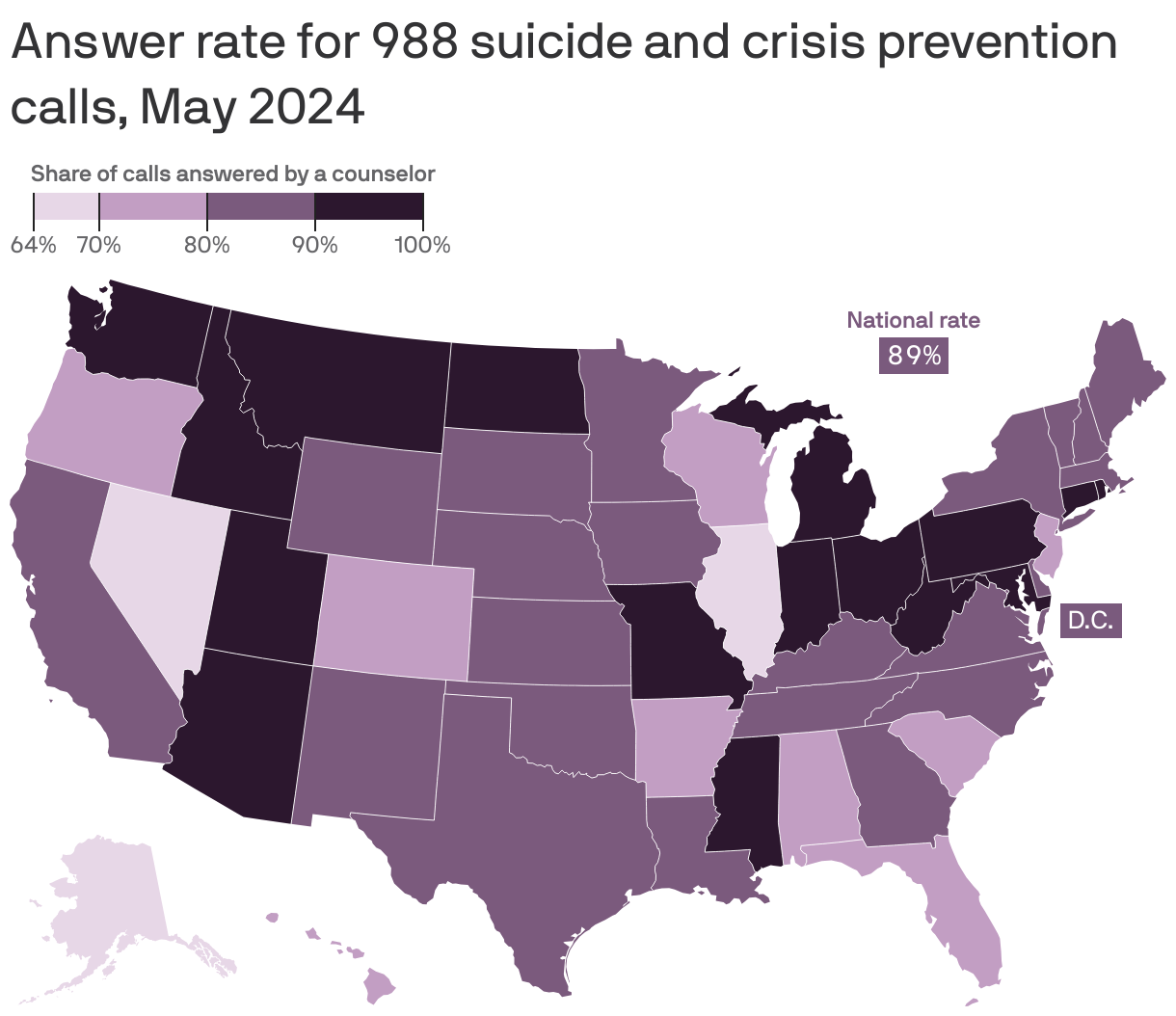
Almost two years after the debut of a revamped national suicide hotline, its promise of a quicker, more seamless crisis response across the country is still a work in progress.
Why it matters: Congress gave states $1 billion to build out the 988 hotline, amid nationwide concern over worsening mental health, with the expectation that states would establish their own long-term funding to operate call centers and crisis services.








/2024/06/12/1718211529199.gif?w=3840)