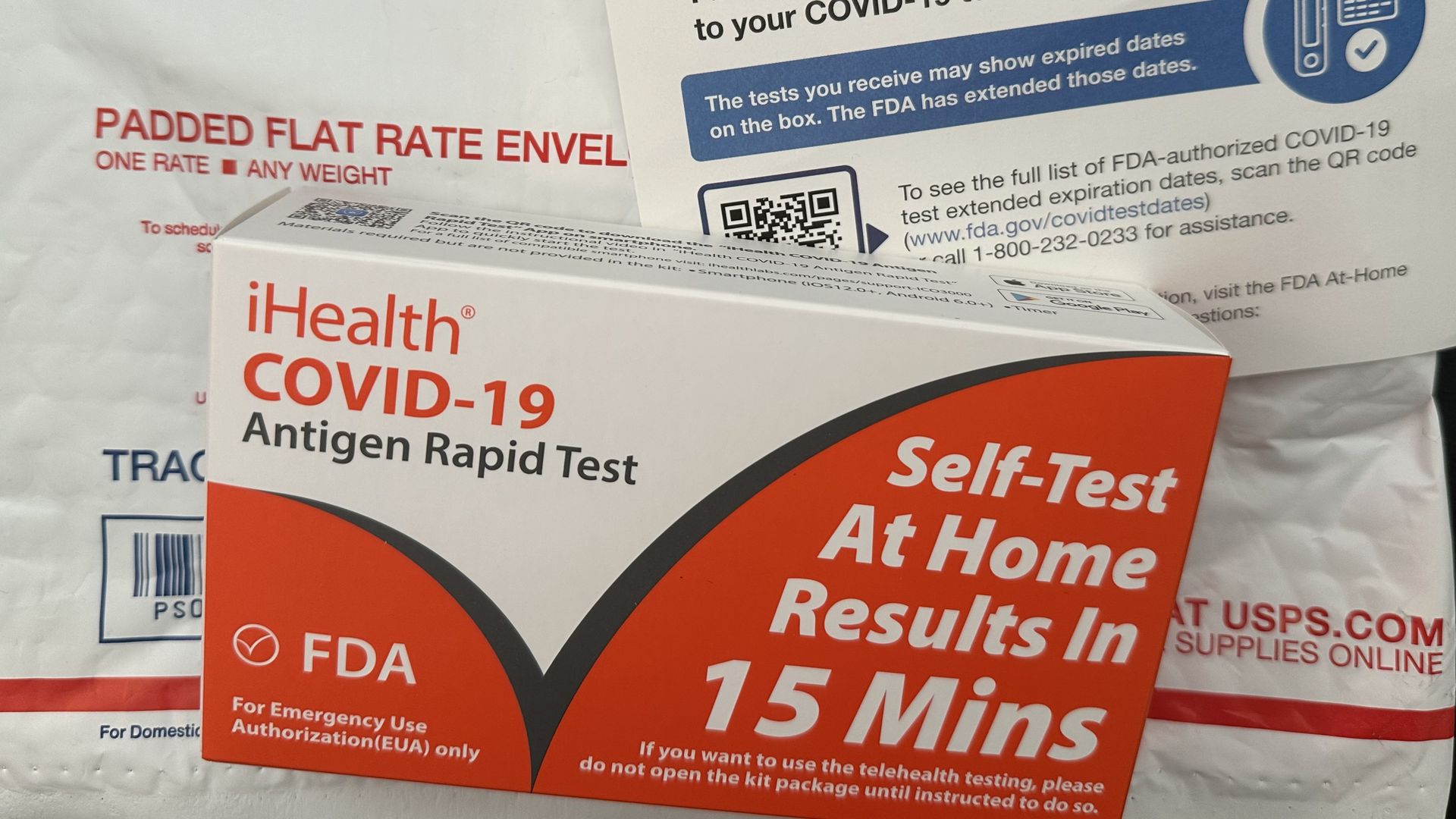
Why it matters: Cases have been falling as the respiratory virus season winds down. But hundreds of people are still dying from COVID-19 every week, according to CDC data.
Two Alabama IVF clinics say they are reopening after Gov. Kay Ivey late Wednesday signed legislation to insulate providers from legal claims in the wake of a court ruling on the status of frozen embryos.
Why it matters: The Alabama Supreme Court decision that embryos are children prompted a scramble for a legislative fix and put Republicans nationwide in the hot seat, facing charges they were interfering with reproductive rights.
The Food and Drug Administration is warning that select ground cinnamon products sold at some discount stores contain "elevated levels of lead."
Why it matters: The federal agency said in a safety alert Wednesday that consumers should throw away the affected spice products, which were sold at retailers such as Dollar Tree, Family Dollar and Save A Lot.
About 11,000 infants and young children landed in hospital emergency departments between 2019 and 2022 because they accidentally ingested melatonin, the Centers for Disease Control and Prevention reported today.
Why it matters: More unsupervised pediatric exposure to the sleep aid coincides with a major uptick in adult use.
About 1 in 8 voters say abortion is the top factor influencing how they'll vote in the 2024 elections, with the issue resonating particularly with Black and Democratic women and those ages 18 to 49, a new KFF tracking poll finds.
Why it matters: It's further evidence of how the overturning of Roe v. Wade has fired up the reproductive health debate and left abortion foes struggling to respond.
President Biden will use Thursday night's State of the Union address to again claim credit for lowering Americans' drug costs — something the public just isn't willing to concede.
Why it matters: While policies around cheaper medicines poll extremely well with voters, Biden hasn't been able to squeeze political juice from Medicare price negotiations, out-of-pocket caps and other policies on his watch.
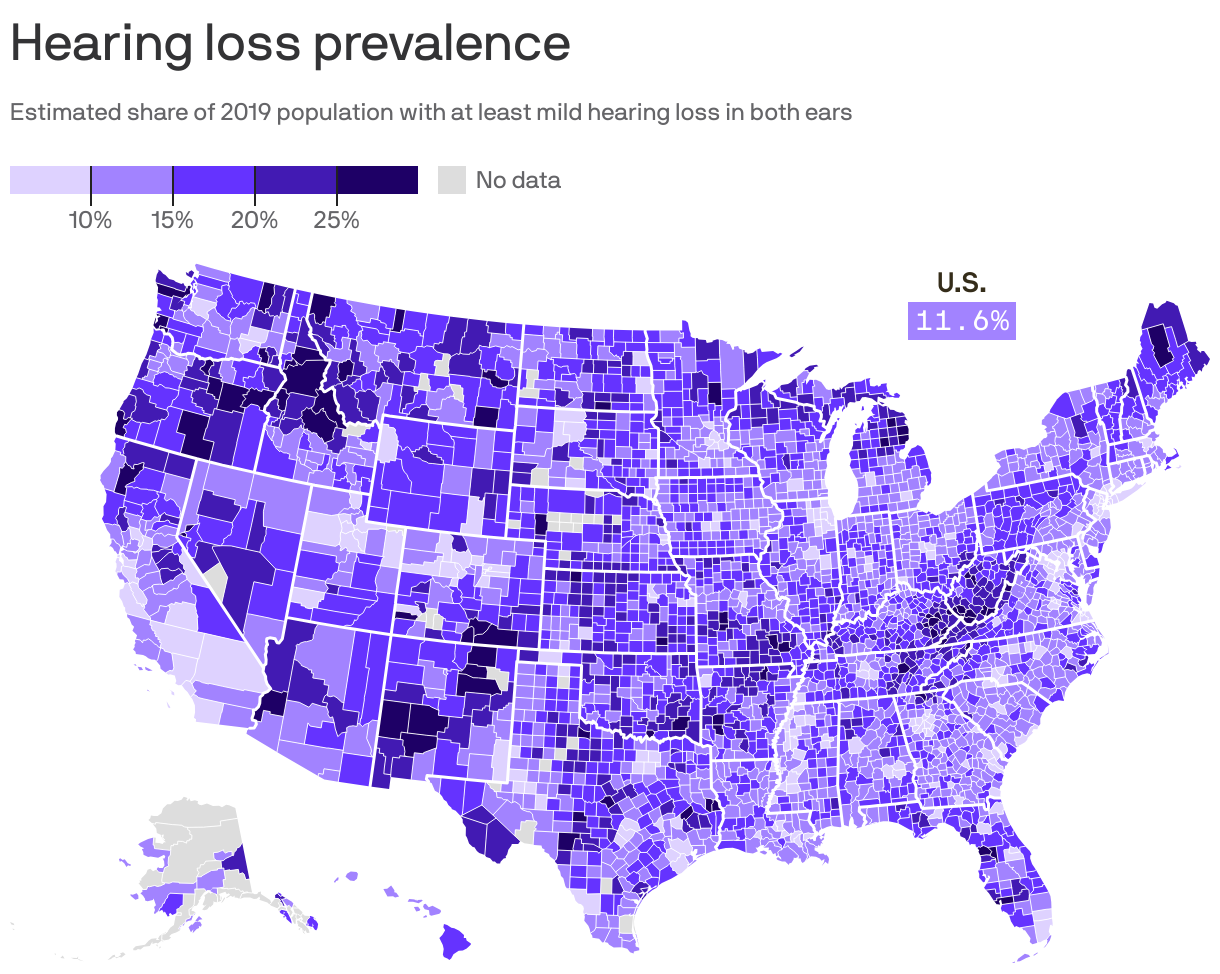
Hearing loss is more common in rural areas than urban ones, according to a recent study seeking to estimate the condition's prevalence down to the county level.
Why it matters: It's a surprising finding, given cities' reputations as awash in constant noise from cars, buses, firetrucks, etc. — and one with important public health implications.
Alabama Gov. Kay Ivey (R) signed into law a bill designed to protect in vitro fertilization patients and doctors from prosecution on Wednesday, following a state Supreme Court ruling that said frozen embryos are considered unborn children.
An independent lab asked the U.S. Food and Drug Administration (FDA) in a petition on Tuesday to recall a group of acne products that could potentially contain elevated levels of cancer-causing benzene.
Why it matters: The lab said the carcinogen was present due to the breakdown of benzoyl peroxide, one of the most ubiquitous ingredients in over-the-counter topical acne treatments.
An FDA advisory panel on Tuesday voted unanimously for a recommendation that the agency adopt a modified flu vaccine for next fall that could make it easier for manufacturers to increase supplies.
The big picture: The panel's recommendation would turn the quadrivalent flu vaccine into a trivalent vaccine — dropping a specific strain that has not been detected since 2020.
When Cerberus Capital Management bought an unprofitable Massachusetts hospital chain in 2010, many viewed the deal as a financial lifeline. Now some believe it was actually a noose.
Why it matters: The company, which Cerberus sold four years ago, is in severe distress and may close facilities, threatening care for thousands of patients, most of whom live in lower-income areas.
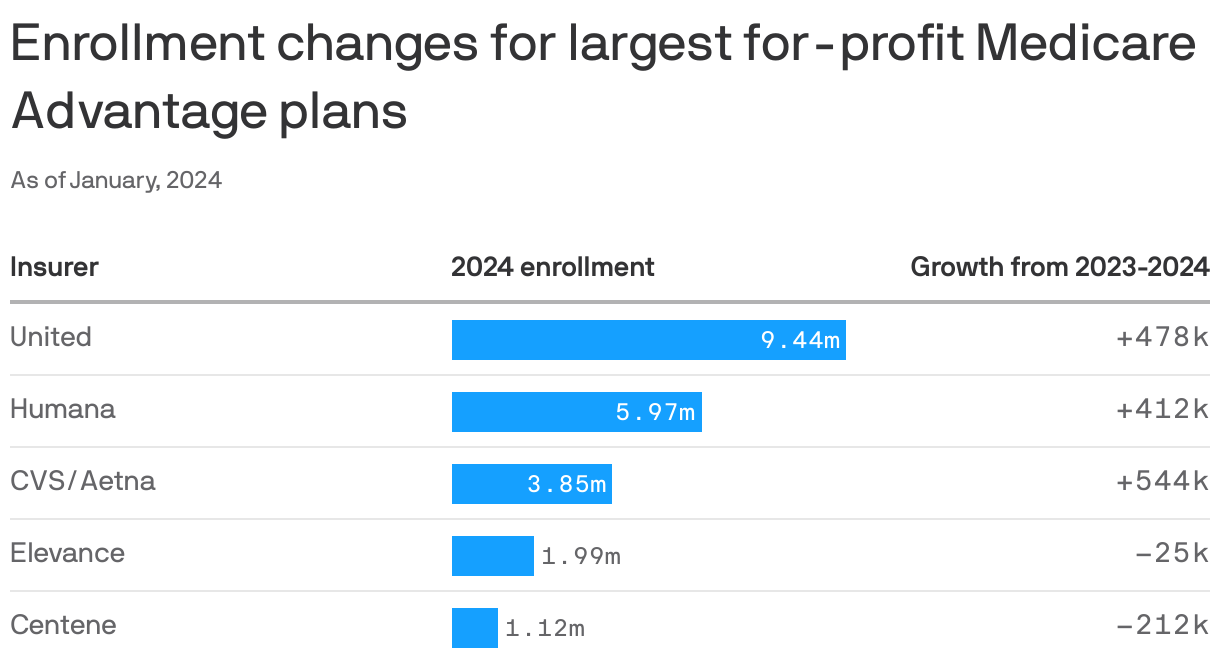
For-profit insurers led by CVS Health's Aetna are gobbling up the majority of new Medicare Advantage patients, despite new restrictions on marketing, higher medical costs and other headwinds, a new analysis of enrollment data found.
Why it matters: An aging population and the perceived attractiveness of MA plans over traditional Medicare bode well forthebig insurers, while nonprofit health plans like Blue Cross Blue Shield are seeing market share slip.
Why it matters: Patients left scrambling to determine if insurance will cover drugs or treatmentscould seek damages from the UnitedHealth Group subsidiary, whose stricken payment network is a mainstay of hospitals, pharmacies and physician offices and processes 15 billion transactions annually.













/2024/03/04/1709575467827.gif?w=3840)