Drug negotiations could save seniors hundreds of dollars: study

Add Axios as your preferred source to
see more of our stories on Google.
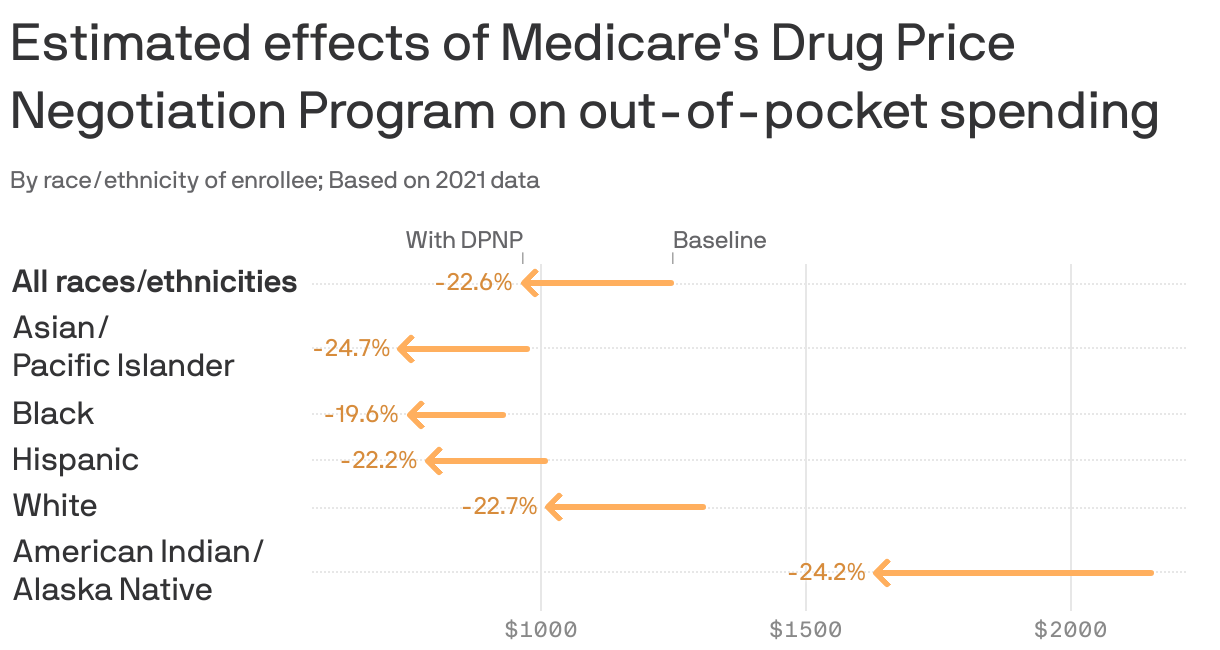
Medicare negotiations of prescription drug prices could have cut seniors' out-of-pocket costs by nearly a quarter had the program been in effect in 2021, according to an analysis Mathematica provided first to Axios.
Why it matters: The research consultancy's analysis offers a glimpse at potential savings enrollees might see as Medicare begins negotiating the prices of certain high-cost drugs.
By the numbers: The analysis looked at the 10 costliest drugs for Medicare Part D in 2021, the most recent year for which complete data were available.
- If Medicare negotiated the prices of those drugs, the average out-of-pocket costs for patients with Part D plans would have dropped 23% from $1,250 to $967.
- The retail prices of the selected drugs would have declined at least 63% on average.
The analysis also found a meaningful difference in out-of-pocket spending reductions by race and ethnicity.
- Asian Americans and Pacific Islanders would see the largest percentage decrease in out-of-pocket spending, while non-Hispanic Black people would have the smallest decrease in spending. The study authors said they are not sure what's driving the discrepancy.
What they're saying: "We estimate that drug price negotiation will lead to sizable reductions in Part D enrollees' out-of-pocket spending for all groups considered and that some groups will benefit significantly more than others," said Jia Pu, senior researcher and lead author of the study.
- "Given the established reality of health care disparities more broadly, it will be important as we move forward to understand why these differences exist."
Catch up quick: In August, the Biden administration named 10 drugs that will be part of the first negotiations. They cost Medicare a combined $50 billion last year before accounting for rebates and other discounts.
- Just three of the drugs in the Mathematica analysis of 2021 data were on the Biden administration's initial list of negotiated drugs.
- Some of the highest-cost drugs were approved too recently to qualify for negotiations, and Mathematica said its analysis suggests expenditures can change significantly from year to year.
- The negotiated prices for the first set of drugs are set to take effect in 2026, but lawsuits could delay or even prevent the law's implementation.
