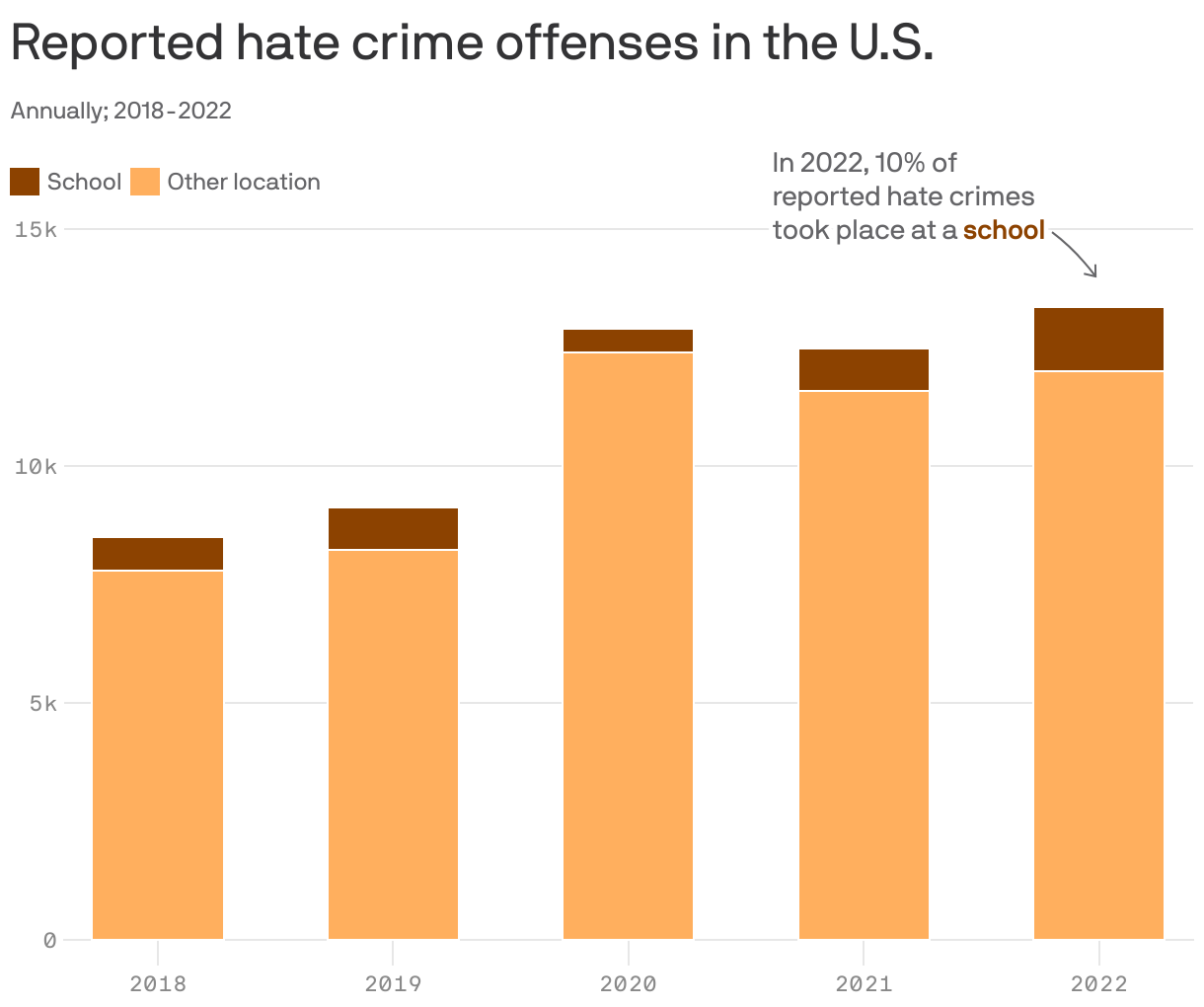
Data: Federal Bureau of Investigation; Note: The FBI defines hate crime as a committed criminal offense motivated by the offender's biases against a race, religion, disability, sexual orientation, ethnicity, gender or gender identity; Chart: Axios Visuals
Schools were the third most common location for hate crimes in the U.S. in a recent five-year stretch, per new FBI data.
The big picture: After homes and roadways, schools from pre-school to twelfth grade made up 10% of hate crimes in 2022, the Federal Bureau of Investigation report, released Monday, said.
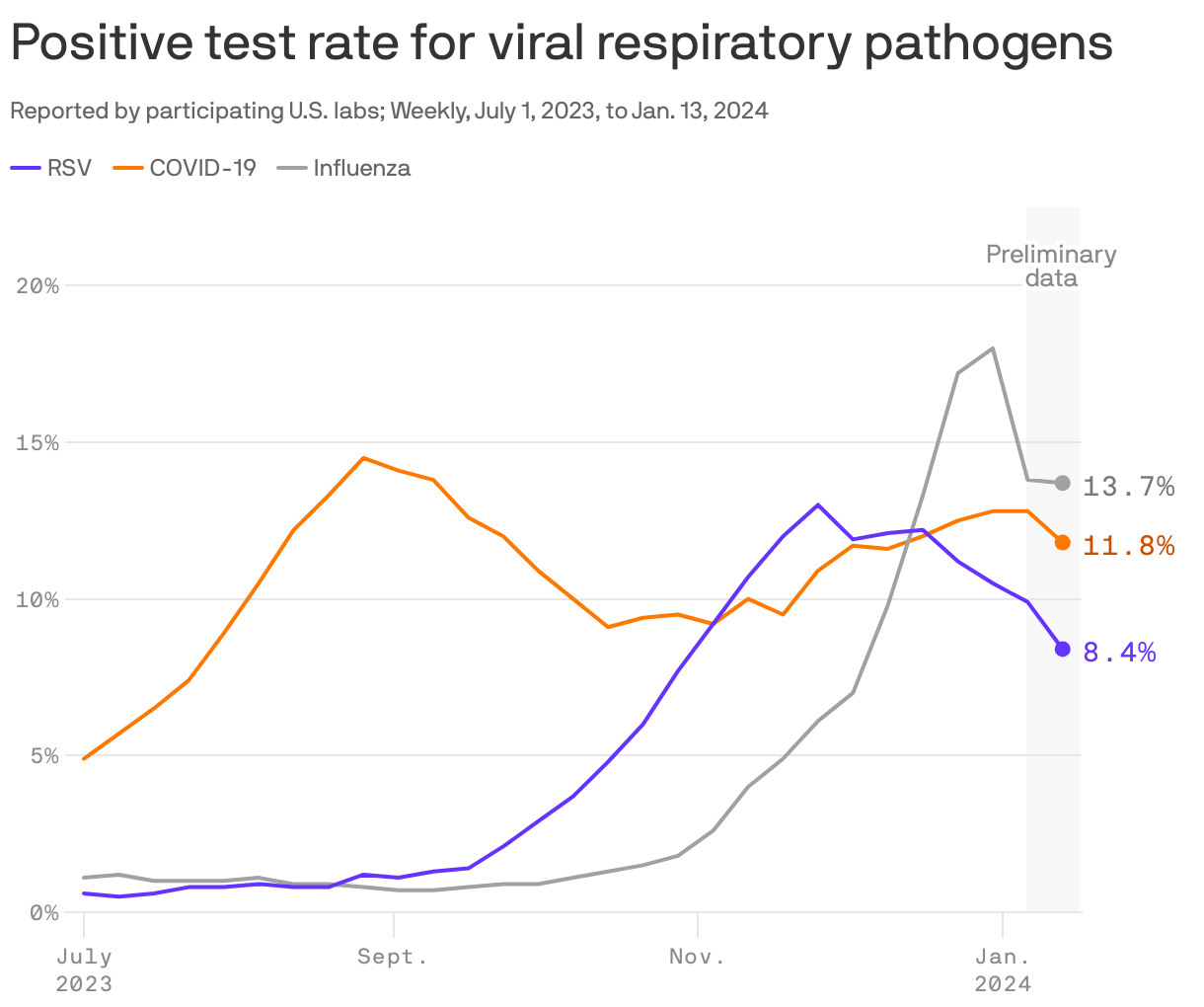
What they found: At the end of last week, 22 jurisdictions were experiencing "high" or "very high" respiratory virus activity — described as fever plus cough or sore throat causing someone to seek care — compared with 37 two weeks ago.
There's been a "substantial and persistent" increase in health care workers leaving the industry since the pandemic, as staff who stayed on during the worst of COVID-19 leave for new opportunities in a robust jobs market, according to a new study in JAMA Health Forum.
Why it matters: While exit rates have been matched by an uptick in hiring, the constant churn can disrupt the continuity of care and result in poorer patient outcomes, researchers wrote.
Details: The Johns Hopkins-led study, based on Census data from the beginning of 2018 through the end of 2021, found a disproportionate number of women and Black workers exiting the health industry.
Employers appeared to have a harder time recruiting Black workers after the pandemic, a trend that could exacerbate diversity issues within the workforce.
Even though overall employment levels appeared to stabilize by the end of 2020, the exit rate rose, starting in the Northeast and gradually spreading to more states in the South and West.
Exit rates remained higher than pre-pandemic baseline levels through the end of 2021. While the increase in health care hiring masked some of the churn, providers were left operating with less-experienced staff.
Between the lines: At the start of the pandemic,most exiting workers didn't have other employment lined up. By the end of 2021, they were mostly leaving for jobs outside of health care, the study found.
The flow to other lines of work could be a sign of health care's declining competitiveness in the broader labor market.
The bottom line: This study offers more evidence of the pandemic's long-term effects on the health care workforce and another reason for policymakers to address burnout, as well as workforce pipelines, researchers said.
Some of America's most challenging behavioral health care problems include a key disadvantage: They're not very profitable to treat.
Why it matters: Serious mental illness and addiction have a profound effect on families and communities, but their complexity and their concentration among lower-income people make them issues that the private market has little incentive to solve.