The sudden collapse of SmileDirectClub has stranded users of its clear-plastic, removable teeth aligners — in some cases just weeks after they were given a discount for paying up front.
Why it matters: Customers experiencing problems with their treatment will not be able to get new aligners, treatment, or other support from the company.
Driving the news: The ACLU of Kentucky, which is representing thewoman identified as Jane Doe, informed the court of the update Monday, just days after filing a class-action lawsuit challenging the state's abortion bans.
The largest pharmacy chains in the U.S. give patients' medical records to law enforcement without warrants, a new congressional investigation found.
Why it matters: Legislators urged the Department of Health and Human Services — for the second time this year — to revise HIPAA regulations to protect Americans' medical records.
French pharma company Sanofi scrapped a $750 million drug licensing deal with California-based Maze Therapeutics, just hours after the FTC sued to block the arrangement.
Why it matters: This is a significant, and de factosuccessful, expansion of the Biden administration's "killer acquisition" theory, to a drug that's still in the early stages of development.
America's big drugstore chains are facing long lines, burned-out pharmacy staff and massive cutbacks, including the closure of hundreds of stores.
At the same time, they're determined to right the ship by transforming themselves into hubs for care that draw in customers by going far beyond their traditional role of dispensing drugs.
A pregnant woman who sued Texas over its abortion ban left the state to get an emergency abortion, the Center for Reproductive Rights said Monday.
Driving the news: Following"a week of legal whiplash and threats of prosecution" Kate Cox left her home state of Texas to get "the time-sensitive abortion care needed to protect her health and future fertility," per the center, which is a plaintiff in the lawsuit.
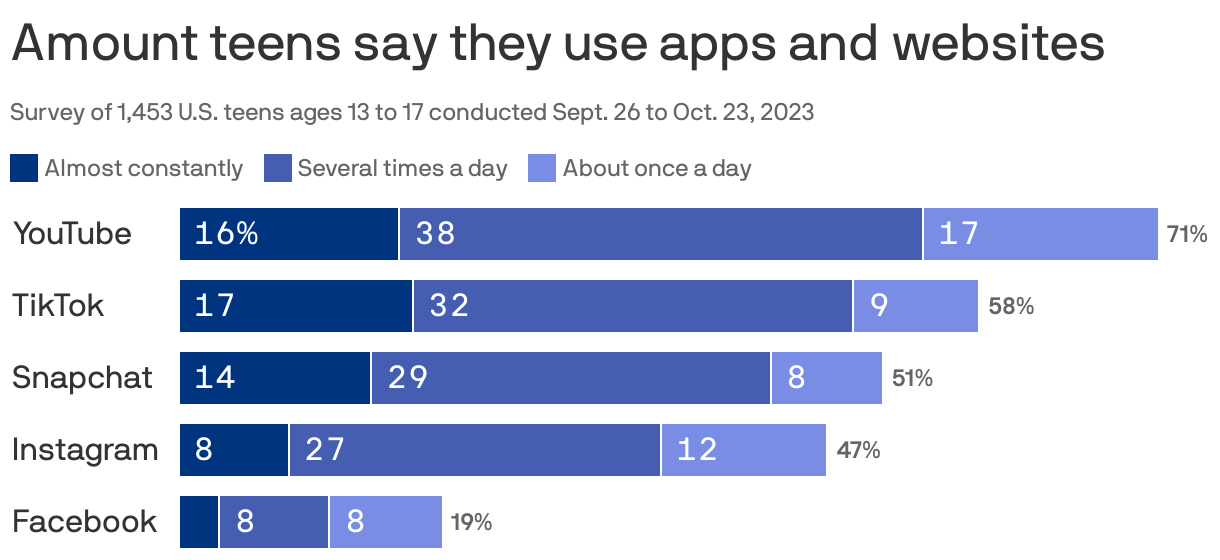
Nearly 1 in 5 teens say they're on YouTube or TikTok "almost constantly," according to a Pew Research Center report.
Why it matters: The report paints a picture of a rising generation whose lives are dominated by a handful of social platforms — amid ongoing debate over the possible mental health harms that could result.