Data: Peterson-KFF Health System Tracker; Chart: Alice Feng/Axios
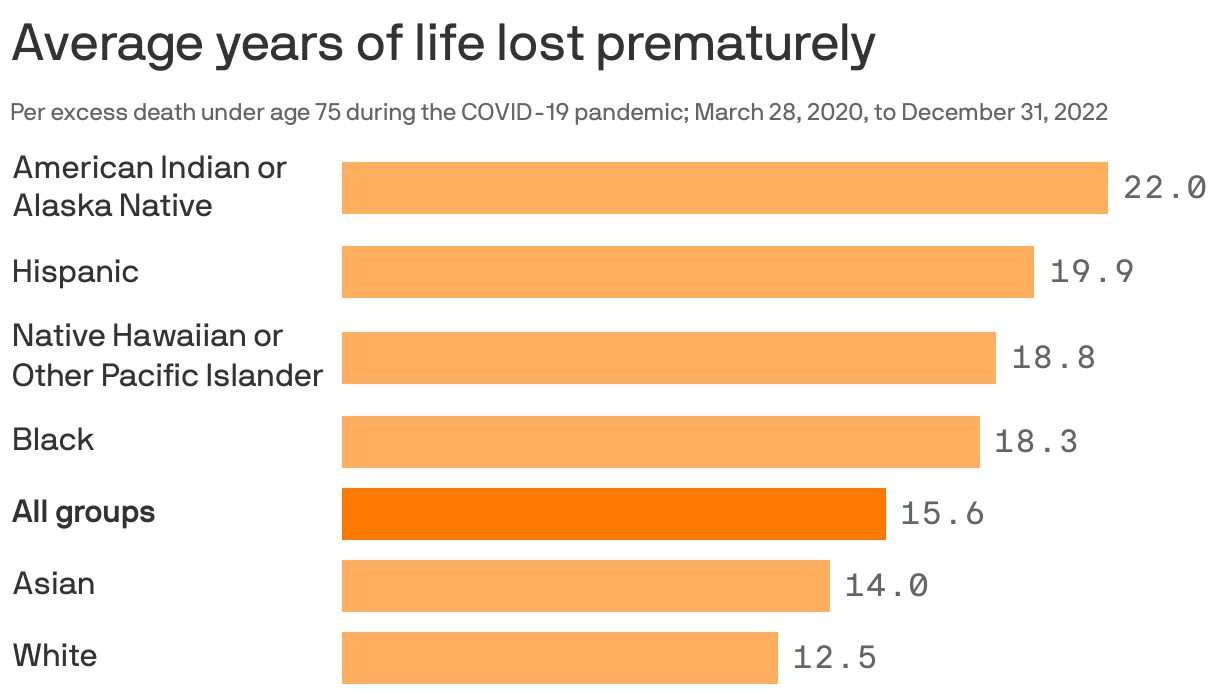
Communities of color experienced significantly higher premature death rates than white people during the pandemic and accounted for 59% of the years of life lost during the health crisis, according to a KFF analysis released on Monday.
Why it matters: Although individuals 75 and older had the highest risk of becoming seriously ill and dying from COVID-19, younger adults who had their lives cut short by the illness offer a window into racial disparities that the pandemic laid bare.
A group of crisis experts and federal advisers conclude in a report out today that a lack of disaster preparedness and coordination led to an unraveling of the nation's pandemic response, and that the crisis exposed a "collective national incompetence in governance."
Why it matters: The 34-member group, dubbed the COVID Crisis Group, was convened by four foundations in 2021 to lay the groundwork for a 9/11 commission-style assessment. But the Biden administration didn't formally establish the panel, and the bill to formalize the commission and report never made it out of the Senate.
More than two decades after a promising vaccine for Lyme disease was pulled from the market, more tools to protect against the tick-borne illness —including a new shot — are on the horizon.
Why it matters: There's worldwide concern about how climate change is helping drive the proliferation of ticks and transforming Lyme disease from a regional summertime nuisance into a year-round health threat that can damage the nervous system and require several weeks of intravenous antibiotic therapy.
North Dakota Gov. Doug Burgum (R) signed a bill Monday that bans abortion at six weeks of pregnancy.
The big picture: The bill that officials said takes effect immediately only allows for exceptions in cases of rape or incest up until six weeks' gestation is one of the strictest abortion bans in the U.S.
A new Washington law aims to make it easier for patients to access aid-in-dying services under the state's Death with Dignity Act.
Driving the news: A measure Gov. Jay Inslee signed into law earlier this month will cut down the waittime between when patients first ask for life-ending medication and when they can receive it.
Friday's Supreme Court ruling on mifepristone didn't end the legal battles over the abortion pill, but it all but assures the drug will remain available unless the justices decide otherwise.
The big picture: The case now returns to the 5th U.S. Circuit Court of Appeals, which will hear arguments on the Food and Drug Administration's authorization of mifepristone on May 17.
The No Surprises Act may have shielded patients from unexpected medical bills, but it's left a bureaucratic mess, with providers and insurers fighting over who'll cover the costs and Congress weighing whether to step back in.
The big picture: Almost a year and a half after it was enacted, the law is tied up in multiple court cases as providers push to change the process it set up to resolve billing disputes. Cases in arbitration are piling up, with more than 164,000 disputes filed from April through early December 2022.



/2023/04/21/1682087830950.gif?w=3840)