Wednesday's health stories
Ukraine's health care infrastructure withstands a year of destruction
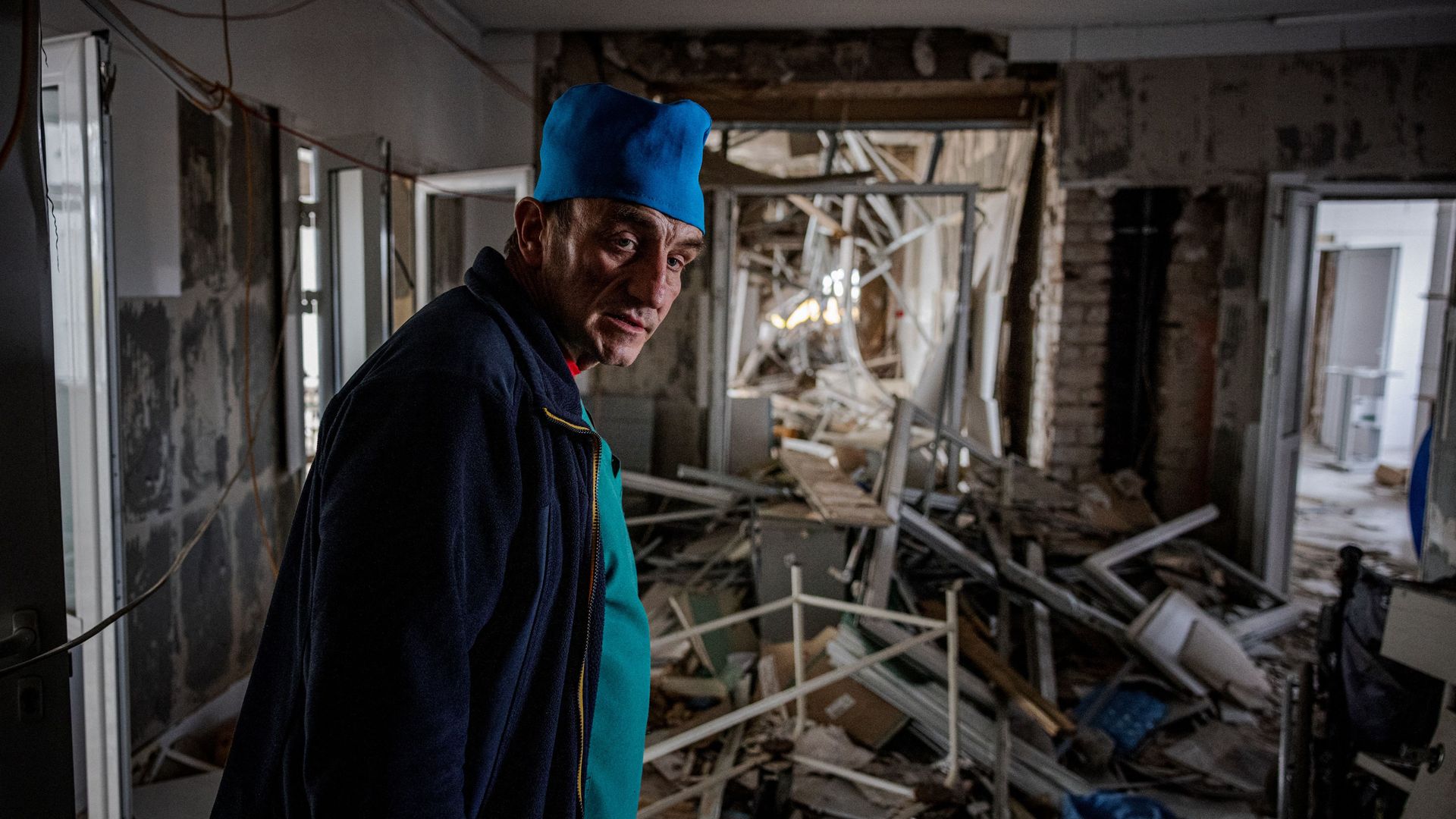
One in 10 of Ukraine’s hospitals has been damaged in attacks from Russia in the last year, according to a new report released Tuesday.
The big picture: The ongoing attacks are hampering their ability to provide "the human right of access to health care" services, according to the joint report from eyeWitness to Atrocities, Insecurity Insight, the Media Initiative for Human Rights, Physicians for Human Rights and the Ukrainian Healthcare Center.
What they are saying: "This report shows how Russia appears to be violating international humanitarian law by deliberately and indiscriminately targeting Ukraine’s health care system as part of a broader attack on its civilian population and infrastructure," the authors wrote.
By the numbers: Between Feb. 24, 2022 and Dec. 31, 2022, there was an average of more than two attacks a day on health care, with a total of 707 attacks on Ukraine's medical system, the report found.
- That included 292 documented attacks that damaged or destroyed 218 hospitals and clinics.
- It also included 65 documented attacks on ambulances and 191 attacks on other parts of the infrastructure, such as pharmacies, blood centers, dental clinics and research centers.
- There were 86 attacks on health care workers, with 62 workers killed and 52 injured. As of the beginning of December 2022, 1 in every 3 Ukrainians were experiencing a lack of medical services, an International Organization for Migration survey found.

Zoom in: Beyond day-to-day health care access, the conflict has impacted clinical trials, medical education and services for cancer, diabetes, cardiovascular conditions and perinatal care.
Between the lines: Ukraine is certainly not alone in sustaining damage from conflict in recent history.
- In Syria, an estimated 500-plus attacks on health care facilities have been carried out by Syrian and Russian forces since 2011, per Physicians for Human Rights.
- Health care infrastructure in the Tigray region of Ethiopia has sustained attacks in the conflict which started there in 2020 with just 3.6% of its roughly 1,000 health facilities considered fully functional, according to Johns Hopkins School of Public Health.

State of play: The effects on Ukraine's health care facilities has been uneven, though nearly all health facilities have been harmed in some way in certain cities.
- The heaviest destruction has taken place in the east, in the oblasts of Kharkivska, Donetska, and Luhanska, Khersonska and Kyivska.
- In Mariupol, almost 8 out of 10 health care sites were damaged or destroyed. In the Makariv municipality, three health facilities and 30 pharmacies were damaged or destroyed.



Hospital outpatient billing draws bipartisan heat
Hospitals could be playing defense this year as bipartisan scrutiny builds in Congress over the way facilities charge more for outpatient services that can be done in less-expensive settings, like a private doctor's office.
Why it matters: So-called site-neutral payment reforms could save Medicare upward of $100 billion over a decade, according to various projections, and those with private health insurance could see savings, too.

Study finds Hispanic veterans wait longer for specialists
Black and Hispanic veterans' access to specialty health care declined during the pandemic, according to a recently published study that also found non-Hispanic white veterans were largely unaffected.
Why it matters: About 12% of vets are Black and 8% are Latino. Those numbers are projected to grow to 15% and 12% respectively by 2045, according to the Department of Veterans Affairs.

COVID-driven drop in cancer screenings didn't result in more new cases
The dropoff in cancer screenings during the pandemic didn't result in significantly more breast, cervical and colon cancer cases, or how advanced those cases were, according to a review of nearly 375,000 diagnoses in electronic health records.
Why it matters: The findings from Epic Research could ease concerns about countless hidden cases and more advanced stages of disease stemming from millions of missed screenings during the height of the pandemic.

Enfamil recalls 145K cans of ProSobee baby formula for bacteria risk
Two batches of Enfamil ProSobee Simply Plant-Based Infant Formula are being recalled "due to a possibility of cross-contamination with Cronobacter sakazakii," parent company Reckitt announced in a recall notice.
Driving the news: The recall of approximately 145,000 cans of formula comes a year after a massive baby formula recall by Abbott Nutrition led to nationwide shortages.

20 Dem governors form coalition to protect abortion access
A group of 20 Democratic members on Tuesday announced they are forming a coalition to protect and expand abortion access in their states as bans continue to be enacted following the fall of Roe v. Wade.
The big picture: The Reproductive Freedom Alliance works as a formal structure for governors to respond together to bans coming from red states and "judges who are advancing their ideological agenda" — particularly the upcoming ruling from a judge in Texas that could end access to abortion pills nationwide.
The next phase of the global HIV/AIDs fight

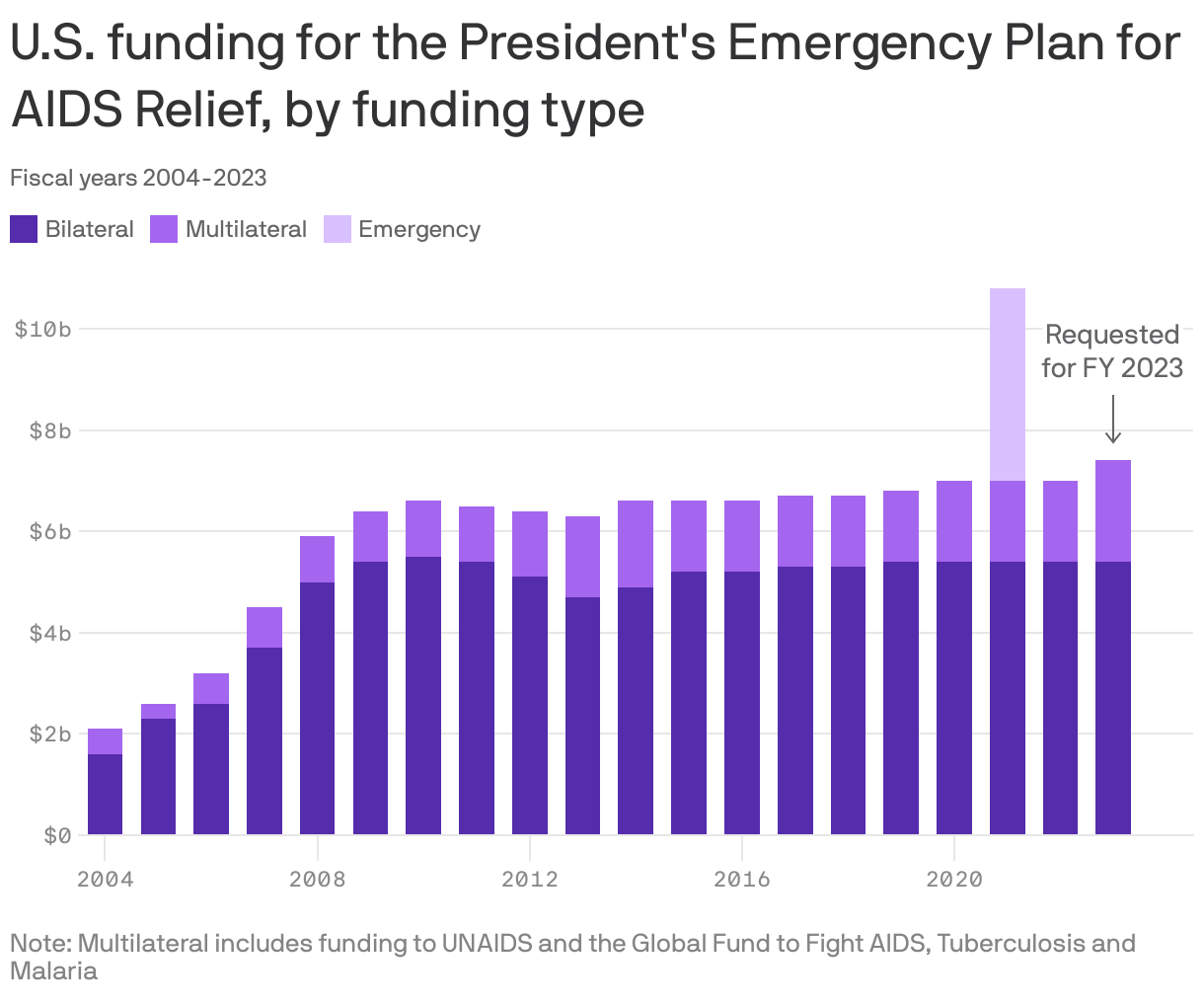
The President's Emergency Plan for AIDS Relief — the biggest effort by one nation to address a particular disease — is hitting a milestone anniversary. But advocates worry the U.S. may take its foot off the gas.
Why it matters: 20 years after then-President George W. Bush launched PEPFAR in his 2003 State of the Union address, the $7 billion-a-year program is up for reauthorization in Congress.

Fentanyl-positive patients usually had additional drugs in their systems
Nearly every person that tested positive for fentanyl last year also had signs of other substances including methamphetamine and heroin, according to a new report from Millennium Health. That's a more than 60% increase from 2019 and an all-time high.
Why it matters: Multiple substances in one's body can increase overdose risk and complicate treatment options, researchers told Axios.