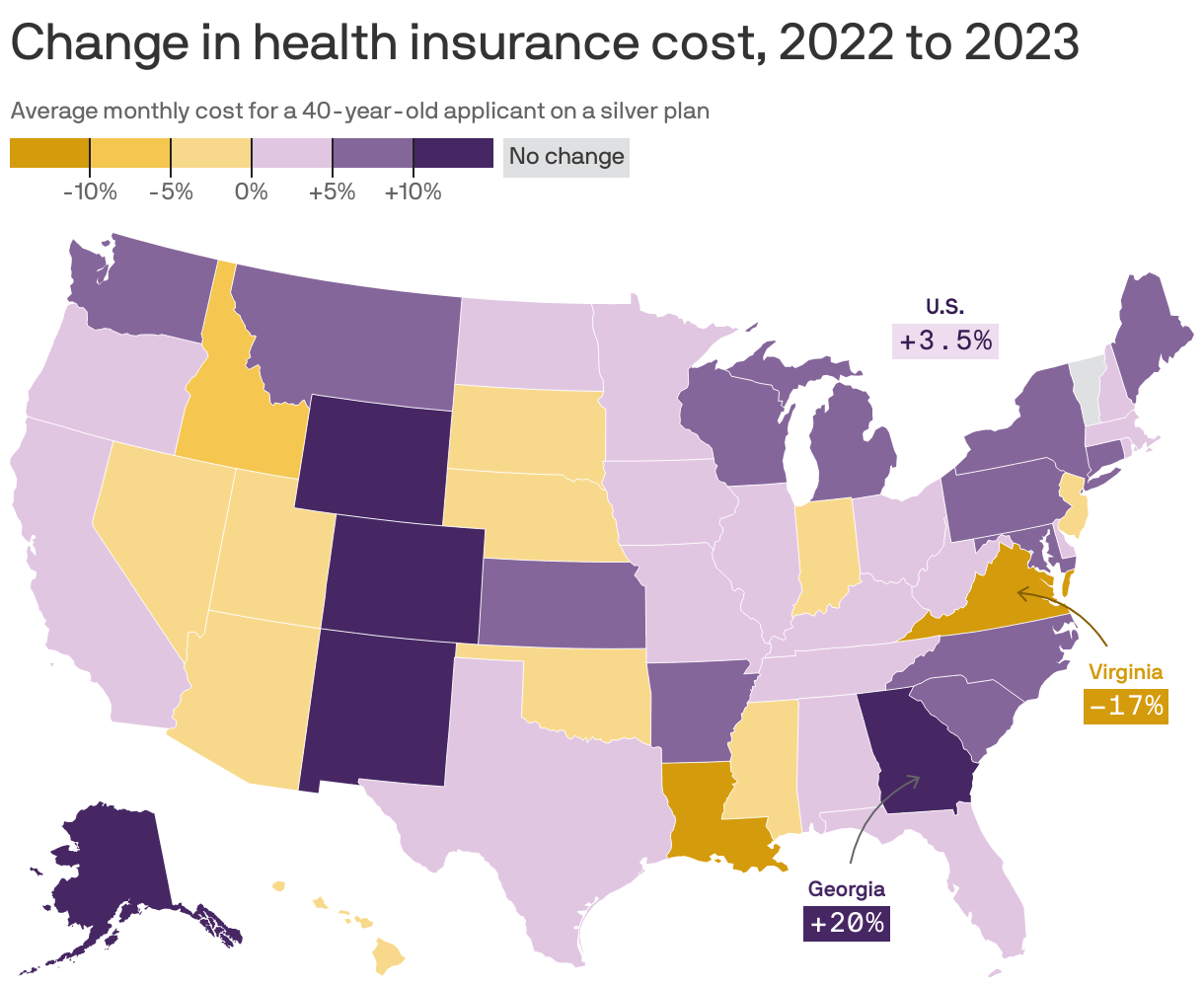
The cost of health care has been rising for years, but where you live heavily influenceshow much you pay, data compiled by consumer research company ValuePenguin shows.
The big picture: Private health insurance premiums are increasing in 36 states next year, with the cost of an individual health insurance plan for a 40-year-old on a silver plan increasing by 4% to an average cost of $560 a month.
Women were more likely than men to report needing mental health services in the past two years but 40% did not seek treatment and 10% were unable to get help despite trying, according to a Kaiser Family Foundation brief released Tuesday.
Why it matters: The nation continues to grapple withskyrocketing demand for mental health services, but there's limited insight into how it breaks down by gender, or how women are coping.
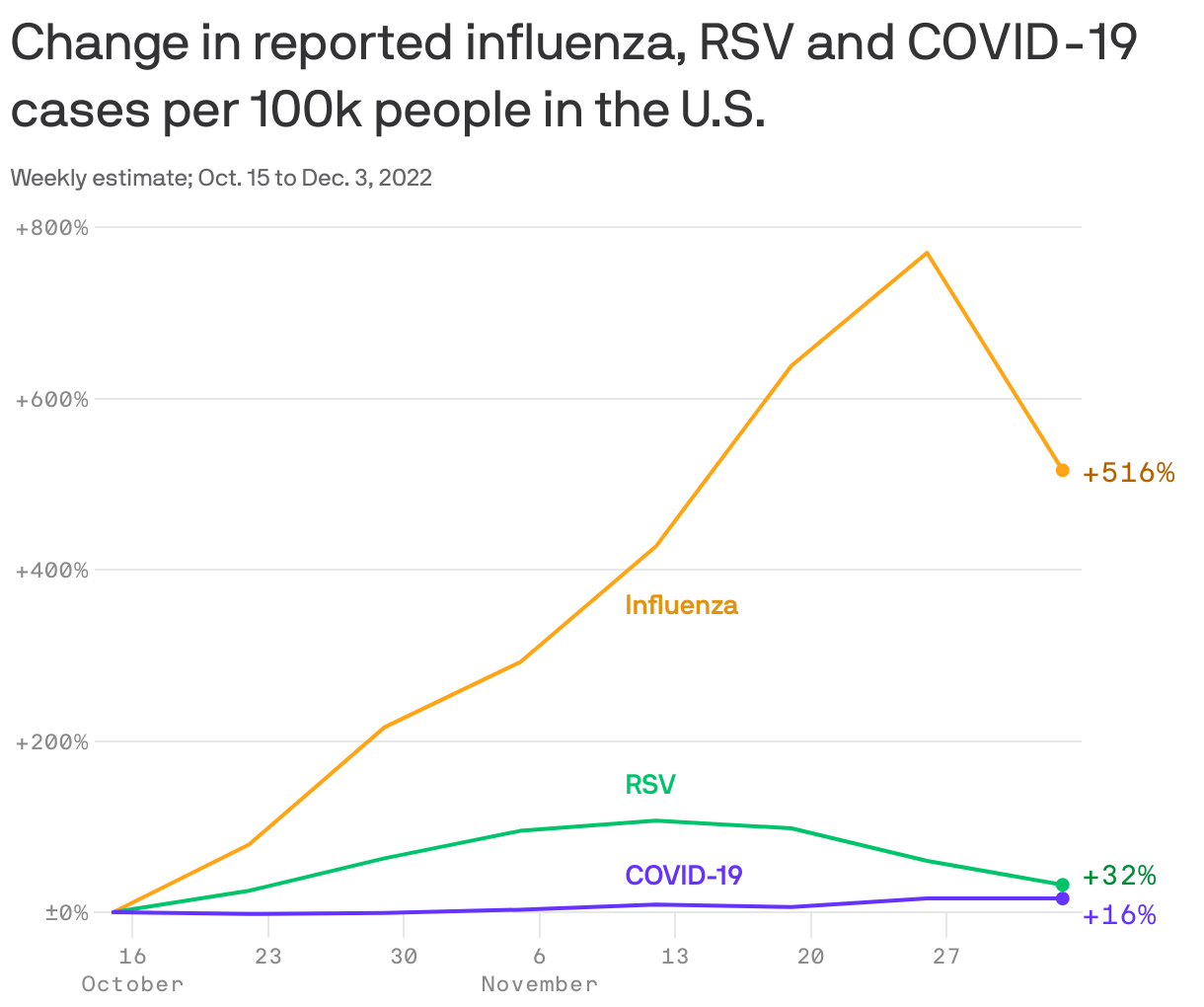
Data: CDC; Note: All data subject to reporting delays and likely undercounted; RSV cases are a five-week moving average; Chart: Kavya Beheraj/Axios
An ominous rise in COVID cases has parents bracing for another wave of illness — even as flu season appears to be peaking and RSV is on the decline.
Why it matters: We're in a season of back-to-back-to-back sucker punches from respiratory viruses that are hitting young children earlier — and harder — than usual.
The $1.7 trillion omnibus Congress is poised to pass this week has provisions addressing the ability to respond to future pandemics, but some experts say its lack of new spending, including on COVID-19, will leave Americans vulnerable.
Why it matters: The virus has evolved significantly since the beginning of the pandemic, rendering vaccines less effective and some treatments useless. And new health threats could hit at any time.
Sen. Cindy Hyde-Smith (R-Miss.) on Tuesday blocked a unanimous consent request to pass a bill that would have set federal protections for IVF and other fertility treatments whose future remains uncertain in the post-Roe era.
The big picture: Sen. Tammy Duckworth (D-Ill.), who introduced the legislation, requested to pass it through unanimous consent — meaning the bill would have been considered passed if there were no objections — in response to concerns that abortion restrictions can apply to assisted reproductive technologies.
The Drug Enforcement Administration (DEA) announced Tuesday that it seized over 379 million doses of potentially deadly fentanyl in 2022, including more than 50.6 million fentanyl-laced fake prescription pills and more than 10,000 pounds of fentanyl powder.
Why it matters: Fentanyl, a highly addictive man-made opioid that is 50 times more potent than heroin, is considered the deadliest drug threat in the U.S. — and a growing threat to teenagers.
The number of Americans on Medicaid is expected to surpass 100 million as early as next month, according to a new projection from the Foundation for Government Accountability.
Why it matters: The record uninsured rate — achieved through both ACA subsidies and Medicaid expansion — has been a point of pride for the Biden administration, particularly in light of stark health disparities exacerbated by the pandemic.
There's plenty for health care interest groups in Congress' year-end spending package, but some had to make significant concessions: There will be no pandemic commission, doctors will have to swallow some Medicare payment cuts and FDA oversight of diagnostic tests will not change.
Why it matters: The health care riders in the year-end spending package reflect which health care interests have clout, and which issues lawmakers want to punt into next year, when Congress will be divided and deals may be more elusive.
The arm of the FDA that oversees tobacco products has "struggled to function as a regulator" and has been "forced to operate primarily in a reactive mode" a report released Monday by the Reagan-Udall Foundation found.
Why it matters: It is the second independent report that FDA commissioner Robert Califf asked for last summer and comes on the heels of a scathing assessment, also from Reagan-Udall., which found deep cultural and systemic problems at FDA were contributing to vulnerabilities in the U.S. food system.