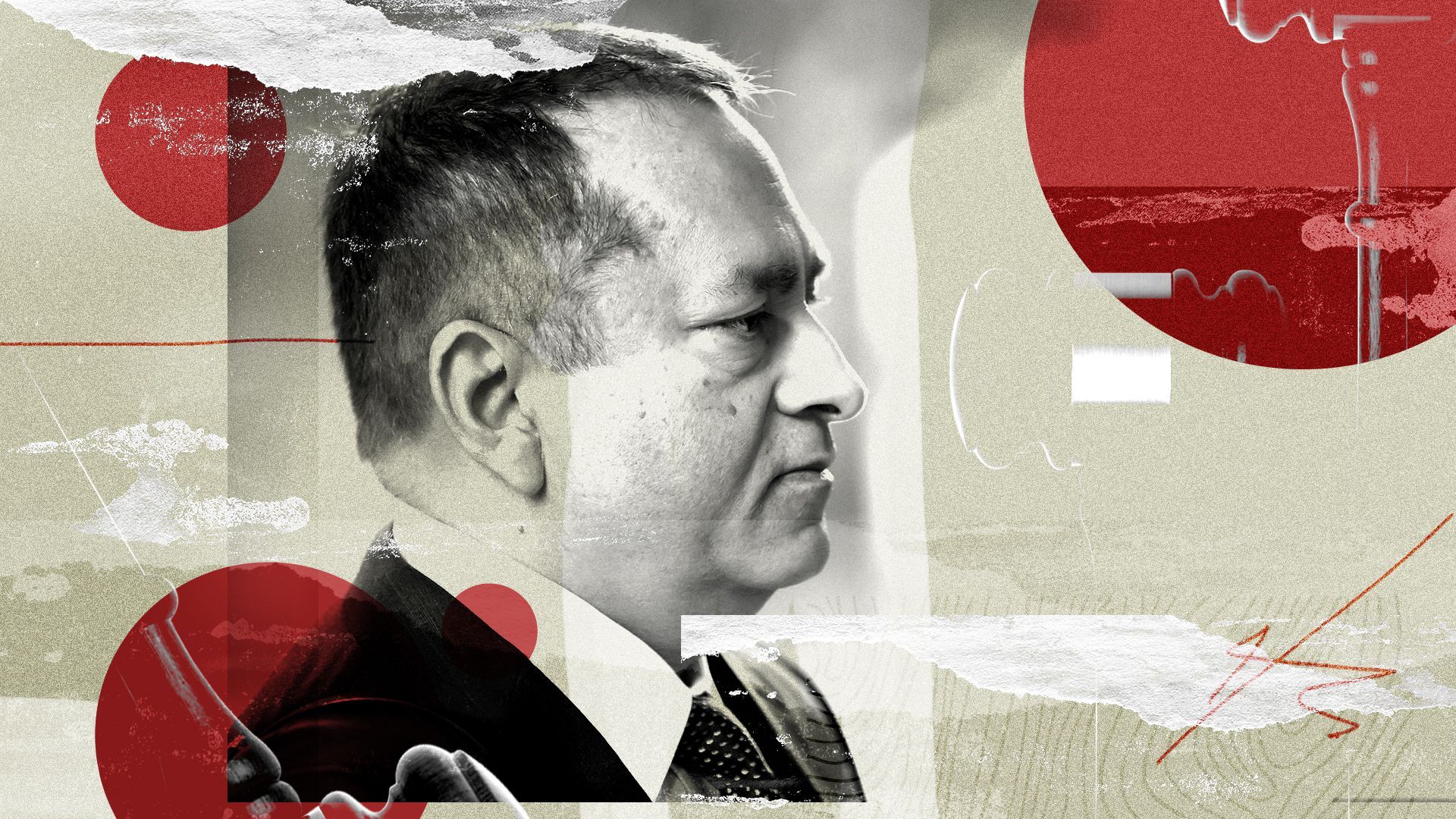
Ramesh "Sunny" Balwani, the former president and chief operating officer of failed blood-testing company Theranos, on Wednesday was sentenced to 12 years and nine months in prison, plus three years of probation.
Driving the news: Balwani's sentencing comes less than three weeks after his former boss and girlfriend, Elizabeth Holmes, received a prison sentence of 11 years and three months that's scheduled to begin in April.
Medicare Advantage plans and other government-funded insurers would have to overhaul the electronic process they use to approve medical services and prescriptions under a rule proposed by the Biden administration on Tuesday.
Why it matters: Prior authorization is a top concern of physicians, who say it imposes excessive administrative burdens and have pressed Congress to make changes in the lame-duck session. The rule could dramatically reduce the cost of a Medicare Advantage prior authorization fix.
A nasal spray for reversing opioid overdoses could become available over-the-counter as early as next March after the Food and Drug Administration gave it priority review.
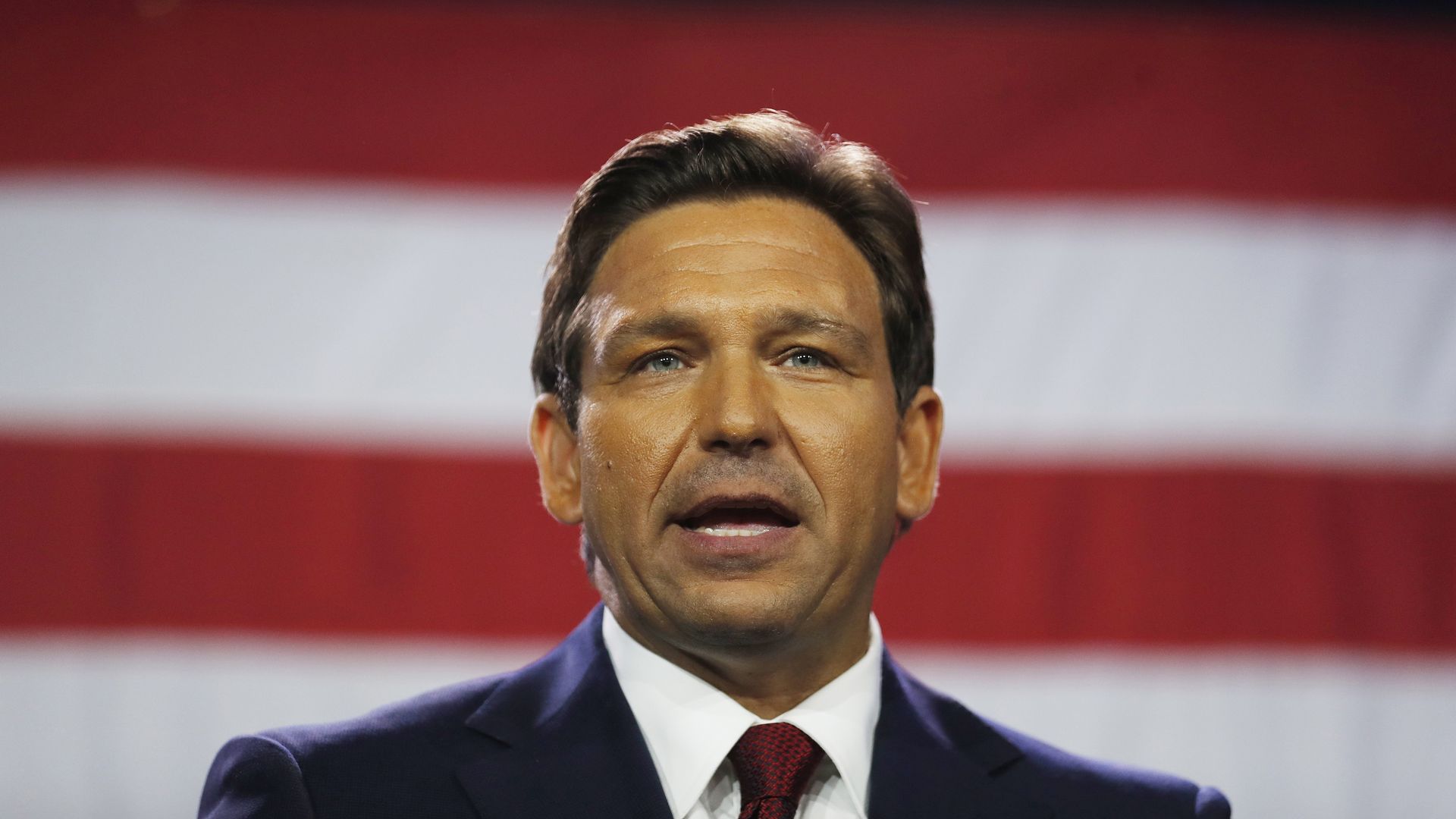
Florida Gov. Ron DeSantis — should he run for the GOP's 2024 presidential nomination — has an opening to attack former President Trump's COVID response from the right.
The big picture: The federal COVID response has become a red-meat issue for the party's base, and DeSantis' 2020 actions are much more aligned with the GOP's tone today.
This article originally appeared in Axios Finish Line, our nightly newsletter on life, leadership and wellness.Sign up here.
Whether it's crime-fighting superheroes in comic books, neighbors who shovel out each other's driveways after a snowstorm or our moms, heroes inspire us.
Why it matters: That inspiration we get from heroes makes a difference. Having a hero — someone to look up to — can motivate us and make hard times easier.
"Imagine life without a hero. It would seem to lack something," says Susan Whitbourne, a psychologist at UMass Amherst.
"We need something to aspire to, something more and bigger than just toughing it out, day in and day out."
Let's look at some of the psychological benefits of having a hero, as demonstrated in studies.
Remembering heroes in times of threat or duress can make us feel safer and increase our perception of our own power — making the threat easier to face, one study from researchers at the University of Leeds notes.
Heroes also motivate us to put energy into our own mental and physical development, University of Richmond psychologists Scott Allison and George Goethals write.
And heroes strengthen communities, Allison notes. Think of the stories we read and repeat about people in our towns risking their lives to save neighbors from burning homes or raising money for sick kids. They inspire and unite us.
The bottom line: "It's a cure for cynicism," Whitbourne says.
The demonstrations that rocked many Chinese cities last week were quickly suppressed but succeeded in getting China's leaders to rework the zero-COVID policy they've implemented for almost three years.
Why it matters: Loosened restrictions will relieve the hardship and uncertainty that many Chinese people have faced and could boost a struggling economy. But an end to zero-COVID will also mean a surge in COVID cases, serious illness and deaths.
The nation's three biggest for-profit hospital chains each had positive operating margins that exceeded pre-COVID levels for most of the pandemic, including as recently as the third quarter this year, according to a Kaiser Family Foundation analysis of SEC filings.
Why it matters: Hospital operators are asking Congress to stop scheduled Medicare payment cuts and provide more federal relief, saying they're facing tough economic times.
Women were underrepresented in pandemic trials of antiviral treatments, and sponsors didn't recruit enough Black and Asian participants for human studies on COVID vaccines, a new JAMA analysis of more than 100 trials found.
Why it matters: Treatment regimens that are found to be effective in clinical trials can't be confidently applied to all populations when certain groups are not adequately represented, researchers said.
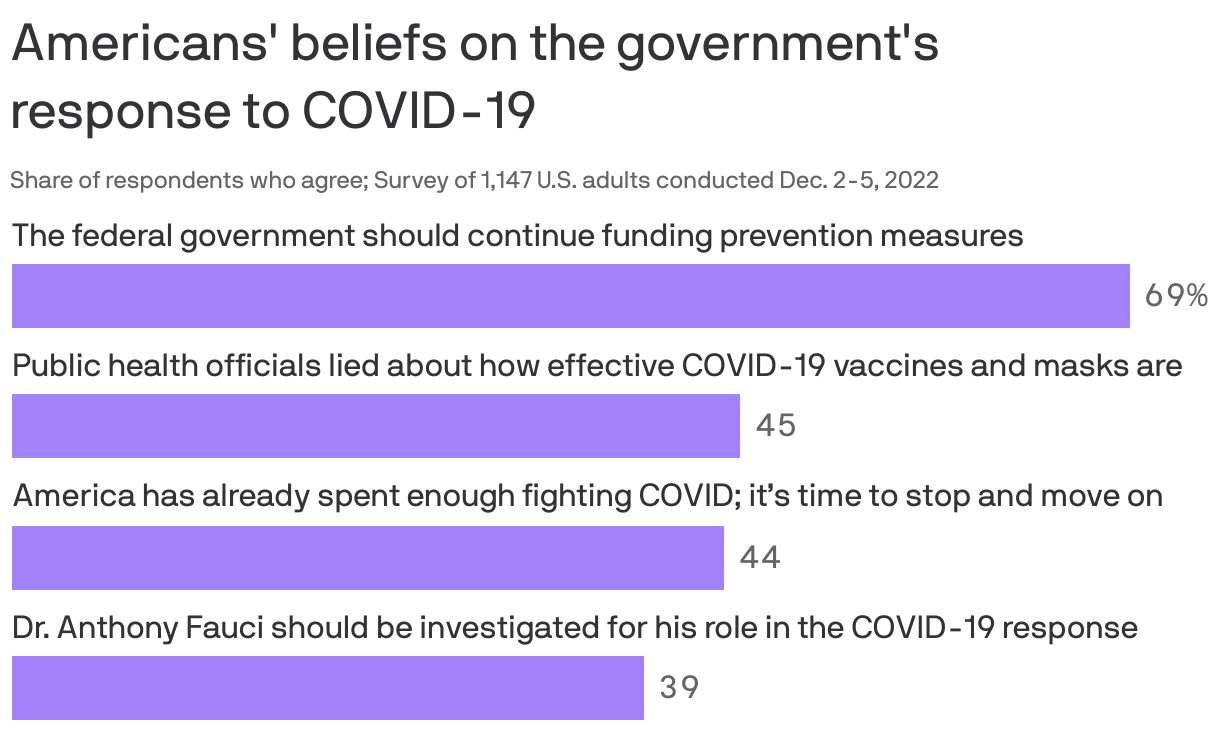
Data: Axios and Ipsos research; Chart: Tory Lysik/Axios Visuals
Americans are entering the holidays for the first time in two years with COVID firmly in the back of their minds, according to the latest installment of the Axios/Ipsos Coronavirus Index.
The big picture: Public behavior on masking, social distancing and other precautions hasn't changed significantly since September, and 7 in 10 believe strongly or somewhat that we're moving to a point where the virus won't disrupt our daily lives.