The demonstrations that rocked many Chinese cities last week were quickly suppressed but succeeded in getting China's leaders to rework the zero-COVID policy they've implemented for almost three years.
Why it matters: Loosened restrictions will relieve the hardship and uncertainty that many Chinese people have faced and could boost a struggling economy. But an end to zero-COVID will also mean a surge in COVID cases, serious illness and deaths.
The nation's three biggest for-profit hospital chains each had positive operating margins that exceeded pre-COVID levels for most of the pandemic, including as recently as the third quarter this year, according to a Kaiser Family Foundation analysis of SEC filings.
Why it matters: Hospital operators are asking Congress to stop scheduled Medicare payment cuts and provide more federal relief, saying they're facing tough economic times.
Women were underrepresented in pandemic trials of antiviral treatments, and sponsors didn't recruit enough Black and Asian participants for human studies on COVID vaccines, a new JAMA analysis of more than 100 trials found.
Why it matters: Treatment regimens that are found to be effective in clinical trials can't be confidently applied to all populations when certain groups are not adequately represented, researchers said.
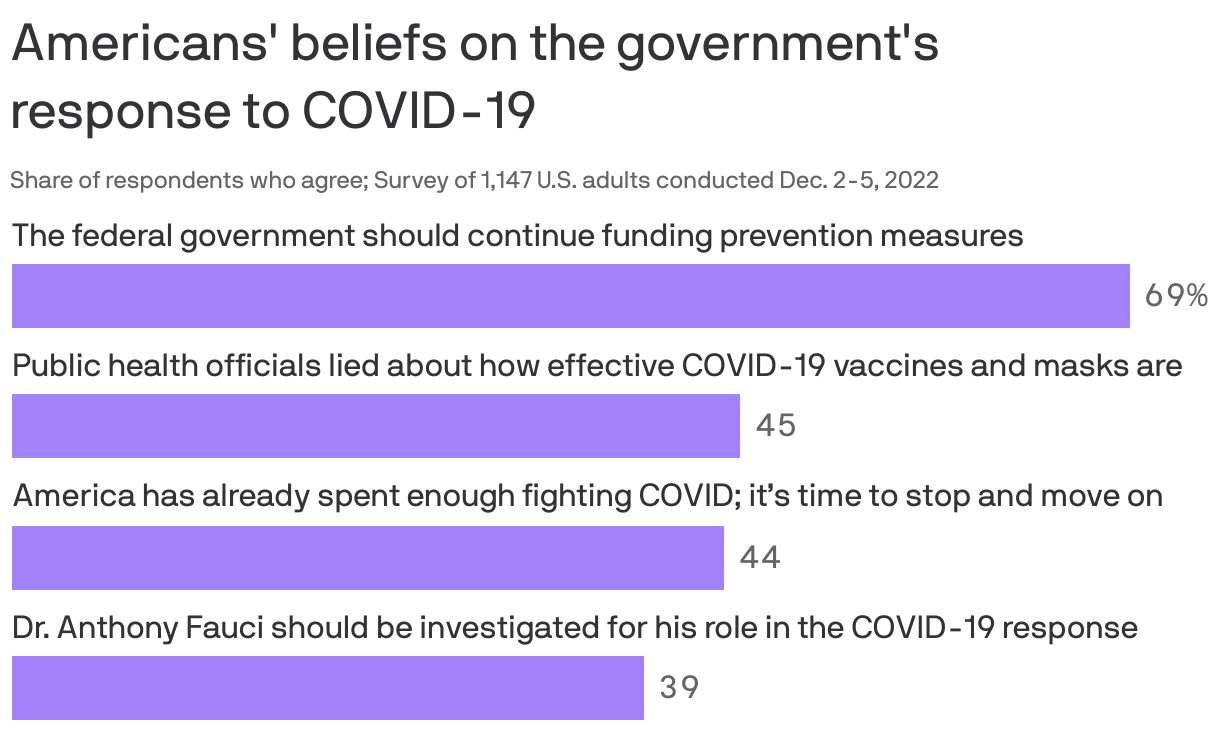
Data: Axios and Ipsos research; Chart: Tory Lysik/Axios Visuals
Americans are entering the holidays for the first time in two years with COVID firmly in the back of their minds, according to the latest installment of the Axios/Ipsos Coronavirus Index.
The big picture: Public behavior on masking, social distancing and other precautions hasn't changed significantly since September, and 7 in 10 believe strongly or somewhat that we're moving to a point where the virus won't disrupt our daily lives.
Congress may consider legislation later this week that would scrap the Pentagon's COVID-19 vaccine mandate for military service members, Politico reports.
Why it matters: A rollback of the policy may be included in the National Defense Authorization Act, which is set to be unveiled Monday, as a compromise between Republicans and Democrats.
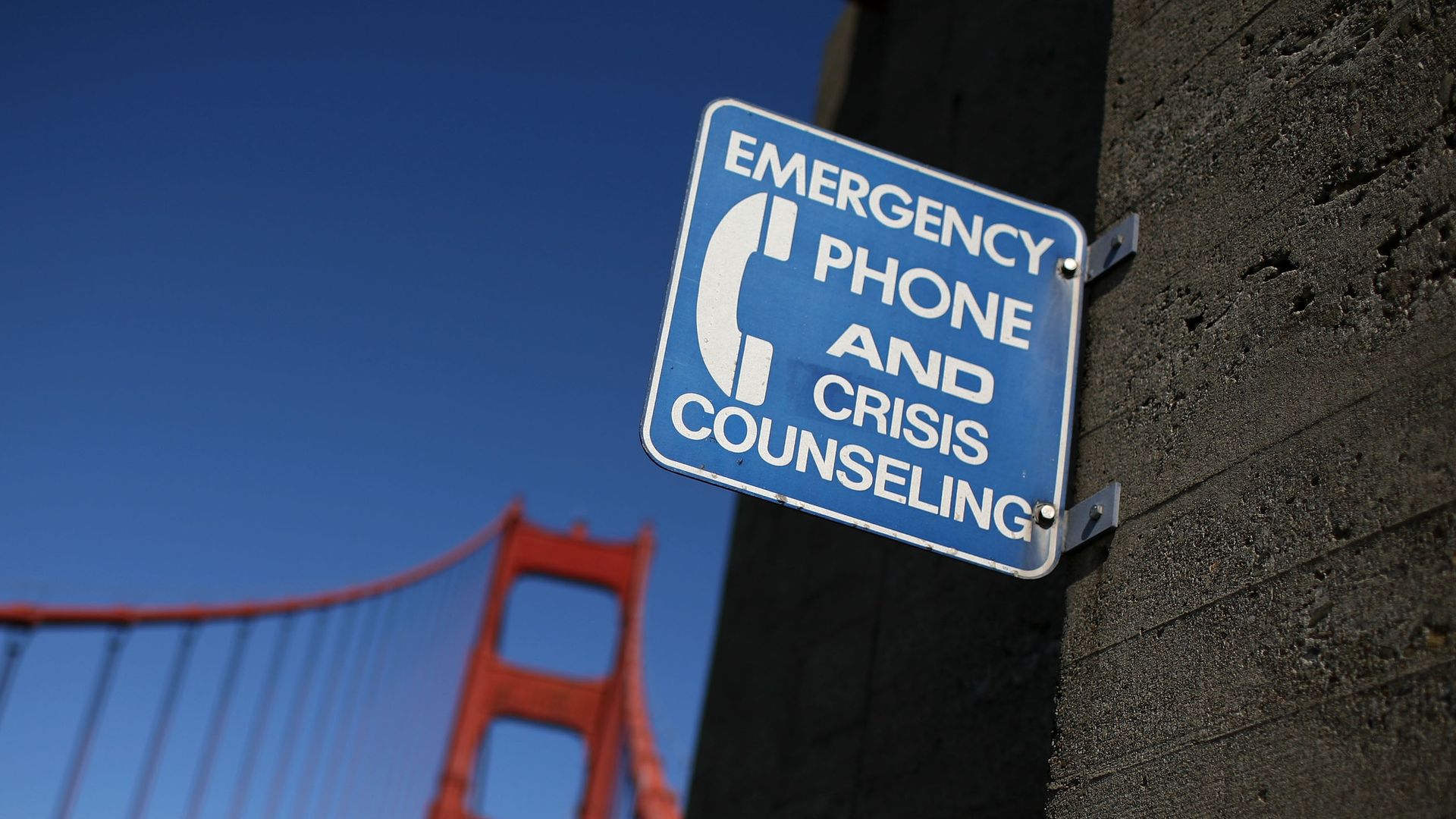
The perception that the suicide rate rises with the holiday season is a myth driven by false media narratives, the Annenberg Public Policy Center (APPC) said in an analysis released Monday.
Why it matters: Allowing people to think that suicide is more likely this time of year can have a contagious effect on people who are contemplating taking their lives.
Yet another wave of viral illness is crashing on a health system already stretched to a breaking point by COVID-19 and, more recently, RSV.
Driving the news: The worst flu outbreak in more than a decade has left nearly every state with high or very high levels of flu activity, underscoring how pandemic precautions may have left us more vulnerable to seasonal respiratory diseases.







/2022/12/04/1670188987270.gif?w=3840)