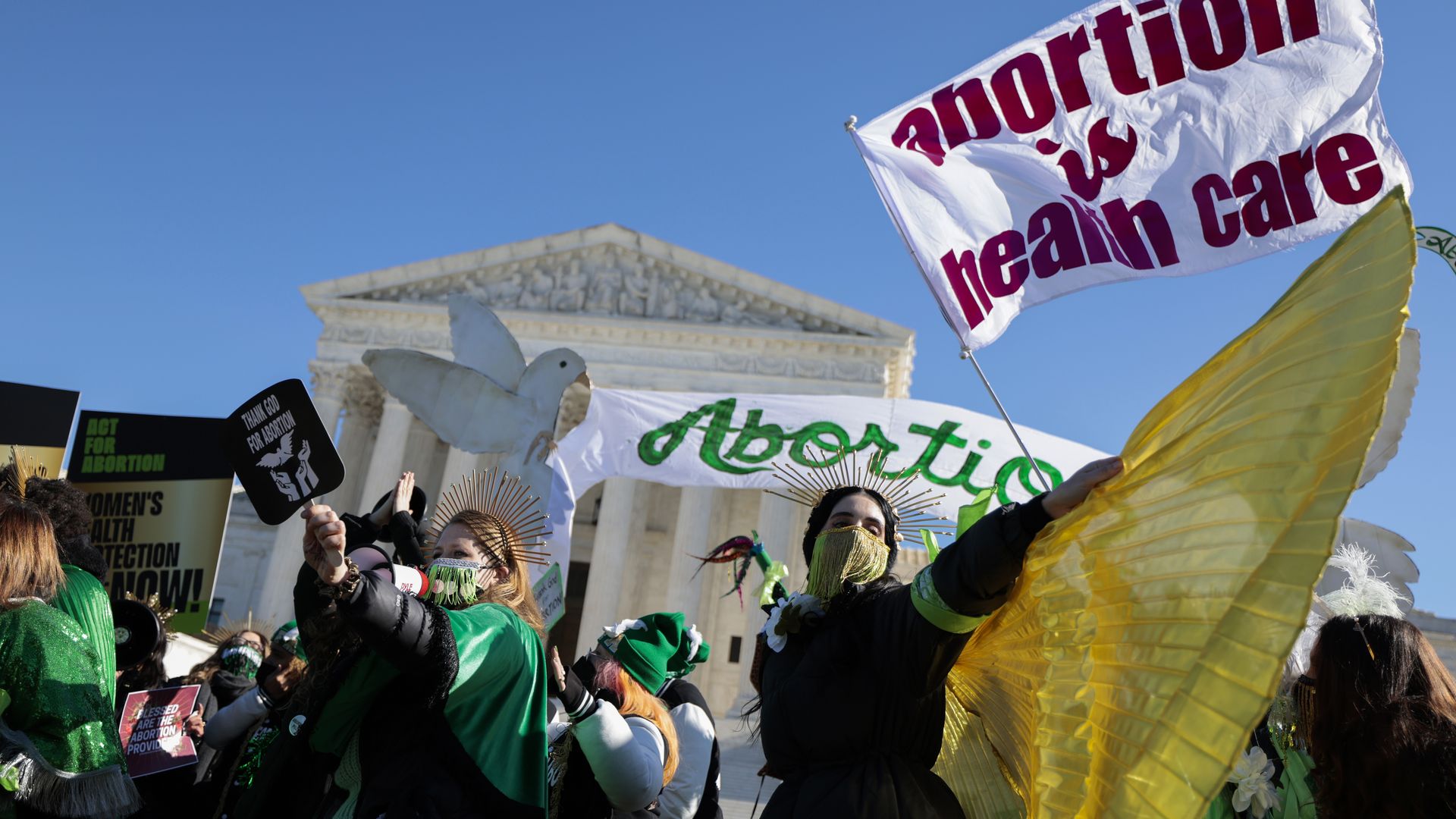
In the month after Roe v. Wade was overturned, the number of people traveling out-of-state for abortion care was sharply up as measured by a hotline that helps patients make hotel and airline bookings.
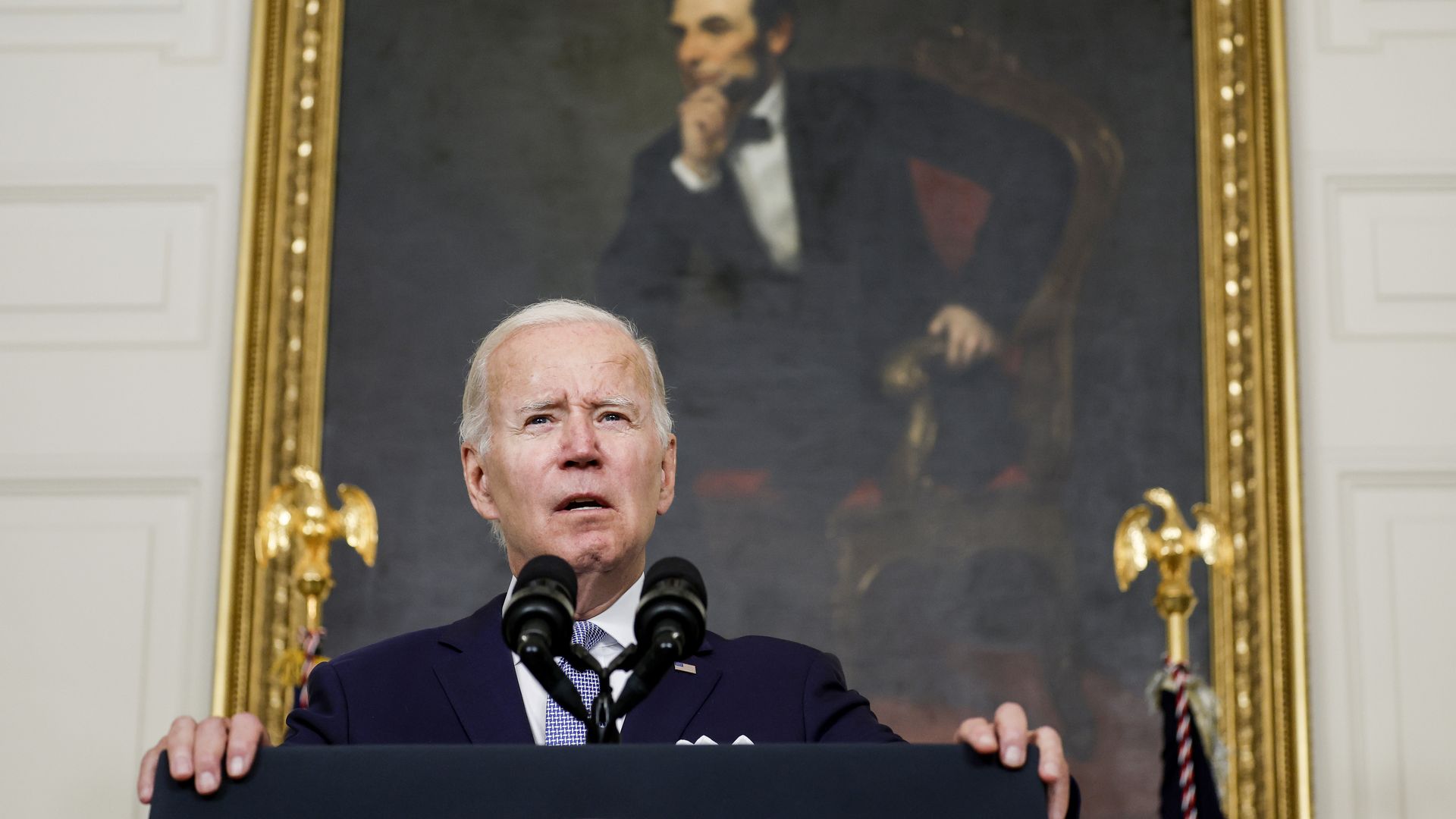
Driving the news: President Biden on Wednesday signed an executive order directing the Department of Health and Human Services to support patients who leave their home states to access abortion.
Why it matters: The nation's second largest school district is shifting its rules on testing, masking and vaccination, aligning with other school districts in the region and marking a shift in priorities just two weeks ahead of the new school year.
Starting today, prostate cancer patients taking a prescription drug called abiraterone will pay what could be thousands of dollars less a month for a generic version from a company called CivicaScript.
Why it matters: It's the first drug to be manufactured and sold by CivicaScript — a subsidiary of the hospital-owned nonprofit Civica Rx that's trying to reshape the economics of drug development.
Democrats' drug pricing plan could end drugmakers' practice of taking out overlapping patents around one drug — a strategy which fends off competitors but that the industry argues incentivizes innovation after a drug is approved.
Why it matters: Patenting new uses, delivery methods or ingredients can often ensure monopoly prices for years after a drug's market exclusivity expires. But the Democrats' proposal would allow Medicare to negotiate much lower prices for those drugs after a set period of time, slashing drugmakers' revenues years before competition enters the market.
Sen. Elizabeth Warren (D-Mass.) told NBC News Tuesday night she'll vote against a new bipartisan bill on federal abortion protections introduced in response to the Supreme Court overturning Roe v. Wade.
Why it matters: The legislation introduced Monday would need all 50 Senate Democrats to help it meet the 60 votes needed to pass.
Kansas voters on Tuesday rejected an amendment that would have gotten rid of abortion protections in the state's constitution, the Associated Press reports.
Why it matters: It's the first time since the Supreme Court overturned Roe v. Wade that U.S. voters have cast ballots on abortion.
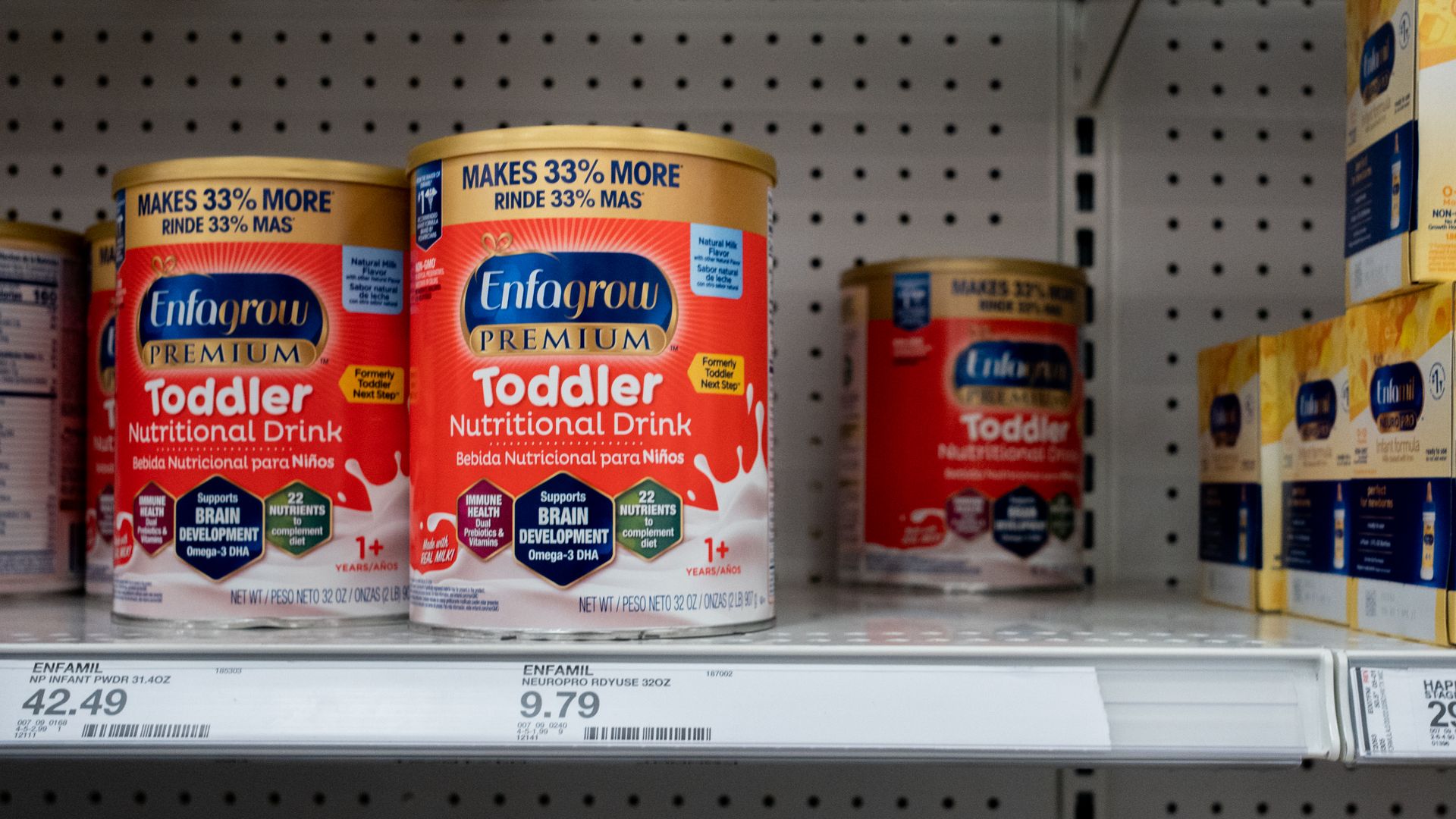
The baby formula shortage that has plagued American families this spring isn't over yet, according to a report from the research firm Information Resources Inc. (IRI).
Driving the news: About 20% of all types of baby formula remained out of stock during the week ending on July 24, the report said.
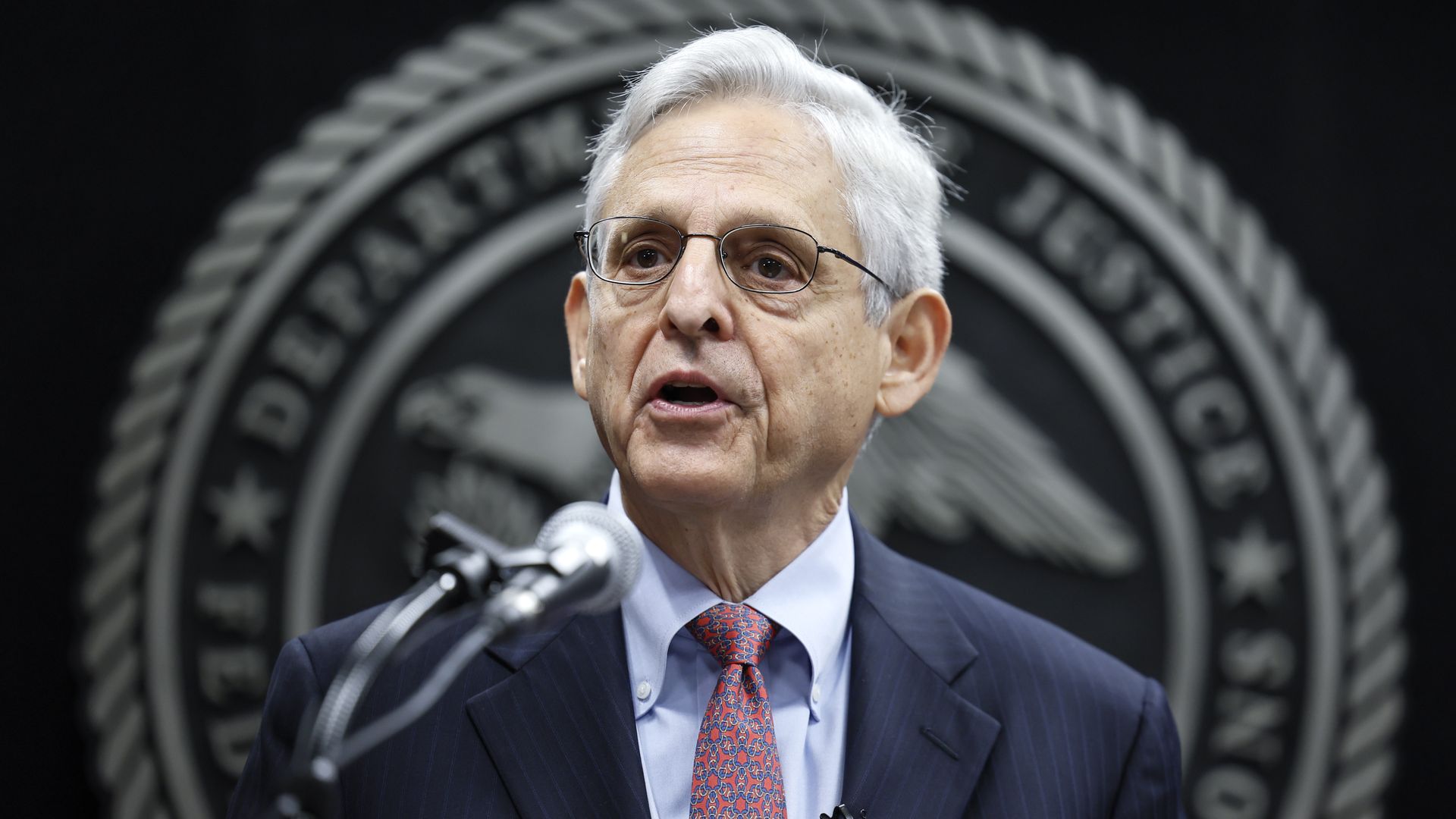
The Justice Department on Tuesday filed a challenge to Idaho's "trigger" near-total abortion ban — the Biden's administration's first abortion lawsuit against a state since the Supreme Court overturned Roe v. Wade.
Driving the news: Idaho's ban is set to take effect in late August and would make abortion illegal unless needed to save a pregnant person's life. The DOJ argues the state's ban has "extremely narrow" exceptions and conflicts with federal law, which allows for abortions to be performed in emergency situations.
The national uninsured rate dropped to a record low of 8% in the first quarter of 2022, according to a new analysis from the Department of Health and Human Services out Tuesday.
Yes, but: The number could increase if Congress fails to extend enhanced Affordable Care Act subsidies, which are set to expire at the end of this year.
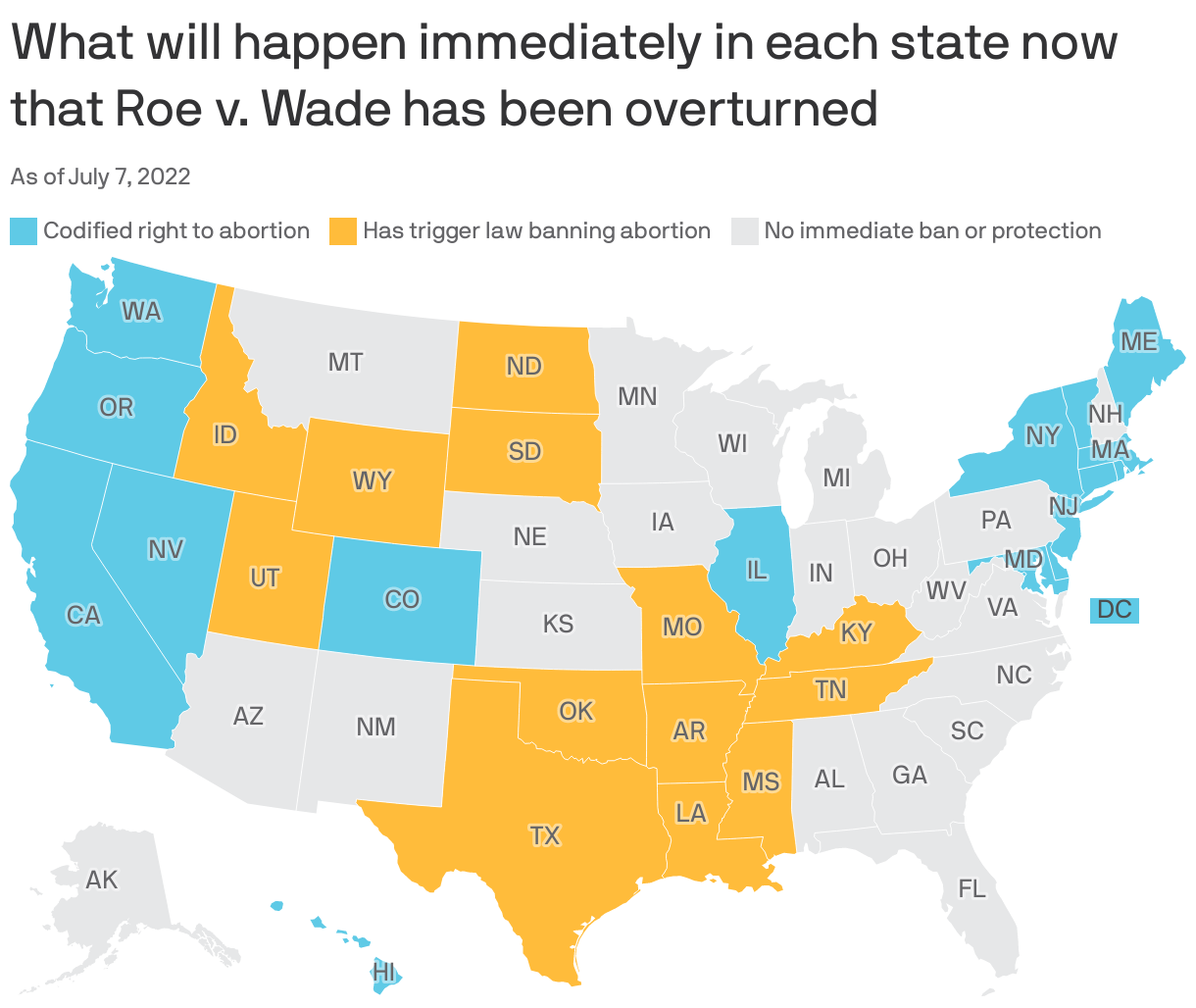
Data: Axios research; Cartogram: Sara Wise and Oriana Gonzalez/Axios
Abortion will become illegal in at least 13 states after the Supreme Court's decision to overturn Roe v. Wade, and more will quickly follow suit.
Why it matters: The Supreme Court's Friday ruling grants states the legal authority to ban the procedure at any point in pregnancy — including at fertilization.
An appellate court in Kentucky on Monday night reinstated two restrictive abortion laws in the state, allowing for a trigger law and a six-week ban to be enforced while a case to challenge the bans proceeds.
Driving the news: Judge Larry Thompson granted a request from Kentucky Attorney General Daniel Cameron, who had asked the court to reverse a lower court's temporary injunctions that allowed abortion providers to keep offering services.
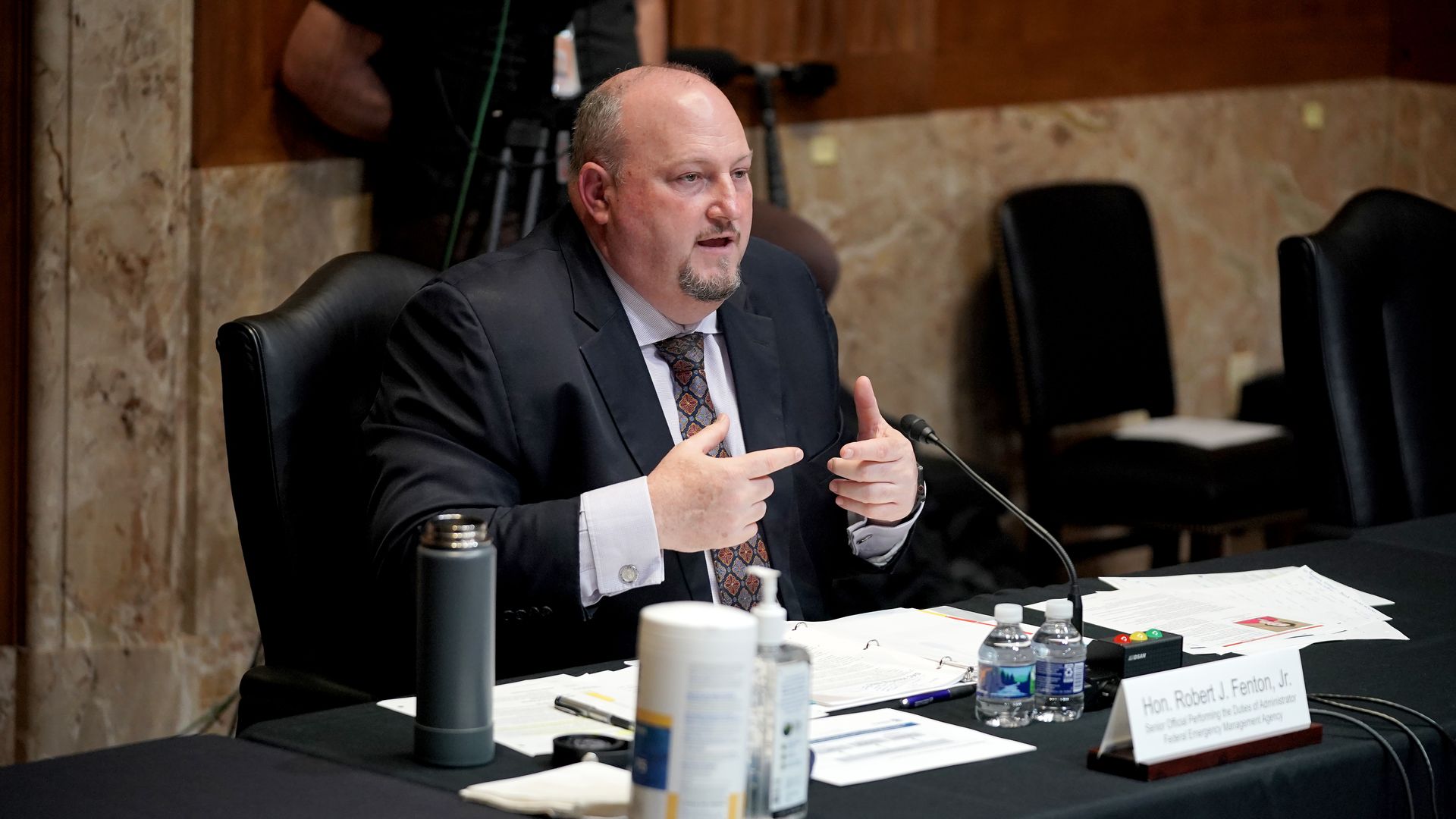
The Biden administration on Tuesday named veteran FEMA official Robert Fenton to lead the government's response to the monkeypox outbreak.
Why it matters: The Biden administration has faced mounting pressure to do more to stop the spread of monkeypox, which has prompted threestates to declare health emergencies.
In some states that have become hotspots for the monkeypox outbreak, there's a drastic disconnect between the number of doses that local health officials say they need versus what they have been allotted, an Axios Local review of a dozen states found.
Why it matters: Across the nation, health officials worry that the outbreak could become the country's second major public health disaster in as many years if we don't work faster to contain it.
In the aftermath of the Supreme Court overturning Roe v. Wade, 55% of voters say abortion is a "very important" issue to consider when deciding how to they will vote in November's midterms, up from 46% in February, according to a new poll from the Kaiser Family Foundation.
The big picture: While abortion is a motivating issue for some voter groups, it's eclipsed by inflation, including rising gas prices, which 74% of respondents say is "very important."
As students around the country start a new school year, providers say childhood immunization rates aretoo low, in some places, to prevent outbreaks of diseases like measles.
The big picture: After COVID kept kids isolated from classmates and discouraged routine medical visits, experts fear the student population will have lower immunity and be behind on routine vaccines.