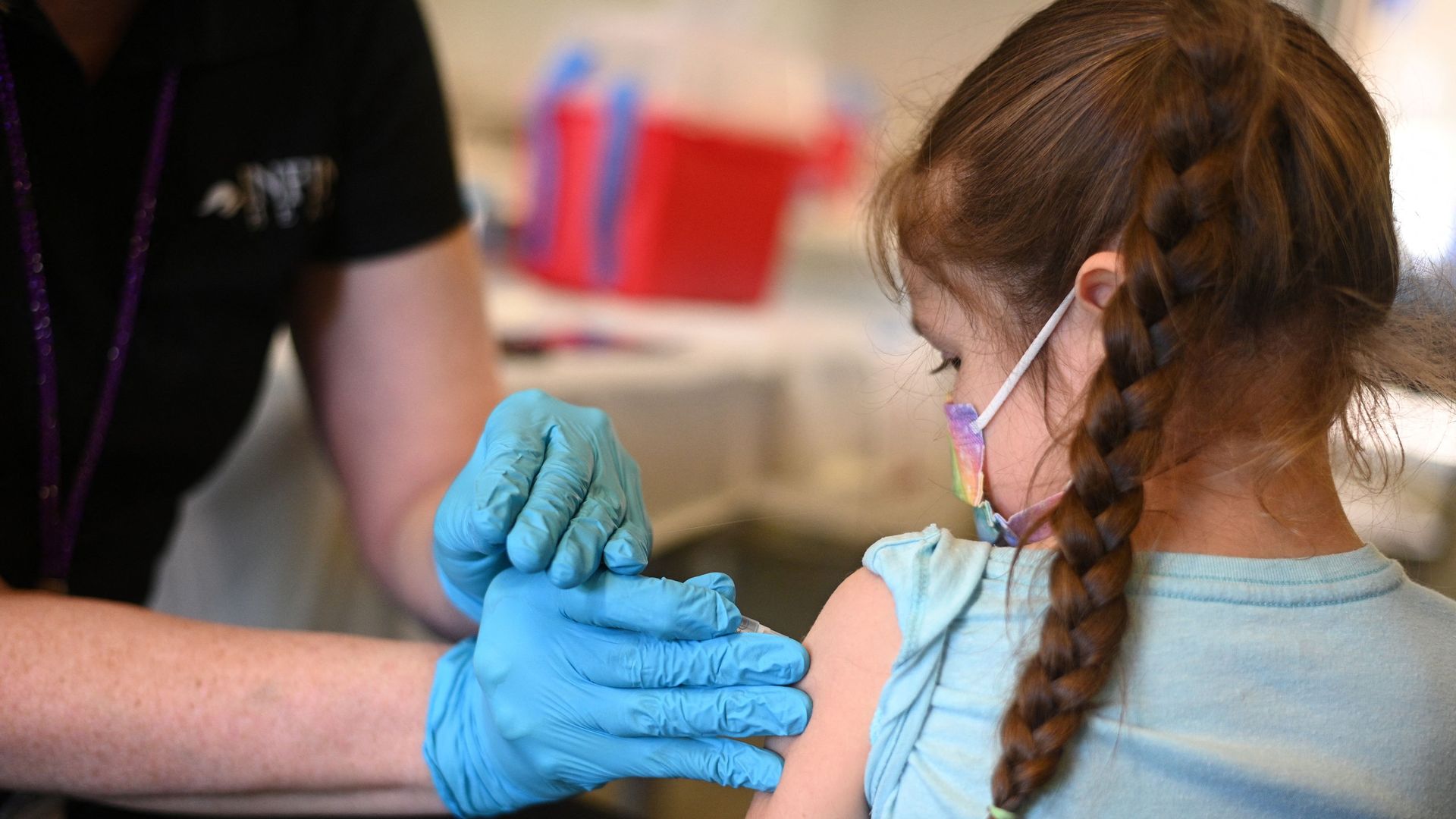
The Biden administration on Thursday outlined its strategy for making COVID-19 vaccines available to children under the age of 5.
Driving the news: Pending approval by the FDA and CDC, the White House said last week it hopes COVID-19 vaccines for the youngest children could be available starting June 21.
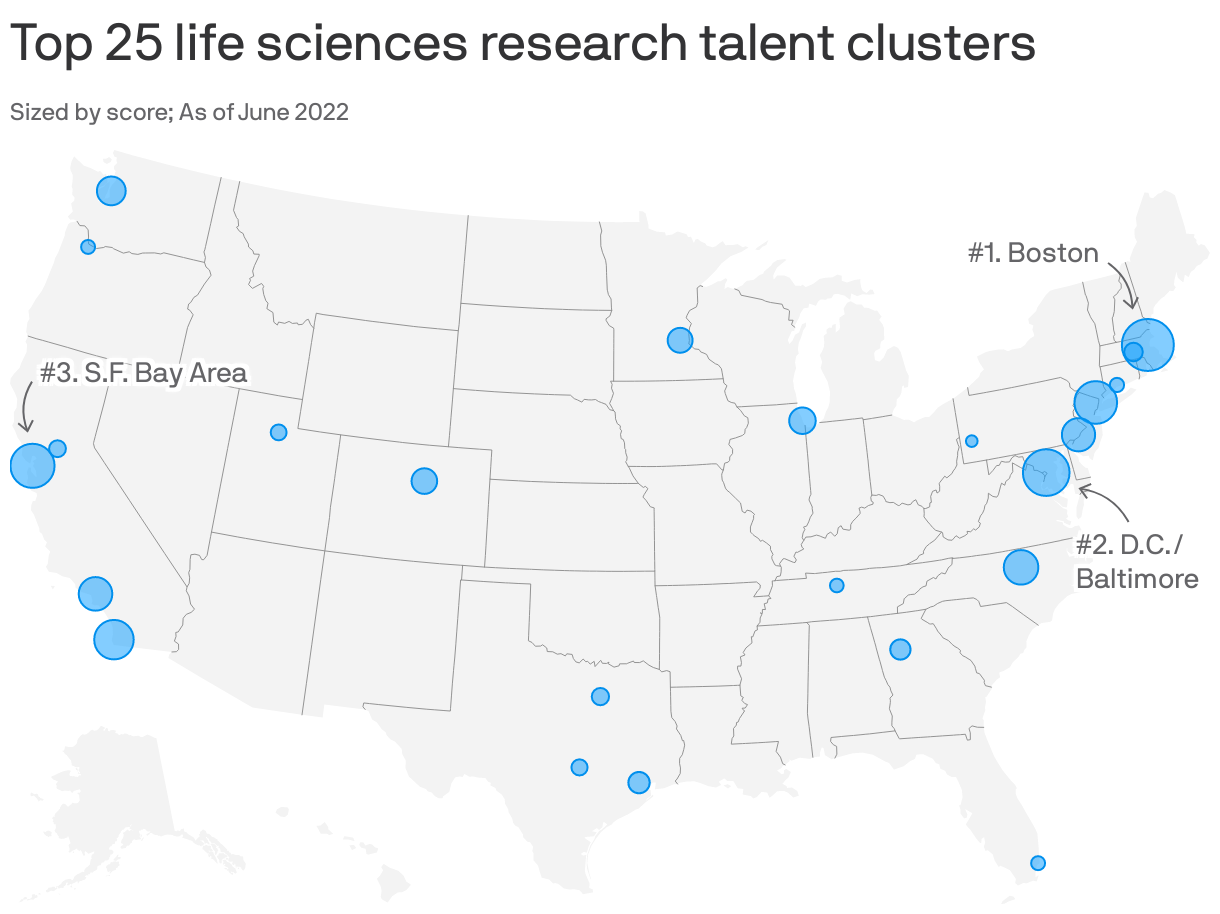
Boston, the Washington D.C./Baltimore corridor and the San Francisco Bay Area rank among the top 25 life science clusters in the U.S. as the battle for talent heats up, according to a new report from CBRE.
The list also includes non-coastal cities such as Pittsburgh, Dallas and Salt Lake City.
With existing pandemic funds dwindling and no new money from Congress in sight, the Biden administration is redistributing $10 billion from testing and other preparedness programs to ensure new COVID vaccines and existing treatments remain available this fall.
Why it matters: With Congress unwilling to approve new spending, the White House is making tough choices to avoid being caught short if new, more dangerous COVID variants emerge.
Nearly half of all drugs launched in the last two years initially cost above $150,000 a year, according to new research that's landing as Congress renews discussions about drug price controls.
Why it matters: The "exponential" growth during the pandemic offers more stark evidence of how pharmaceutical companies raised costs in the face of lawmakers' vows to enact price controls and even add them to COVID relief packages.
After deadlocking on the issue earlier this year, the Federal Trade Commission is launching an inquiry into the business practices of pharmacy benefit managers (PBMs) and how they influence drug prices and the pharmacy business.
The big picture: The prescription drug middlemen have been an increasingly prominent target of finger-pointing as players up and down the drug supply chain try to pass off blame for rising drug costs.
Six months after a federal price transparency rule went into effect in 2021, adherence to the rule by hospitals was low, according to new research published in JAMA on Tuesday.
Zoom in: Starting Jan. 1, 2021, the rule required hospitals to disclose five types of standard charges for all services in an accessible file, and have a consumer-friendly display for at least 300 shoppable services.
Three Texas families have filed a lawsuit demanding that a court block state investigations against them for supporting their transgender kids with gender-affirming care.
Driving the news: The Texas Supreme Court said last month state agencies could, but were not required to, continue investigating parents for child abuse if they seek gender-affirming care for transgender kids, under a directive Gov. Greg Abbott (R) issued in February.
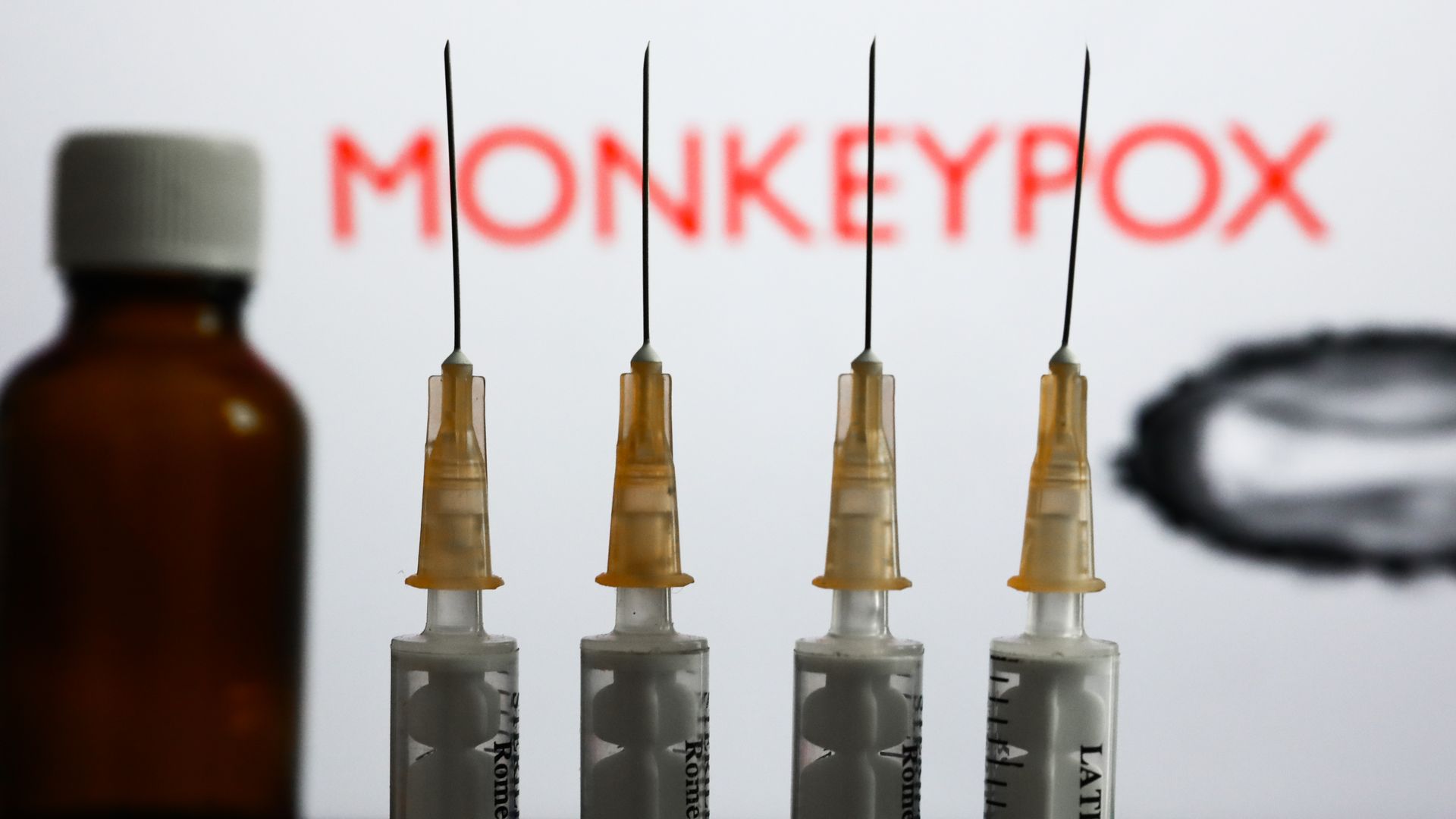
The World Health Organization said Wednesday it does not recommend mass vaccination against monkeypox, as global cases of the virus surpass 1,000.
Why it matters: Some countries have started to use smallpox vaccines to protect those exposed to monkeypox, and the U.S. has been shipping vaccines to multiple states to prevent the spread of the virus.
Health advocates say it's time to develop more preventative measures to curb the increasing rate of fatty liver disease among U.S. Latinos
Why it matters: The myth that cirrhosis is a disease related to alcoholism, and the associated stigma, have contributed to less research, advocates tell Axios.
Moderna said Wednesday that preliminary data show that its bivalent COVID-19 vaccine booster gives a "superior antibody" response against the Omicron variant.
Driving the news: The bivalent booster candidate generated an eight-fold increase in immunization against Omicron, Moderna said.
There's a growing effort to name and categorize heat waves the way we do hurricanes — to call attention to their significance, alert people to dangerous temperatures and prod public officials into action.
Why it matters: Heat waves are the deadliest type of weather emergency in the U.S. They're bigger killers than floods, tornadoes or hurricanes — and they're growing in frequency and intensity due to global warming.