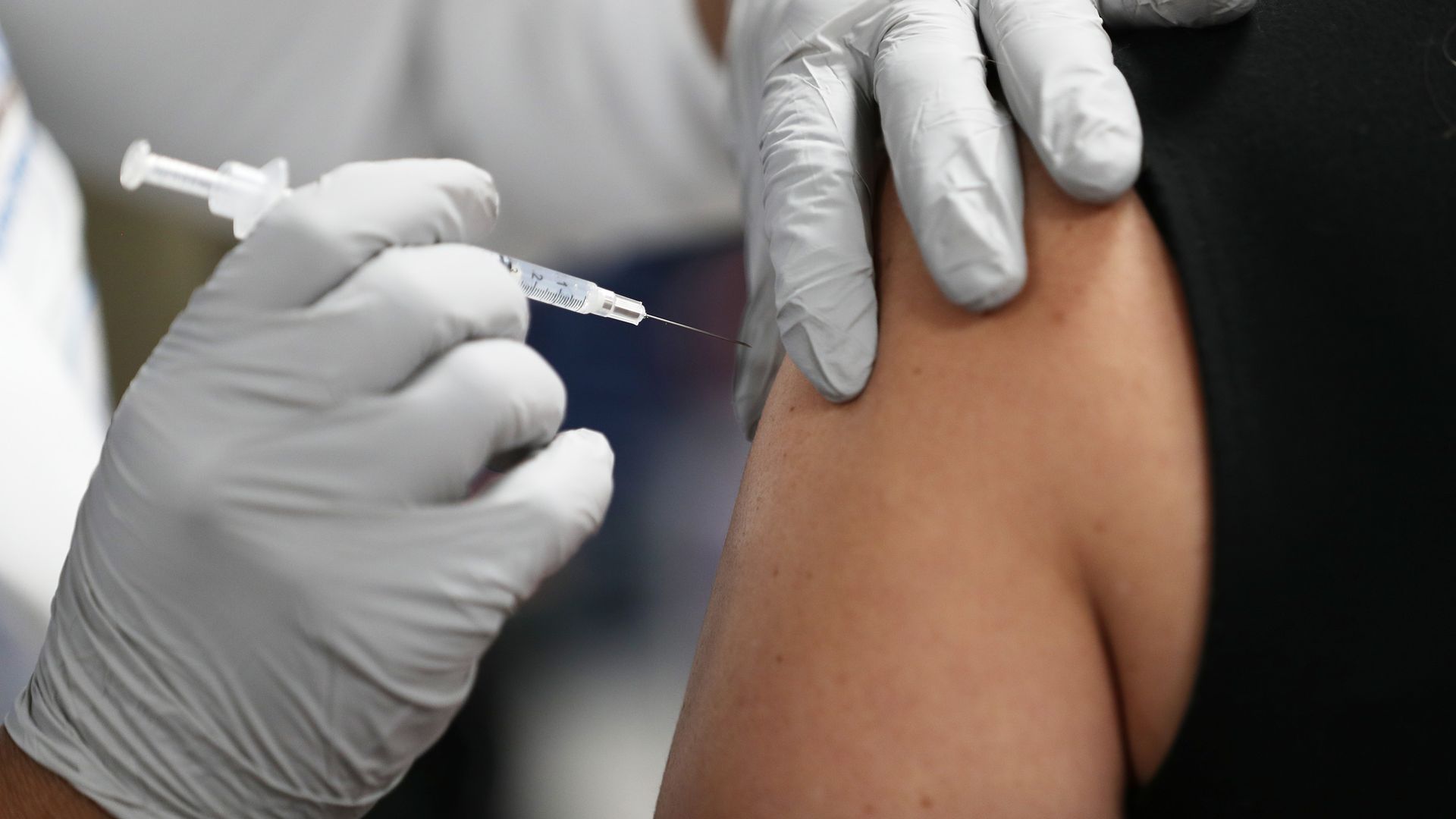
The world still needs more coronavirus vaccines, but an additional bottleneck has emerged in many low-income countries: They need help getting shots in arms.
Why it matters: Increasing vaccination rates across the world is both a humanitarian necessity and the best way to prevent dangerous new variants from emerging, but it increasingly requires complex problem-solving.
Health officials in the United Kingdom, Italy and Germany announced on Saturday that they've detected the first known cases of the new COVID-19 Omicron variant.
Why it matters: The discoveries come as the world scrambles to respond to concerns over the new variant, discovered in South Africa earlier this week.
South Africa said Saturday it's being "punished" for detecting the new Omicron coronavirus variant as more countries rush to enact travel bans and restrictions.
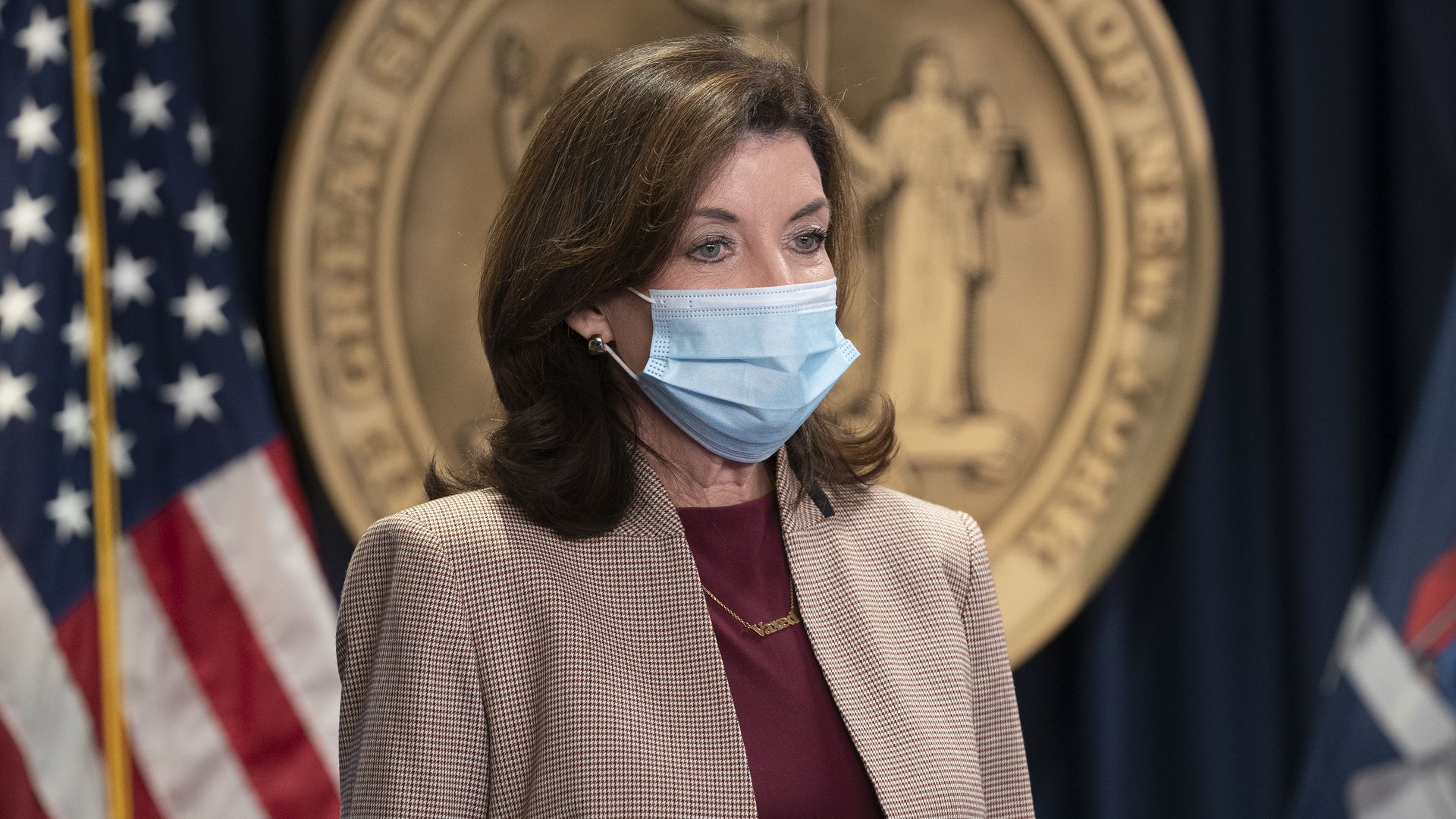
New York Gov. Kathy Hochul on Friday declared a state of emergency amid rising COVID-19 cases and the newly identified Omicron variant of the virus.
Driving the news: The declaration enables the state to acquire supplies to fight a potential surge in cases, increase hospital capacity and combat potential staff shortages, NBC's local affiliate reports.
The U.S. will impose new air travel restrictions in response to the Omicron variant, a new COVID-19 strain first detected in South Africa, President Biden announced Friday.
The big picture: Air travel from South Africa, Botswana, Zimbabwe, Namibia, Lesotho, Eswatini, Mozambique and Malawi will be restricted starting on Monday.
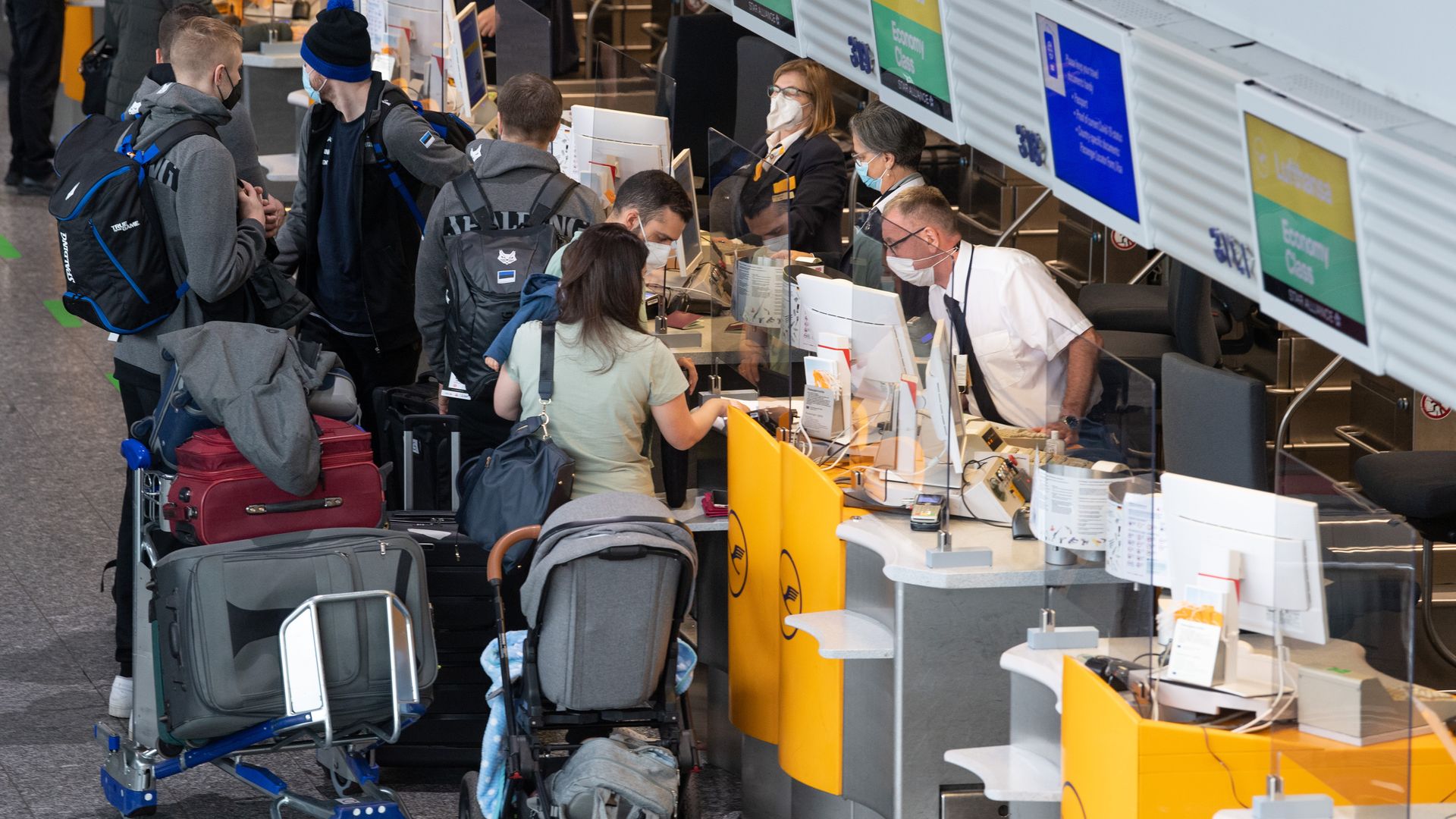
Countries across Europe and Asia are rushing through new travel restrictions in response to a new COVID variant identified by scientists in South Africa.
The big picture: Israel, Japan, the U.K., France, Germany, Italy and Singapore are moving to restrict entry from countries in the south of Africa, AP reports. Many are also adding quarantines for their own citizens upon return from the region.
As vaccine makers pursue the next generation of COVID-19 vaccines, some are working to develop products that wouldn't require a shot.
Why it matters: Delivering a vaccine through a pill or a nasal spray could make them much easier to administer, especially in places where distribution is challenging — or even for people who just don't like needles.
Merck said Friday updated data from a study on its experimental COVID-19 pill showed the drug is less effective than initially reported.
Driving the news: The drugmaker said molnupiravir reduced the risk of hospitalization or death for patients with mild or moderate COVID-19 by about 30%, based on a study of more than 1,400 adults. Last month, the company said the study showed about 50% efficacy, based on data from 775 patients.