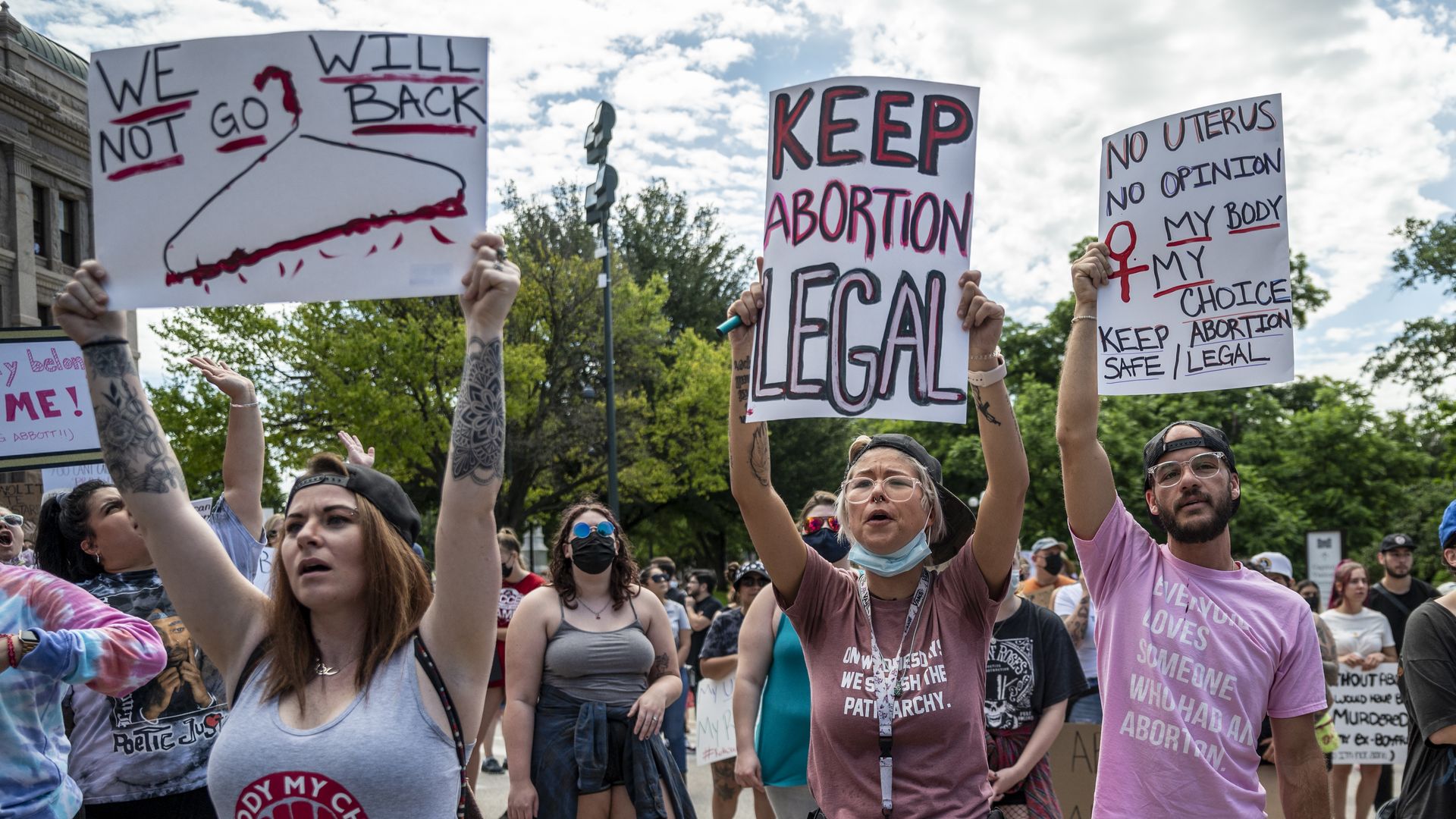
Bumble has created a relief fund to support reproductive rights for people who seek abortions in Texas, the Austin-based online dating platform announced Thursday.
Why it matters: Texas' new abortion ban went into effect on Wednesday, the most restrictive abortion law allowed for enforcement since 1973. It erects significant barriers and expenses for some people in Texas seeking abortions.
Michelle Fiscus, Tennessee’s fired vaccine chief, filed a federal defamation lawsuit on Thursday, alleging state officials skewed facts and misled the public as part of a coordinated campaign to destroy her reputation.
The backdrop: Fiscus was fired in July after facing criticism from Republican lawmakers over messaging to teenagers about the COVID-19 vaccine. A public battle ensued over Fiscus and her job performance.
NIAID director Anthony Fauci said at a press briefing Thursday that the coronavirus variant Mu, which the World Health Organization is now tracking, does not pose an immediate threat to the U.S.
Driving the news: WHO added the Mu strain, first detected in Colombia in January, to its "Variants of Interest" list Monday, warning that early data suggest it may be more resistant to protection from prior infection or vaccination.
Days after Hurricane Ida made landfall in Louisiana, many of the state’s Latino residents are awaiting aid amidst sweltering heat and lack of power, food and drinking water.
Details: The category 4 storm left many houses and apartments unlivable and their residents stranded in the swath between the Gulf of Mexico and Lake Pontchartrain, where many of the state’s Latinos reside.
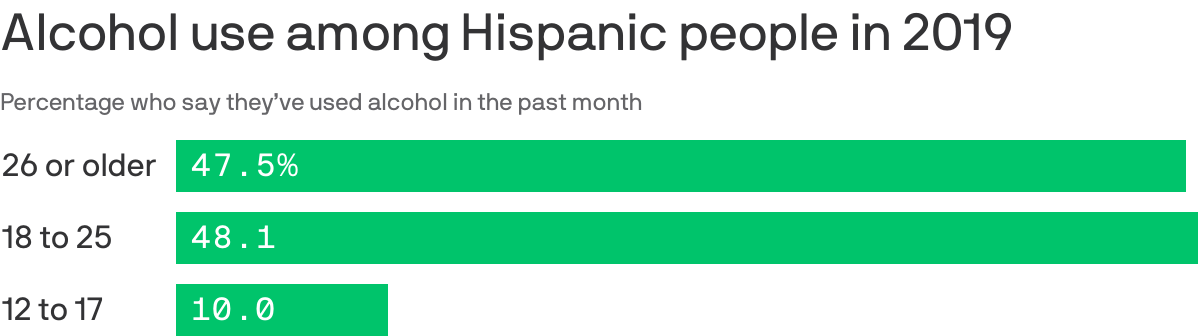
Data: National Survey on Drug Use and Health; Chart: Thomas Oide/Axios Visuals
Hispanic women had one of the highestincreases in alcohol consumption the last year, likely as a response to increased stress and caregiving responsibilities from the pandemic, per a study on drinking habits.
What’s happening: The data contrasts with a historical trend in which Latinas especially report more alcohol abstinence than white non-Hispanics, according to data from the National Institutes of Health.
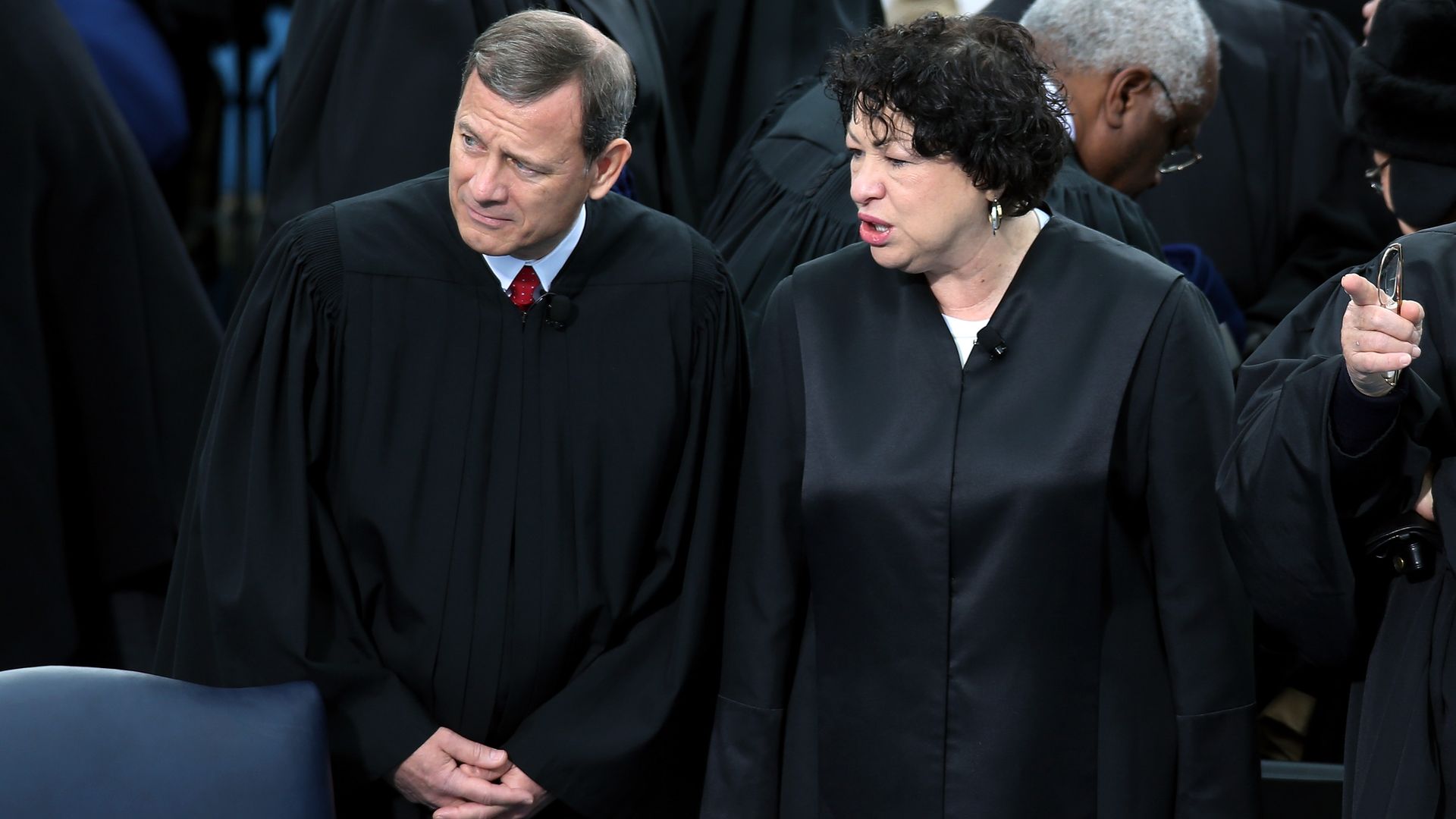
The Supreme Court voted 5-4 to leave the Texas ban on most abortions in place, with Chief Justice John Roberts joining the three liberal judges in the dissent.
Why it matters: The Texas law is the most restrictive abortion ban allowed to be enforced since the 1973 Roe v. Wade decision enshrined abortion as a constitutional right. The Supreme Court decision will likely prompt other states to pass similar laws, reproductive rights groups say.
Solv, a provider of same-day and next-day appointment software for health care providers, tells Axios that it's raised $45 million in new venture capital funding.
Why it matters: Health care remains difficult for many consumers to navigate, particularly as it has fragmented with the rise of urgent care facilities, telehealth services and home delivery of prescription products. Plus the rise of COVID testing and vaccinations, often in unexpected places.
The return to school across the U.S. coincided with surges in cases among kids, causing enough hospitalizations for children's hospitals to warn of capacity concerns.
By the numbers: There were roughly 204,000 child COVID-19 cases reported last week, according to the latest data from the American Academy of Pediatrics.
The Supreme Courtallowed Texas' ban on most abortions in the state to remain in place in a 5-4 vote late Wednesday, rejecting an emergency application by reproductive rights groups to block the restrictive law.
Why it matters: The law, which took effect earlier Wednesday, is the most restrictive abortion ban allowed to be enforced since the Supreme Court's landmark 1973 Roe v. Wade ruling that legalized abortion nationwide. Reproductive rights groups fear the court's decision will prompt other states to pass similar laws.
Preliminary Israeli data shows that coronavirus booster shots quickly spike a person's protection against both severe disease and infection, suggesting that the additional shots could help blunt the virus' spread in the U.S. — although it's very unclear how much.
Why it matters: The Biden administration has said that the main rationale for its booster push is to stay ahead of any waning of the vaccines' effectiveness against severe disease. But slowing the spread of the Delta variant would be a welcome bonus.
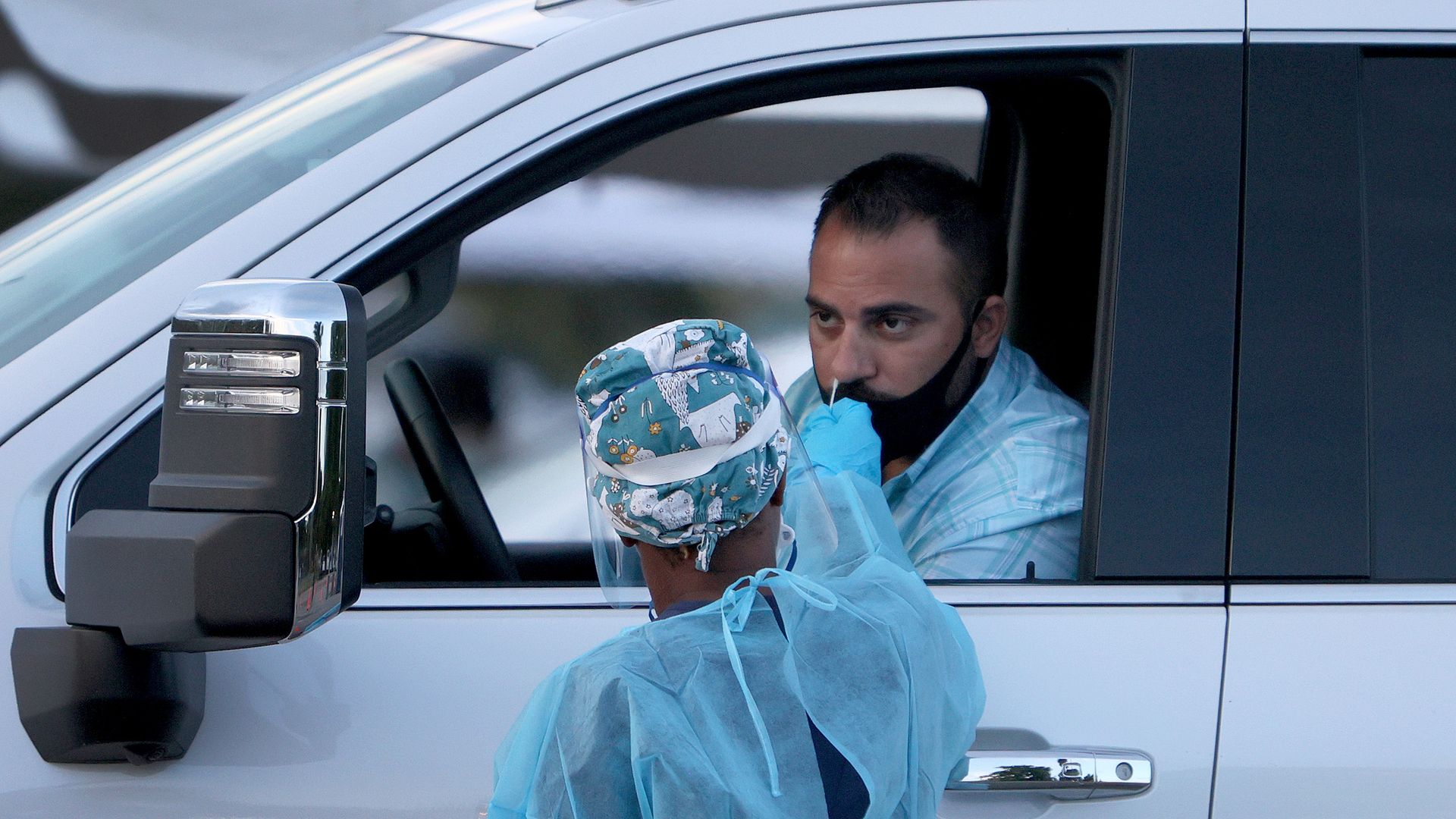
The United States processed an average of 1.2 million COVID-19 tests daily in August and some of the highest daily totals since April.
Why it matters: The surge of the Delta variant led to unexpected test volumes for diagnostic lab companies, and Wall Street is anticipating unexpectedly bigger profits for those companies as a result.
Coronavirus infections continue to climb all across the U.S., with few new solutions on the horizon.
The big picture: There are some initial signs that things may be starting to get better in the South, which has experienced the worst of this wave, but America’s springtime dreams of putting the pandemic behind us seem a lot less realistic now.