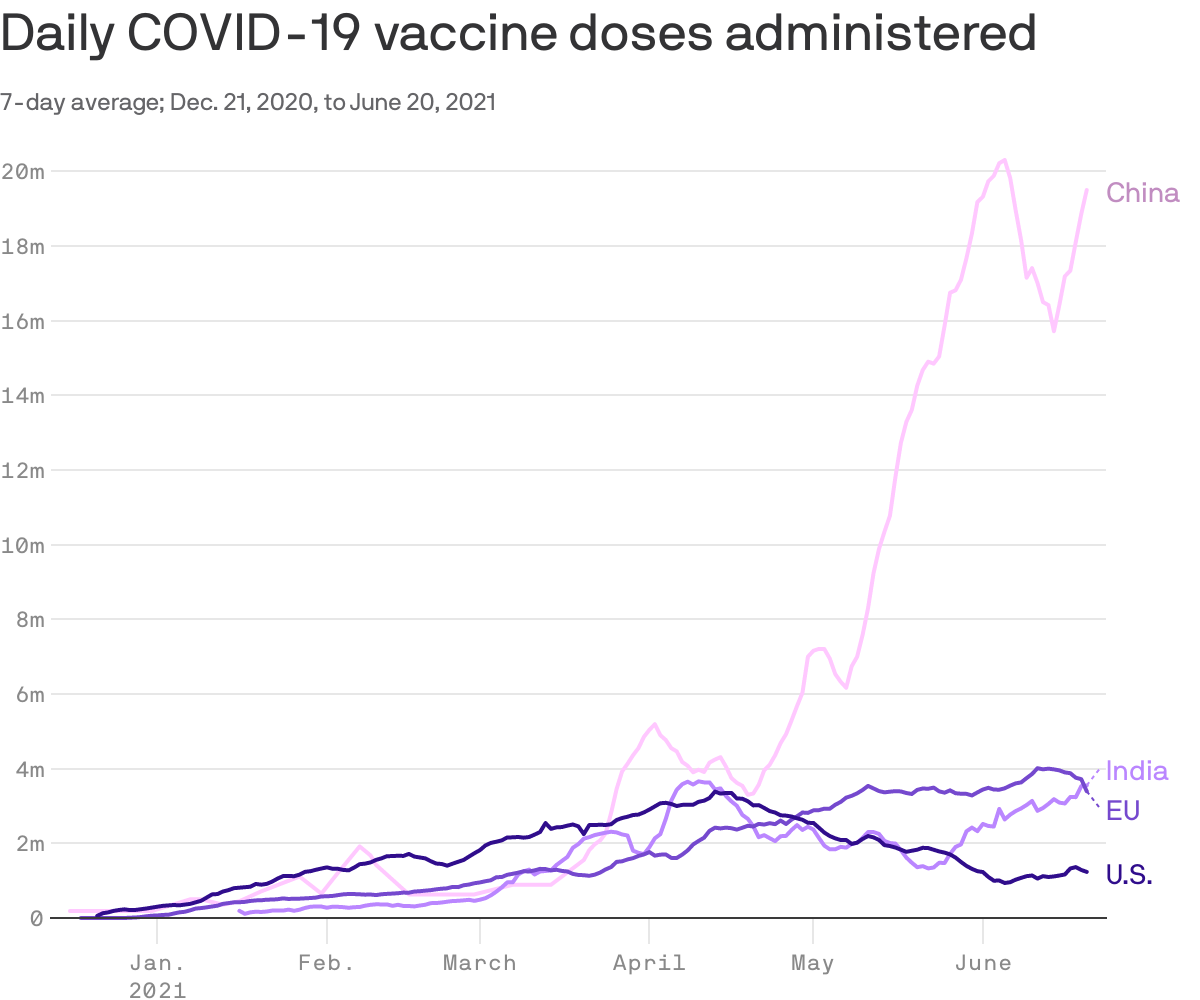
China has now administered 1 billion doses of coronavirus vaccines — 500 million of them in just the past month. That's half of the global total during that period.
The big picture: China's vaccine rollout started slowly, due in part to a low sense of urgency and also to the fact that the government was focusing on exporting doses.
WhatsApp and the Centers for Disease Control and Prevention have partnered to deliver information on the coronavirus vaccine to Spanish-speaking users, the social media platform announced Monday.
Why it matters: 36% of Latinos have had at least one vaccine dose compared to 45% of white people as of June 14, per the Kaiser Family Foundation. Reaching the Latino community on WhatsApp, which hosts a huge immigrant user base, could help counter misinformation and mistrust, NBC News reports.
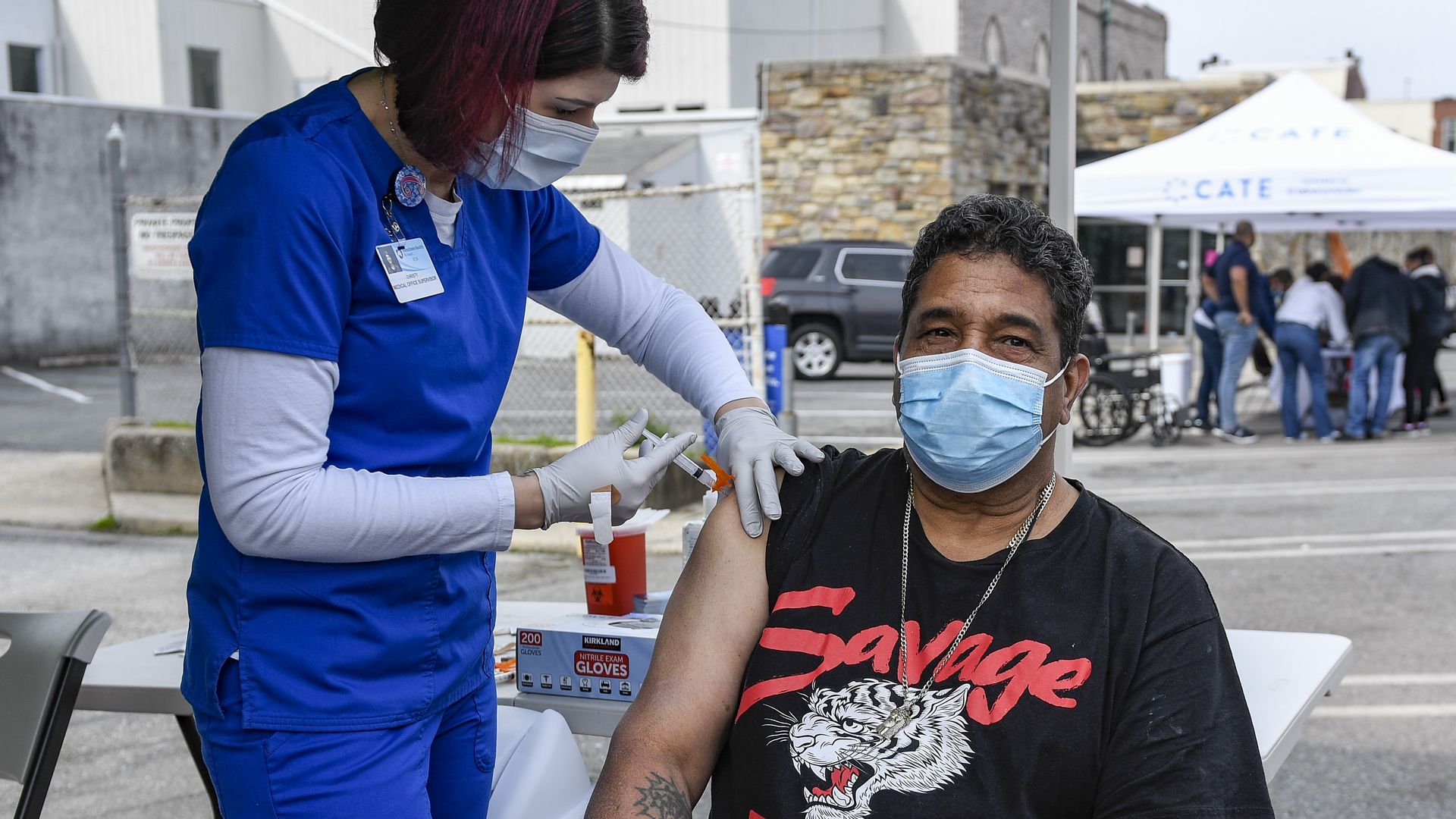
The Biden administration on Monday announced a list of countries that will receive the remaining 55 million COVID-19 vaccine doses that the U.S. has pledged to allocate by the end of this month.
The state of play: The White House had previously named the recipients of the first 25 million of the 80 million doses that the U.S. has pledged to export, as it took its first step toward becoming a global vaccine supplier.
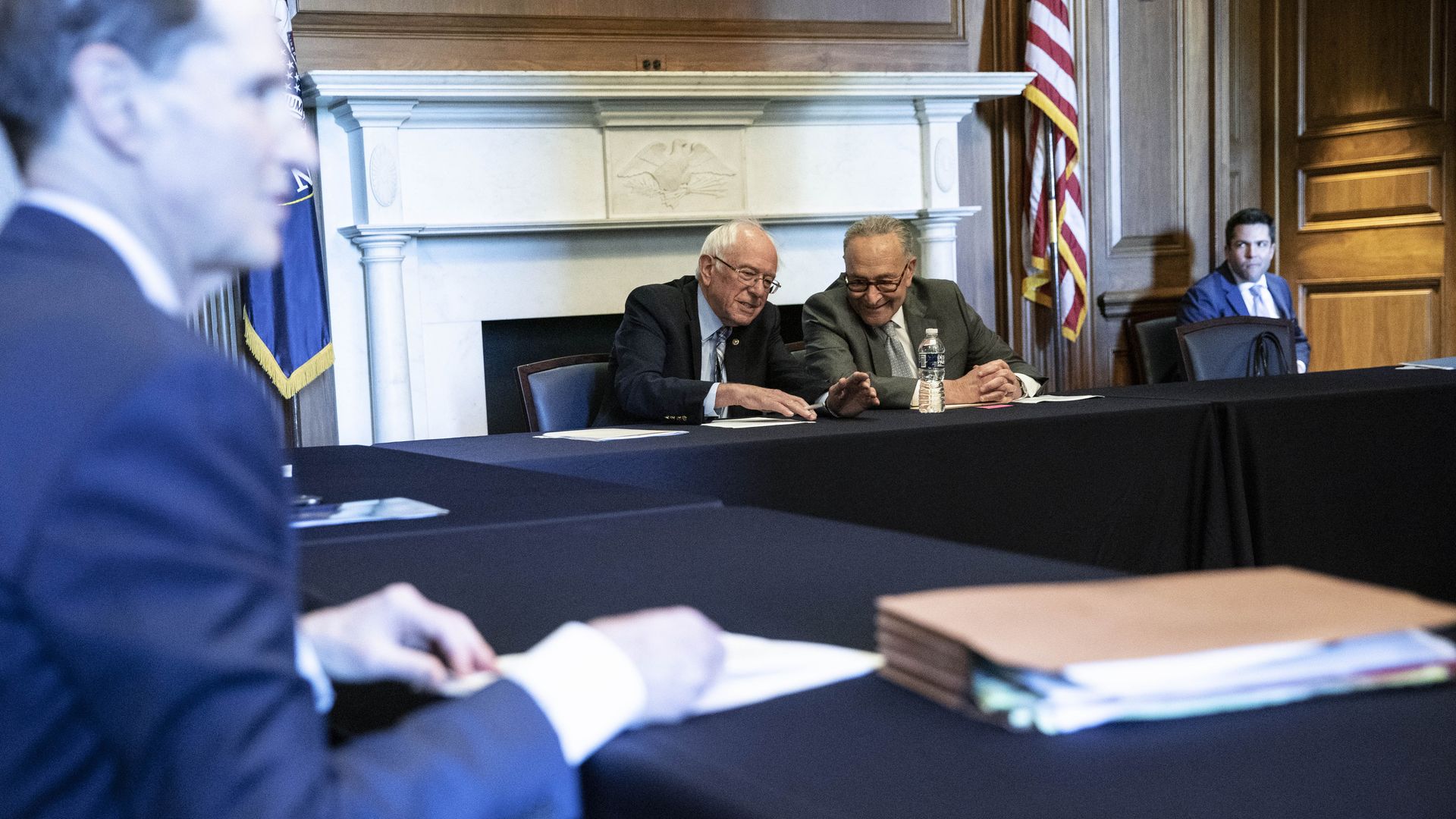
Senate Majority Leader Chuck Schumer (D-N.Y.) is working with Sen. Bernie Sanders (I-Vt.) to add dental, vision and hearing health coverage to Medicare, the New York senator announced Sunday.
Why it matters: Schumer said the effort is meant to close "a gaping hole" in the health insurance program that covers millions of Americans age 65 and older.
Nearly $50 billion or a third of Medicare Part D costs in 2016 were for drugs with absent cost-effectiveness analyses, according to a report from JAMA Network Open.
Why it matters: The lack of a quality analysis that weighs the relative cost with outcomes of these drugs may create hurdles toward efforts aimed at addressing drug spending in terms of value.
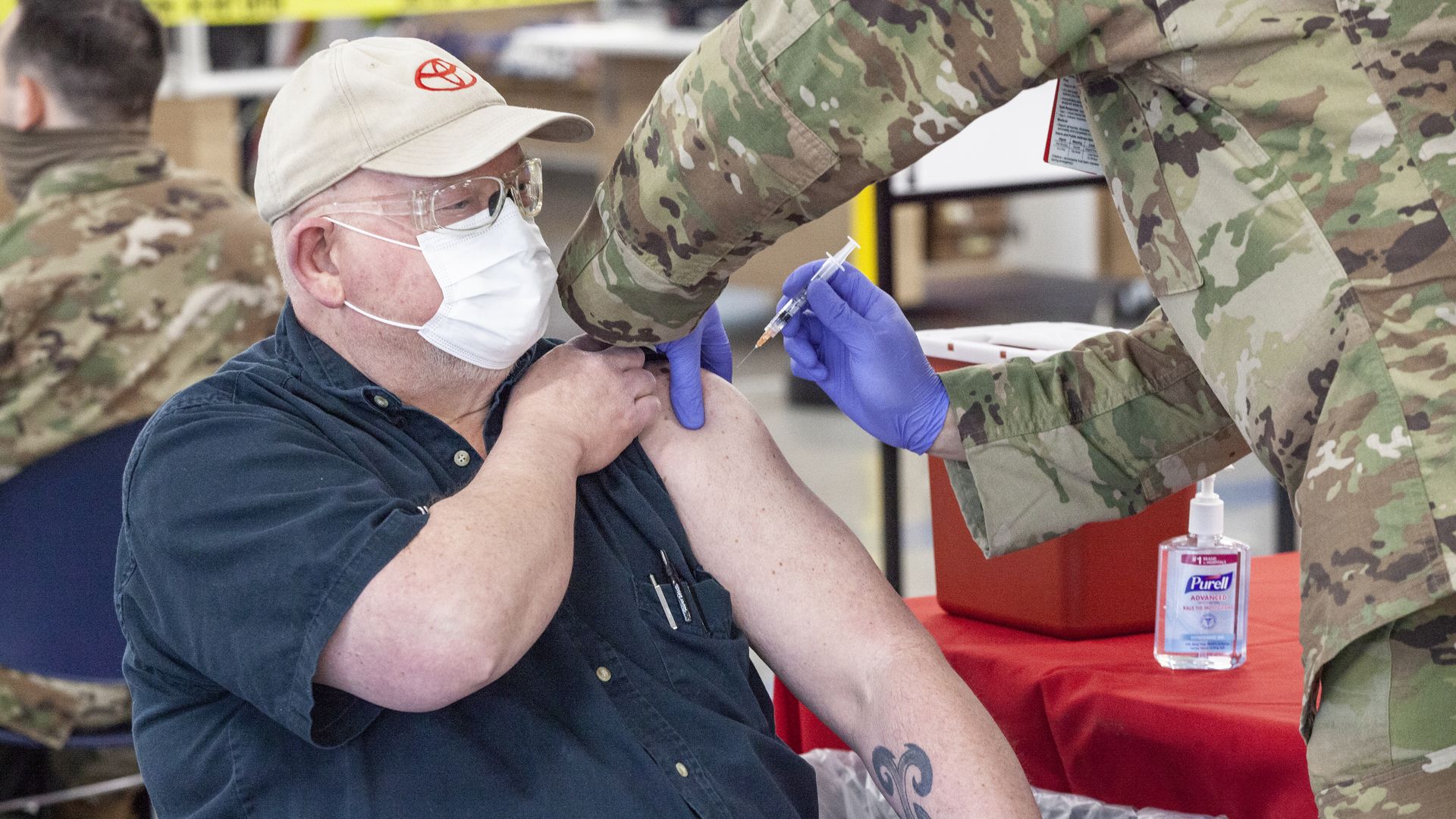
NBA season tickets. Scholarships. A chance at $5 million. The list of lotteries and raffles states are launching to drive up COVID-19 vaccination rates is growing, and some local officials are already reporting "encouraging" results.
Driving the news: The reason why, some psychologists and public health experts say, is that the allure of lotteries for many people is simply that the prospect of winning a great prize seems better than passing up the chance, regardless of the odds.
The coronavirus pandemic forced hospitals and patients to delay care — everything from heart procedures and knee replacement surgeries to lab tests and X-rays — but people have been flocking back to their doctors as coronavirus cases wane.
Why it matters: A return to normal levels of care means health care spending is back on the rise, which will continue to strain governmental budgets and people's paychecks.
Some states — particularly those in the South — are at much higher risk for bad coronavirus outbreaks not only due to low vaccination rates, but also because their populations were more vulnerable to begin with.
Why it matters: In many ways, the pandemic feels over in the U.S. But in some parts of the country, that feeling may be short-lived, especially as new variants continue to spread.