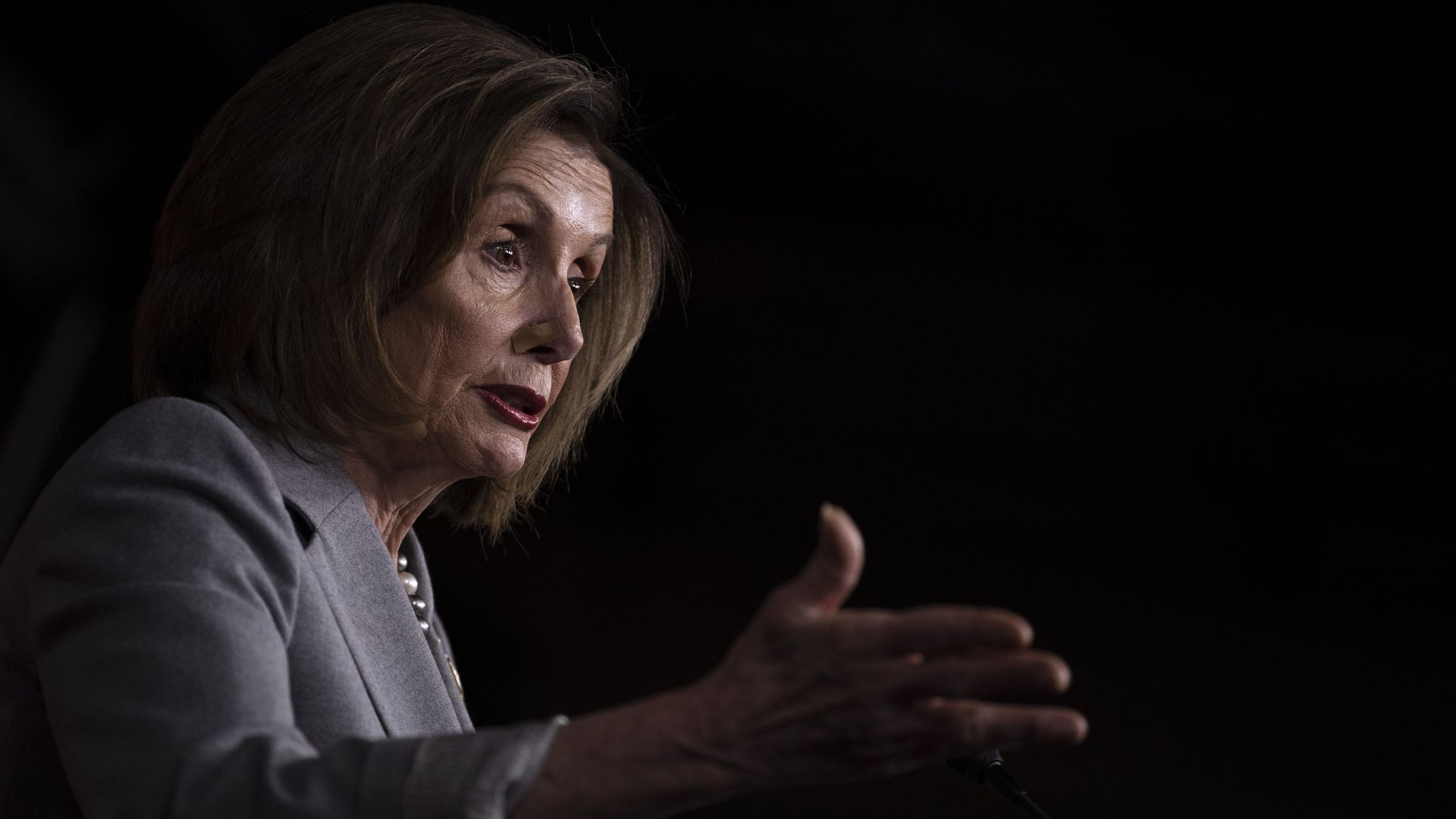
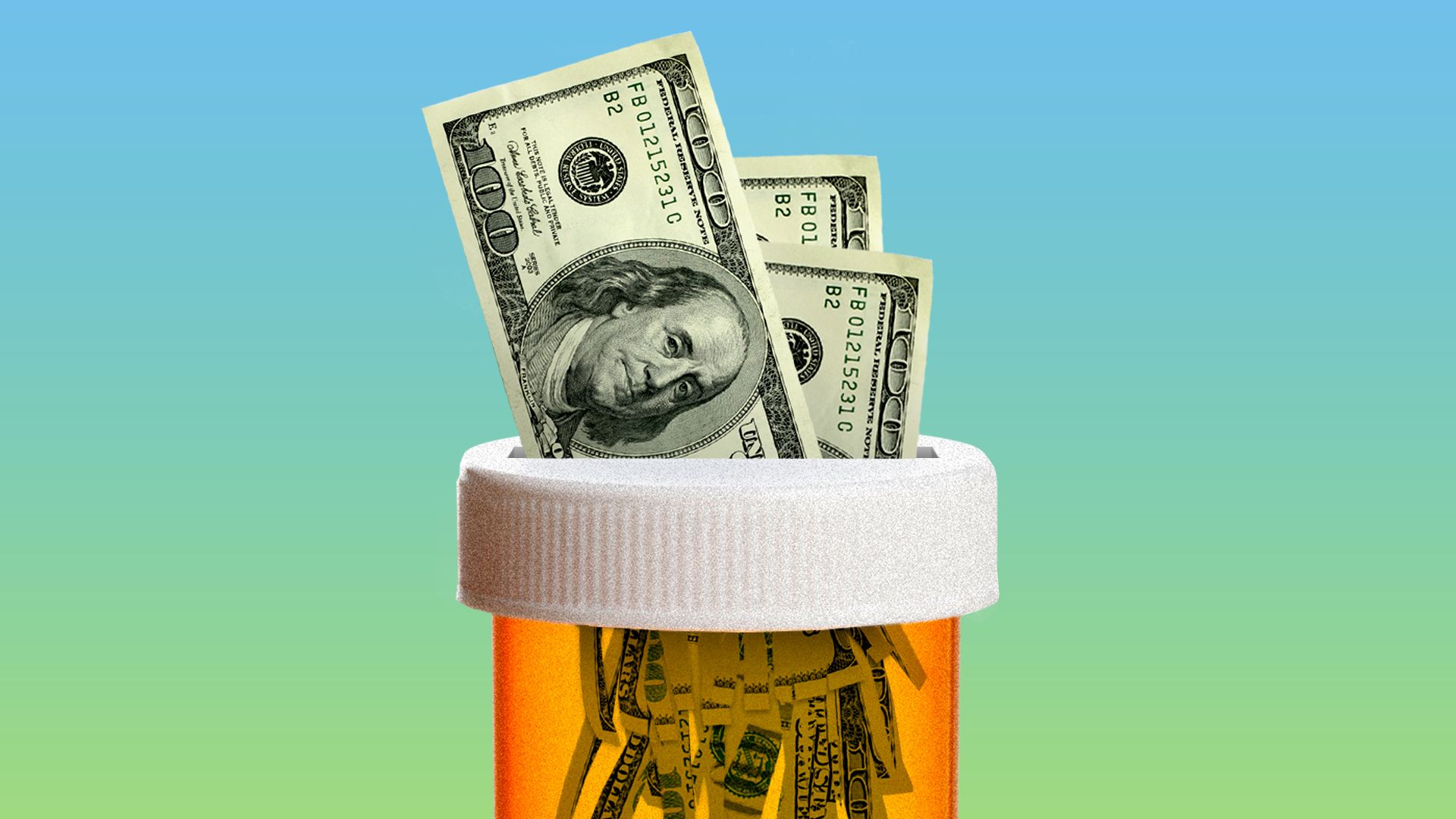
The House on Thursday passed a drug pricing bill backed by Speaker Nancy Pelosi that would allow the federal government to negotiate prices for specific drugs on behalf of Medicare and the private market.
Why it matters: Pelosi struck a last-minute deal with progressive Democrats who thought the bill didn't go far enough. Nonetheless, the bill has almost no chance in a Republican-controlled Senate.
A new federal audit presents more evidence that private Medicare Advantage plans are fudging the data about how sick their customers are, as a way to pull in more taxpayer dollars.
Details: Medicare Advantage plans received $6.7 billion in federal funding in 2017 based on diagnoses — like cancer or heart disease — that were not reflected in the actual care patients received, according to the report from the Office of Inspector General.
A new Gallup survey shows that Republicans have gotten a whole lot happier about the cost of health care since President Trump took office, while Democrats' satisfaction has plummeted.
Our thought bubble: There is very little reason for anyone to be satisfied with the cost of health care in the U.S. — and that has been true for a very long time.
Mergers between health insurers and pharmacy benefit managers have been billed as a way to save employers money. But half of employers don't expect that to happen, according to a new JPMorgan survey.
Driving the news: In JPMorgan's survey of top human-resources executives from 50 companies, exactly 50% said they don't think integrating medical and drug benefits under one roof will "drive overall health care savings."
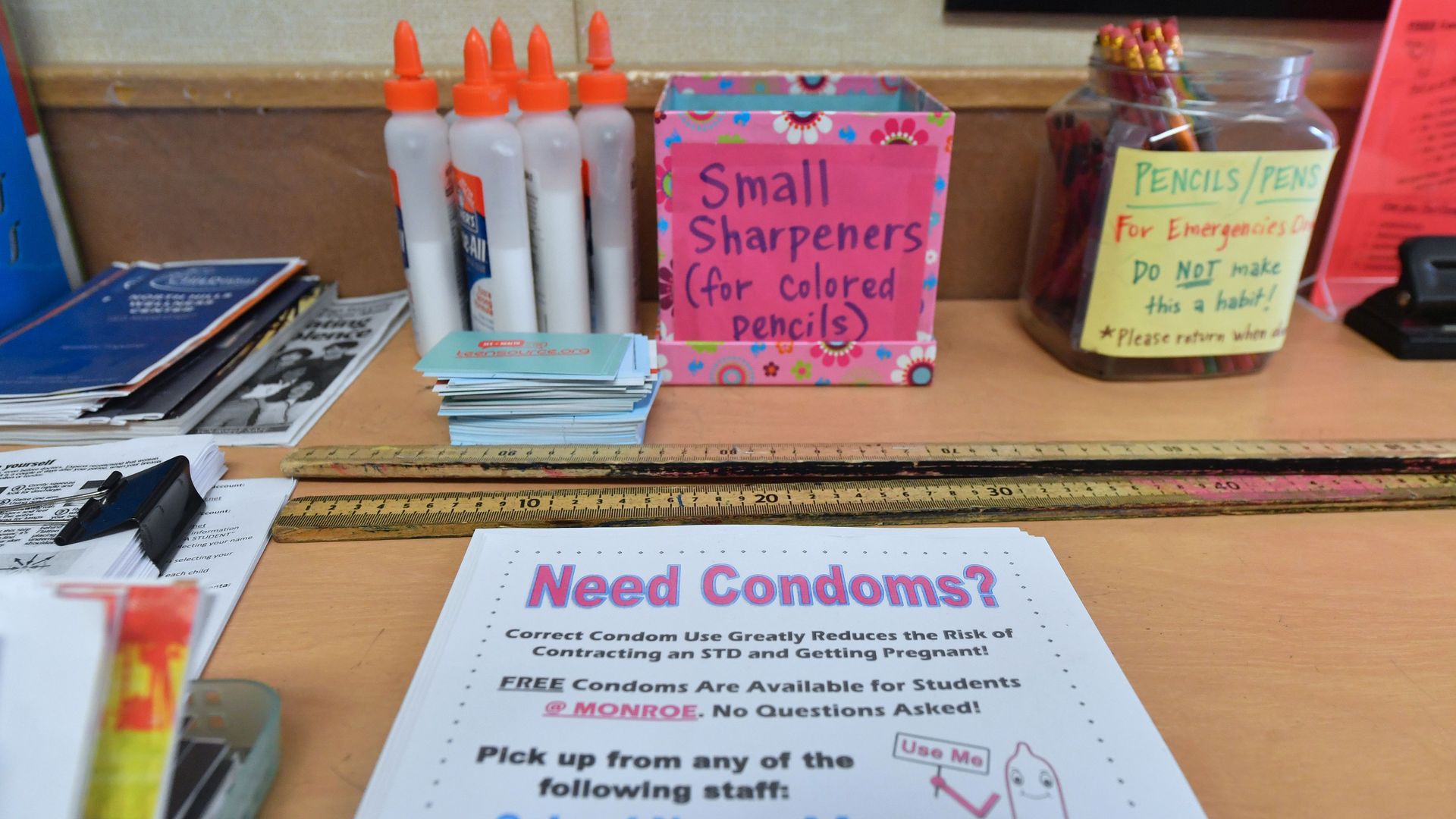
Planned Parenthood announced Wednesday it's opening 50 clinics for some 75,000 teenagers at Los Angeles County high schools that'll offer a range of reproductive services, but not abortions, the Washington Post first reported.
Why it matters: It's the latest example of California officials working with Planned Parenthood as the reproductive health care provider faces Trump administration efforts to restrict its services and cut funding. In October, California became the first state to require public colleges provide abortion medication to students on campus.
More than 50% of Americans have reported receiving surprise medical bills, when a provider charges more than an insurer will pay — but Congress is proposing a fix, over the health care industry's objections.
Former FDA commissioner Dr. Scott Gottlieb told Axios' Mike Allen at an event Wednesday that Juul, a vaping company that has the largest market share of e-cigarettes, "should be pulled off the market entirely."
Why it matters: The Trump administration has stalled talks to ban flavored tobacco products as millions of teens within the past few years have become addicted to nicotine.
Roughly 4.7 million people who have no health insurance could get coverage next year without paying a dime for the monthly premium, according to a Kaiser Family Foundation analysis.
Why it matters: If you make less than $50,000 as an individual or $103,000 as a family of four — and you can't get health insurance through your job or Medicaid — you could get coverage for free.
The Supreme Court appeared to side with insurers over their claim that the federal government owes them $12 billion in Affordable Care Act risk corridor payments, AP reports.
Between the lines: The program was included in the ACA to help protect insurers participating in its new marketplaces from financial losses, but Congress inserted provisions into spending bills limiting those payments.