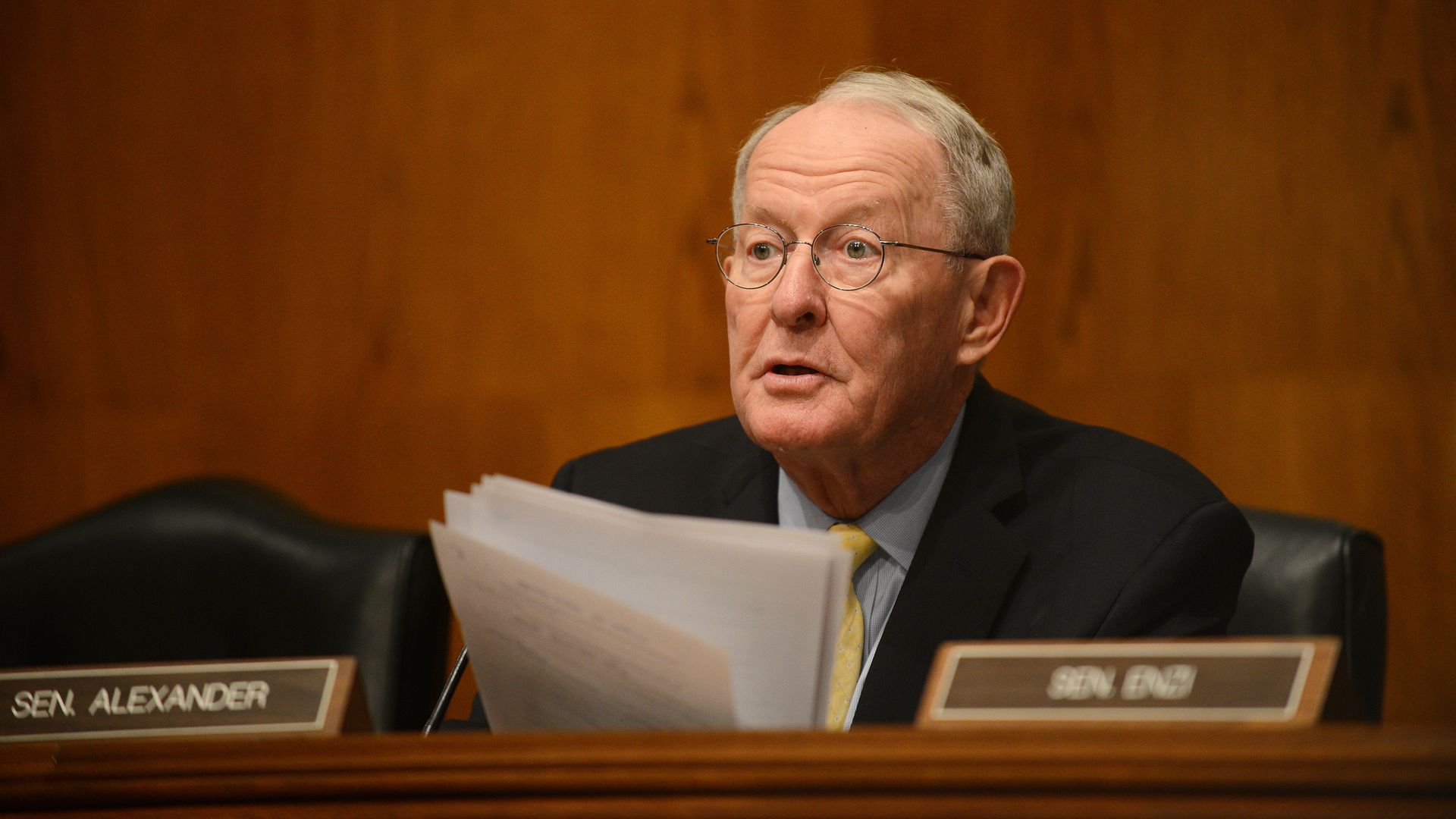
The health care industry is not very happy with Congress' latest proposal on surprise medical bills, which also includes other provisions designed to lower health costs.
Driving the news: The bill, championed by Sen. Lamar Alexander and Reps. Frank Pallone and Greg Walden, cracks down on industry behavior that is often profitable at patients' expense.
A group of insurers will make their case to the Supreme Court today for billions of dollars in Affordable Care Act payments.
Driving the news: The court will hear oral arguments in a long-running dispute over the ACA’s risk corridors program. Insurers say they’re owed billions of dollars from that program; the government says it doesn’t have to pay.
As they took in Game 5 of the World Series together, President Trump told House Minority Leader Kevin McCarthy he doesn't want to fight for the most prominent prescription drug component of the administration's trade pact with Mexico and Canada — despite it being a key priority for Republicans.
Why it matters: The biologics provision has beenone of the final sticking points keeping the USMCA from finalization, with Democrats fighting for it to be removed or watered down. But McCarthy has known for more than a month that Trump probably won't go to bat to keep it.
People who are in the middle of a health crisis often are at an especially high risk for surprise medical bills, according to previously unreleased data from the Kaiser Family Foundation.
The big picture: The new data underscore the importance of a legislative solution to help patients who are powerless to protect themselves.
Details: People having surgery or receiving mental health and substance abuse treatment at an in-network hospital are the most likely to experience a surprise bill from an out-of-network provider.
Among people with employer-based insurance, out-of-network charges were 50% higher among heart-attack victims than for other diagnoses.
21% of women undergoing mastectomies experienced out-of-network provider charges.
My thought bubble: It’s hard to imagine many patients who are so prepared and insurance-savvy that they could protect themselves from an out-of-network bill in the middle of a heart attack.
Why it matters: It doesn’t take a headline-sized bill to wreak havoc on family budgets.
Half of the American people say they would have to borrow money or go into debt to pay a $500 medical bill, or wouldn’t be able to pay it at all.
Unexpected medical bills are the public’s top health cost concern, ahead of deductibles, premiums, drug costs, and even paying the rent or the mortgage.
People with major medical conditions and chronic illnesses are most likely to experience problems paying their medical bills.
The bottom line: Congress is torn between two competing ideas solving this issue and settling payment disputes between insurers and providers. Each plan has its own implications for premiums and industry negotiations, but for patients, just getting a fix is the most important thing.
Spending on prescription drugs in 2018 — both through premiums and out-of-pocket costs — grew a moderate 2.5% from the previous year, which was below the growth rates for hospital and doctor services.
Yes, but: That doesn't give a true accounting of total pharmaceutical spending. Spending on common and expensive drugs that are administered by providers is buried within the hospital and doctor statistics.