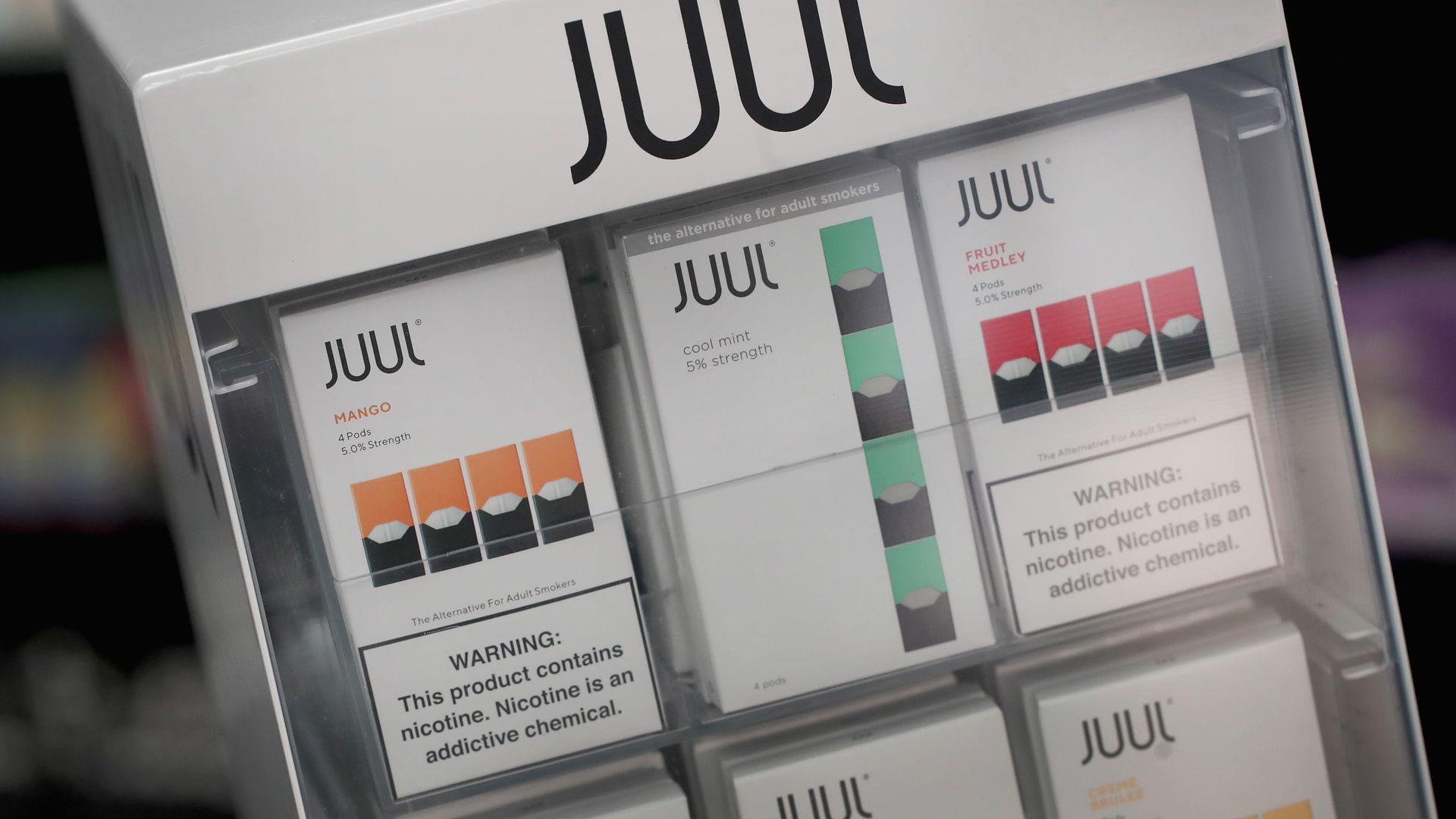
Middle school and high school students are vaping mint or menthol flavors almost as much as fruit-flavored e-cigarette products, a new investigation by JAMA shows.
Reality check: The Trump administration is expected to announce this week a finalized ban on almost all flavored vaping products, but it won't include tobacco and menthol flavors.
A drug pricing model used by other countries but long opposed by drugmakers in the U.S. is getting new attention amid the political debate over drug prices, the Wall Street Journal reports.
How it works: The method, pushed by the Institute for Clinical and Economic Review, "puts a dollar figure on a year of healthy life, calculates how much health a drug restores to a sick patient, then prices drugs accordingly," per the Journal.
Georgia Gov. Brian Kemp — a Republican — released Monday his plan for a partial Medicaid expansion, with work requirements attached. It will apply for partial expansion if the initial request is rejected.
The big picture: If the waiver is approved, Georgia would be the first state with work requirements built into its expansion. Other states have tried to retroactively apply work requirements.
More than half of Medicare beneficiaries with a serious illness have struggled to afford a medical bill, and some beneficiaries with chronic conditions pay an astronomical amount out of pocket for their care, two new studies find.
Why it matters: Medicare is supposed to be a safety net for America's seniors, but its lack of a cap on what beneficiaries pay out-of-pocket — and the fact that it doesn't cover some benefits — leads to many seniors falling through the cracks.
Switching to a high-deductible health plan has an impact on diabetes patients' adherence to their medication — but only if they're taking brand-name anti-diabetic drugs, a new study in JAMA Network Open found.
Why it matters: This is further evidence that putting people on the hook for too much of their health care costs can have adverse health effects if they then can't afford their care.
The Trump administration is promising to issue a "forthcoming final rule" related to its proposal requiring hospitals to post all of their privately negotiated prices with insurance companies. It delayed a decision in a final regulation released Friday.
Between the lines: Even if the Trump administration follows through and issues a price transparency rule, the industry almost certainly will sue to block it — meaning this policy is years away from seeing the light of day.
Sen. Elizabeth Warren's Medicare for All plan takes on every major health care industry — insurers, doctors, hospitals and drug companies — in her pursuit of expanding coverage and lowering costs for the middle class.
Why it matters: We've never tried any cost containment measures that are remotely close to being as aggressive as Warren's, and there could be consequences if payment rates are slashed so low.