San Francisco banned e-cigarettes on Tuesday, citing a "growing health epidemic of youth vaping."
The big picture: San Francisco is now the first major U.S. city to ban e-cigarettes, NBC reports. Juul, which is headquartered in San Francisco, tried to crack down on youth vaping in 2018, but this didn't prevent the FDA from stepping in to start to address the problem.
AbbVie is acquiring Allergan for $63 billion in cash and stock, in a deal valued at about $80 billion after factoring in Allergan's debt. The company is banking that Allergan's Botox, along with other beauty and eye drugs, will ease the transition as AbbVie's Humira loses U.S. patent protection in 2023.
Why it matters: A combined AbbVie and Allergan — both of which have engaged in controversialpatenttactics to protect the moats around their blockbuster drugs — would be one of the largest companies in the rapidly consolidating pharmaceutical industry.
Why it matters: Self-funded employers, or those that directly pay for their workers’ medical claims, usually buy "stop-loss" coverage to insure themselves from unpredictably costly diagnoses. And cancer has been the highest-cost condition for stop-loss claims every year since 2013.
The cost of specialty drugs has skyrocketed over the last decade, with the cost of 61 widely used drugs almost tripling between 2006 and 2017, according to a new AARP report.
By the numbers: The average annual cost of a specialty drug in 2017 was almost $20,000 more than the median U.S. household income.
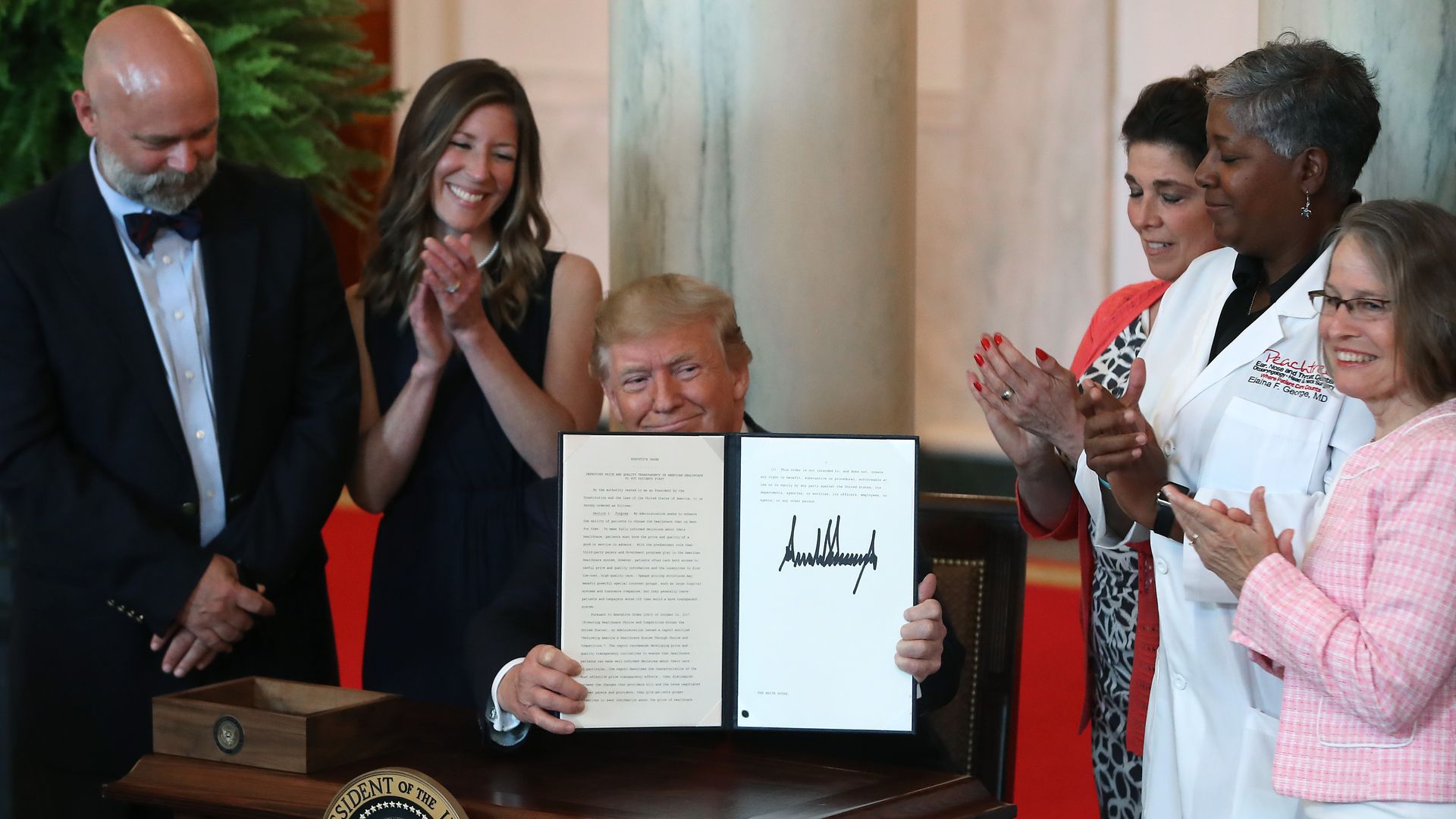
The most important detail to watch in the regulations for President Trump's executive order on price transparency for hospitals: will they require that insurers give consumers information on out of pocket costs in a timely and usable way?
Why it matters: That kind of timely information will be needed in the regulations — which have yet to be written — so consumers can shop based on the costs they will actually pay.
Industry groups came out with guns blazing yesterday against President Trump's executive order on price transparency for hospitals. And plenty of experts are skeptical that it will bring prices down.
What's next: Industry will have ample opportunity to kill or weaken the new rules while the administration fills in the details through the regulatory process.
As a condition of Federal Trade Commission approval for its takeover of Celgene, Bristol-Myers Squibb plans to sell off Otezla, a psoriasis drug made by Celgene that generated $1.6 billion of worldwide revenue in 2018.
Why it matters: The FTC seems worried Bristol-Myers would hold too much power in the psoriasis market; it has a psoriasis drug in development and sells Orencia, which treats psoriatic arthritis. The Otezla divestiture would significantly cut the value of the Celgene deal, and sent Bristol-Myers' stock down 7%.
Health insurers will get a chance to persuade the Supreme Court that they're entitled to roughly $12 billion in payments under the Affordable Care Act. A lower court ruled against the insurers last year, but the Supreme Court said Monday that it will hear their appeal.
The big picture: The disputed payments involve the ACA's "risk corridors" program, designed to help stabilize the law's insurance markets through their infancy. Insurers say the government still owes them billions, but the Trump administration says Congress has forbidden those payments.
President Trump will sign an executive order today directing his administration to require hospitals to disclose more information about the prices patients and insurers actually pay. The order also aims to give patients more information about their out-of-pocket costs.
What's next: The prices hospitals negotiate with insurers are valuable business information, and both parties will likely fight hard to keep those prices secret.
The fight against malaria in the past couple decades has largely had a positive trajectory — since 2000, there have been 7 million lives saved and about 1 billion cases prevented — but recently there's been pockets of plateauing or increased infections in the world.
Why it matters: Malaria parasites are starting to show more resistance against insecticides and drug treatments. Combined with political instability and lack of necessary funding, the goal of eliminating malaria now requires urgent action with new tools no longer using the "one size fits all" method, a group of malaria experts tell Axios.
The Senate is working on a proposal that would allow state Medicaid programs to pay for new gene therapies over time, and tie those payments to patients' outcomes.
Why it matters: Tying payments to how well drugs work, on this scale, would be an enormous policy change. But some experts are skeptical, saying such a model would perpetuate high prices.






/2019/06/24/1561416426387.gif?w=3840)