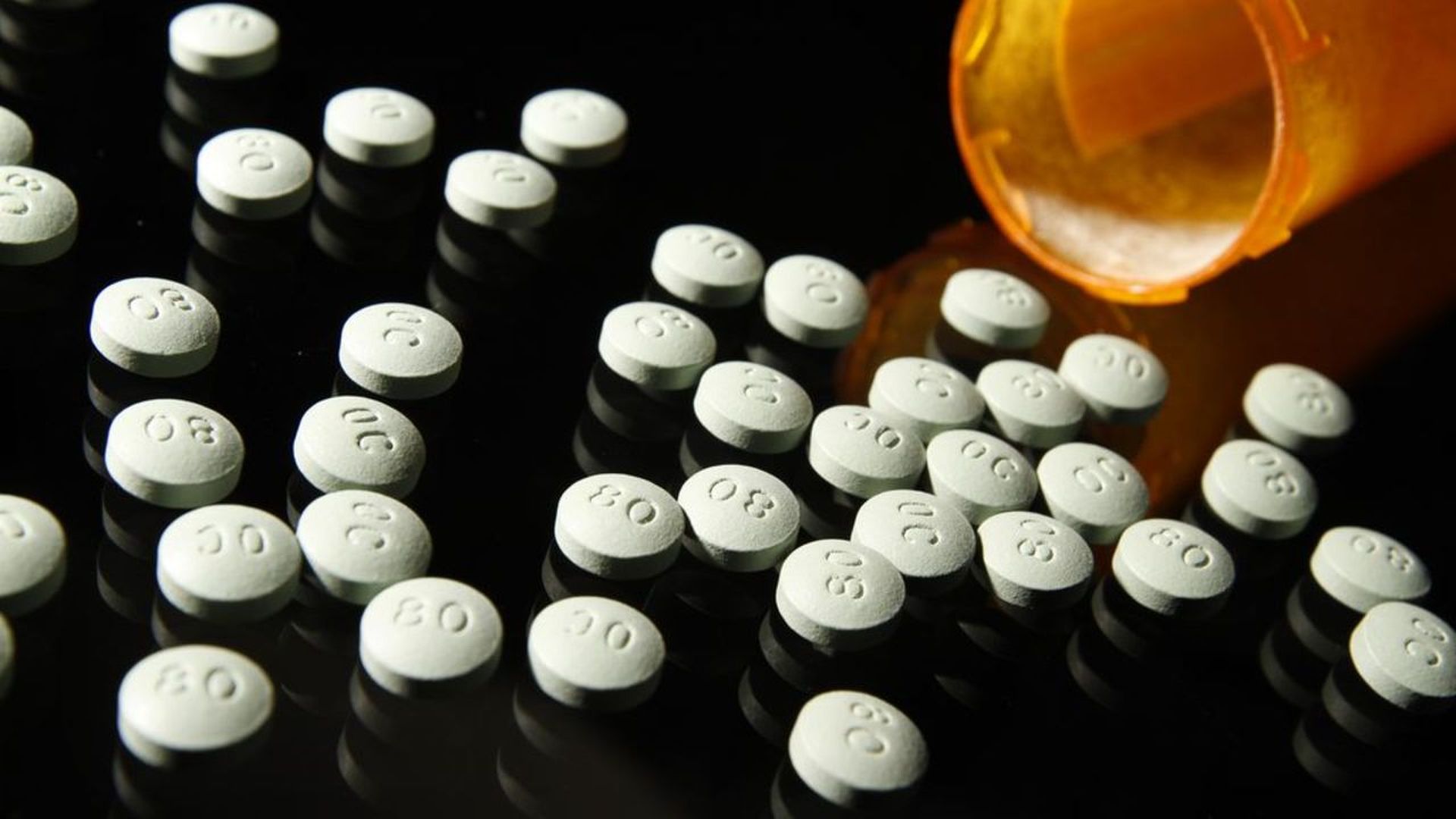
Purdue Pharma and the Sackler family — both of which are facing legal questions about their involvement in the opioid epidemic — made donations to Tufts University's medical school that may have helped advance their business interests, Stat News reports.
Details: Tufts, for example, allowed a high-ranking Purdue executive who said in 2003 that OxyContin wasn't addictive to lecture in the pain program and receive the title of adjunct associate professor.
Bernie Sanders' "Medicare for All" push has upended Democratic politics almost as thoroughly as it would upend the health care system.
Why it matters: The coverage most of us are used to — private insurance through the workplace — would change or even disappear under Medicare for All. The only question Democrats are really debating is how far to go, and how quickly.
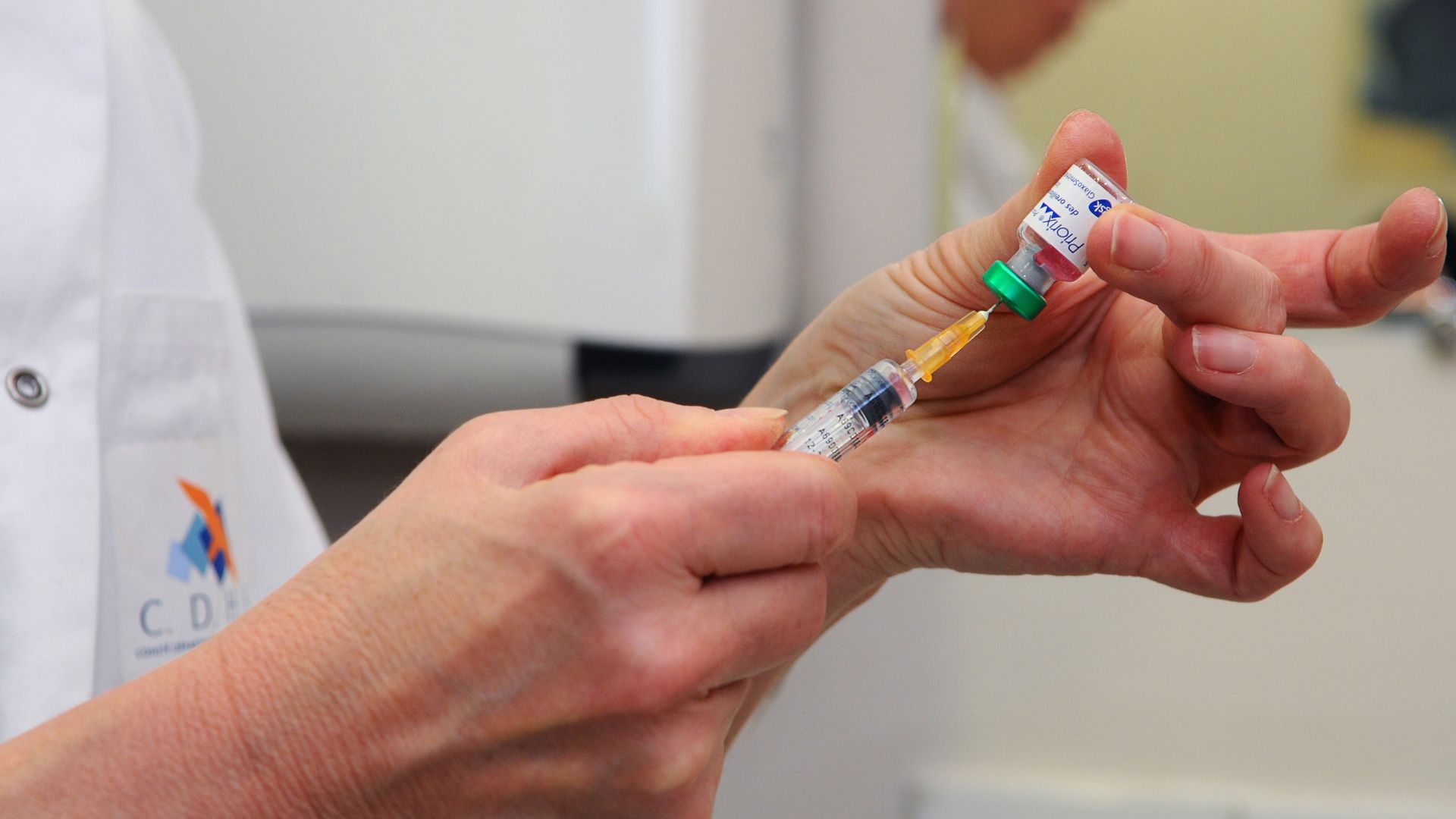
There's a state of emergency in New York City, where Mayor Bill de Blasio is practically begging residents to get their vaccinations after 285 confirmed cases of measles since the fall.
Why it matters: The world's financial capital has declared a public health emergency in the face of a virus that has a safe and effective vaccine.
Four pharmaceutical companies — Johnson & Johnson, Pfizer, Merck and Abbott Laboratories — collectively kept $7 billion in tax savings in 2018 due to Republicans' 2017 corporate tax overhaul, according to a new Oxfam report.
The bottom line: Oxfam's results mirror our reporting, which shows pharmaceutical companies in particular have benefited from bringing back billions of dollars in overseas profits that have sat untaxed. However, this report says the tax savings have not led to other social goods, like more research investment in new drugs or lower drug prices.
New York City declared a public health emergency on Tuesday over the current measles outbreak and ordered mandatory vaccinations for everyone exposed to the virus, adding that the city will issue violations and possibly fines for those who do not comply, the New York Times reports.
Administrative costs make up a much larger share of health care spending in the U.S. than in other high-income countries, according to a new analysis by the Center for American Progress.
Adapted from a Center for American Progress chart; Chart: Axios Visuals
The big picture: In 2016, we spent 8.3% of our health care dollars on administration, while the next-highest spender — France — spent only 5.7%.
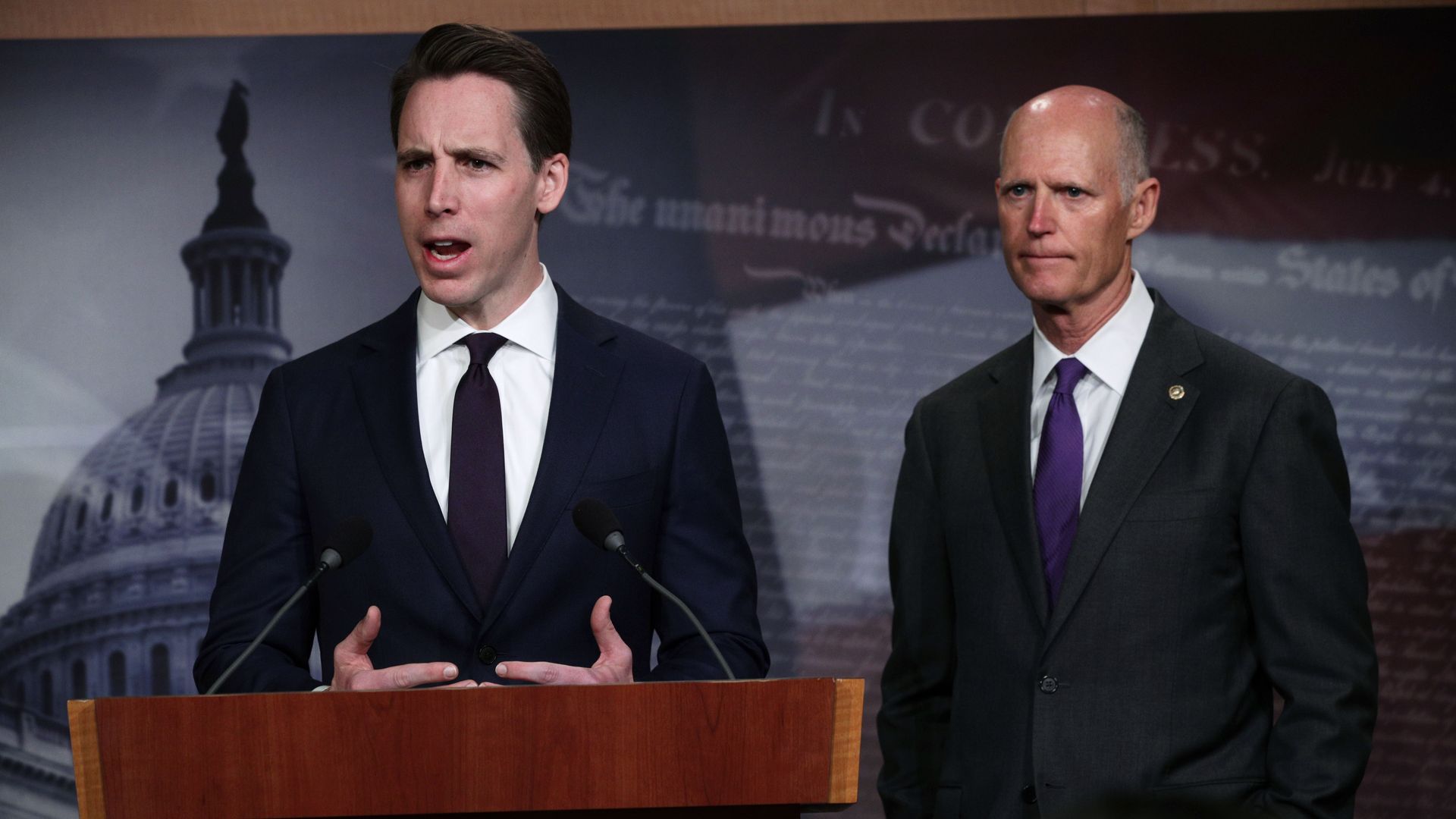
Freshman GOP Sens. Rick Scott and Josh Hawley introduced a new drug pricing bill last week that could have been written by Bernie Sanders, and it's not being attacked by GOP leadership.
The bottom line: The bill would, among other things, ban drug companies from charging Americans a higher list price than they charge consumers in Canada, France, the U.K., Japan or Germany.
The number of measles cases this calendar year has jumped to 465, the Centers for Disease Control and Prevention announced yesterday.
By the numbers: This the second-highest number of cases reported since the disease was eliminated in 2000. Cases have been confirmed in 19 states, but the spread is mostly accelerating due to an outbreak in New York City, according to WSJ.
Pharmacy benefit managers usually operate behind the scenes, quietly influencing the 5.8 billion drug prescriptions Americans fill every year. But they'll take a step into the spotlight today.
Driving the news: The Senate Finance Committee is set to grill the industry over its role in rising drug prices, and at the same time, the Trump administration is weighing a seismic shift in how these companies get paid.