President Trump attacked the late Sen. John McCain again during an Oval Office pool spray with Brazil's President Jair Bolsonaro, claiming he's still "very unhappy" with McCain for killing the GOP's efforts to repeal the Affordable Care Act in July 2017. McCain passed away 7 months ago.
A coalition of employers and health insurers wants Congress to step in and set doctors' payment rates, in some cases, as a way to combat surprise medical bills.
What they're saying: In a letter to congressional leaders, the group — which includes America's Health Insurance Plans and the American Benefits Council — said Congress should set reimbursement rates for certain services either based on market rates or as a percentage of what Medicare pays.
Roughly 11% of adults don't take medicine as prescribed as a way to try to keep their health care costs under control, according to new data from the Centers for Disease Control and Prevention.
Details: That includes people who skipped medications, took a smaller dose or didn't fill a prescription, specifically to save money.
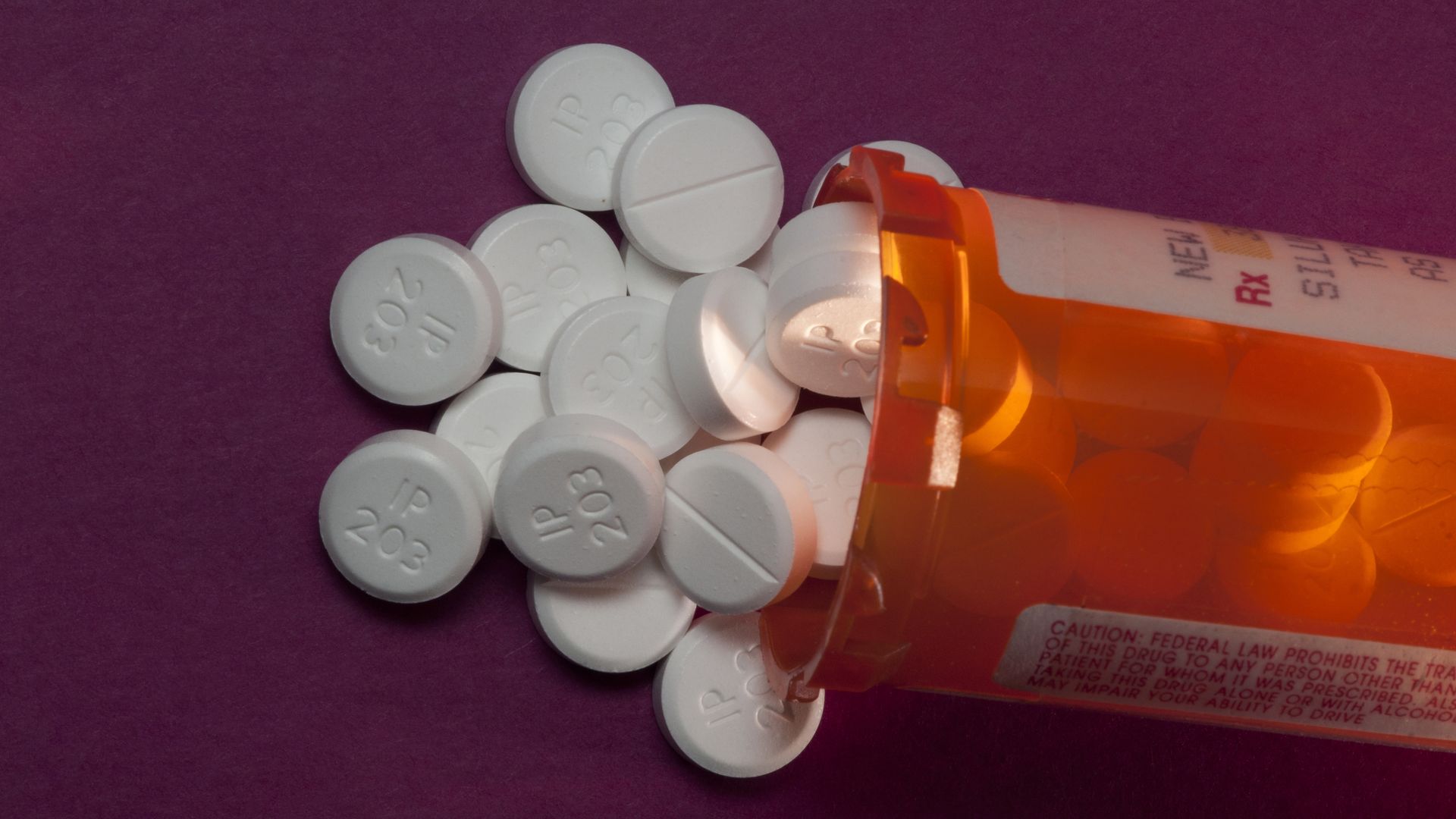
Democratic presidential candidate Sen. Kirsten Gillibrand said during an MSNBC town hall Monday that drug manufacturers like the Sackler family, which founded Purdue Pharma, should be prosecuted for their role in exacerbating the opioid crisis.
The vast majority of new HIV infections in the U.S. in 2016 were transmitted from the less than 40% of people with HIV who either did not know they had the virus or were not receiving care, according to a new report by the Centers for Disease Control.
Purdue Pharma is asking an Oklahoma court to ban all video cameras from the company's upcoming trial, arguing the filming would inappropriately influence jurors and witnesses, and would create a "media circus." Law360 first reported Purdue's motion.
Why it matters: The Oklahoma case is the first major legal battle between public officials and the companies involved with making, distributing and selling prescription painkillers — and the industry wants the case to be in as controlled an environment as possible.
Competition doesn't always lead to lower drug prices, at least in the class of drugs administered by a doctor, according to new Medicare payment data. Most of the drugs with the biggest price increases from 2016 to 2017 had at least 2 versions on the market.
Why it matters: This data only captures one year of price changes, but casts doubt on the idea that competition is a foolproof way to constrain drug prices.