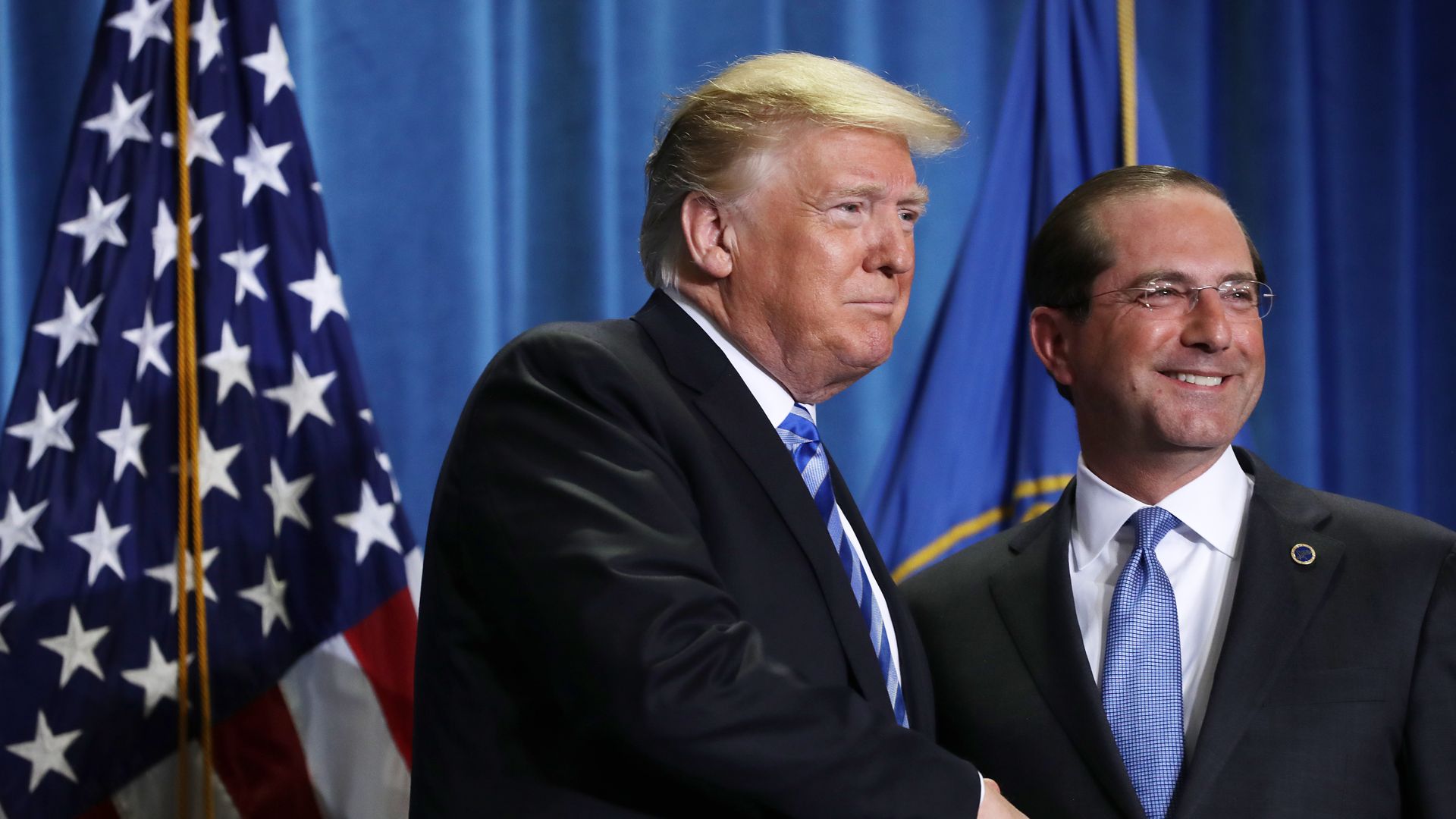
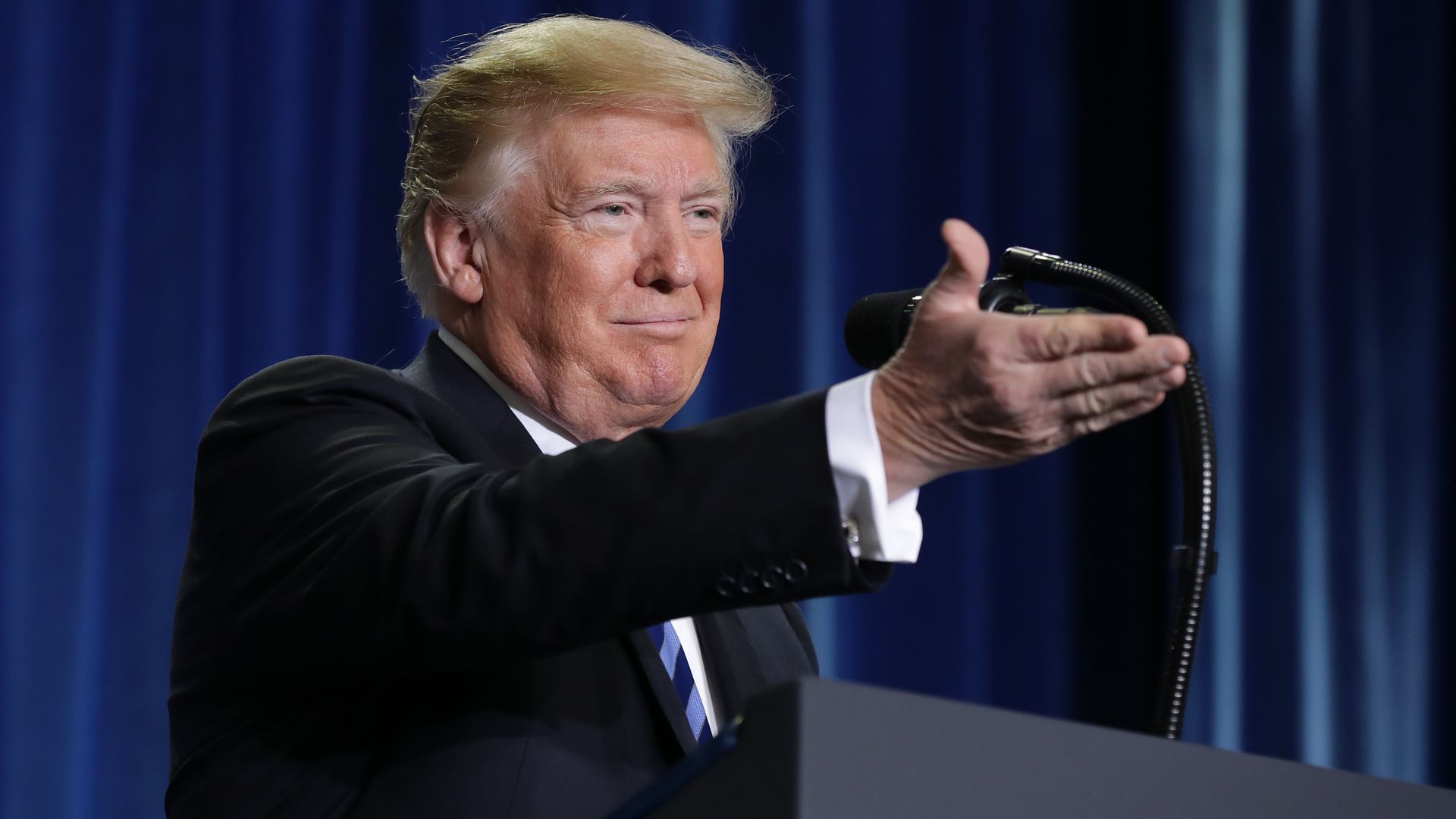
Pfizer CEO Ian Read told Wall Street today the company's drug pricing strategy will be "business as normal" next year, just months after Read spoke with President Trump and agreed to temporary delays of recent drug price hikes. Pfizer reported a $4.1 billion profit in the third quarter, a 45% increase from the same time last year.
Reality check: The Trump administration hailed Pfizer's move this summer as a "major win for American patients." But the company's decision to return to the status quo shows both sides were looking to score political points, and patients won't see meaningful changes to their drug prices in the near term.
Idaho Gov. Butch Otter, a Republican, says his state should join the Affordable Care Act's Medicaid expansion. Otter appears in a new ad encouraging voters to support a ballot initiative next week that would adopt the expansion — a tool advocates turned to after elected officials resisted the expansion for years.
Why it matters: Medicaid expansion could be one of the biggest winners of the midterm elections. Three states — Idaho, Nebraska and Utah — will vote on ballot initiatives about whether to expand. If those measures pass, and Democrats win close gubernatorial races in large non-expansion states like Florida and Georgia, millions of uninsured people could end up getting Medicaid coverage.
How much more expensive are prescription drugs in the U.S.? Enough that one Utah insurer can fly its customers to San Diego, give them a ride across the Mexican border, pay them $500 cash for their trouble, and still save over $13,000 per person.
This is bananas. PEHP, which covers state employees and their families, recently added the cash bonus to an existing "pharma tourism" package, and is hoping participation will rise, the Salt Lake Tribune reports.
A lot has been written about how much the cost of health care varies from one region to another — say, the difference between urban and rural hospitals. But prices also vary within one region, and even within the same hospital, based on the rates each patient’s insurance plan has negotiated.
The details: A new working paper, published yesterday in the National Bureau of Economic Research, aims to shed some light on the differences in what various insurers pay for the same services, using data from Massachusetts’ claims database.
States are increasingly using their Medicaid programs to focus on addressing social determinants of health, like access to housing and food, as a way to make health care more comprehensive and cost-effective.
The big picture: These state Medicaid efforts are part of a growing recognition that improving overall population health — and health equity — will have to include interventions beyond the traditional health care system.
Many of the exchanges for Affordable Care Act insurance still don’t have especially sophisticated tools to help consumers understand their costs, according to a review by the Council for Affordable Health Coverage, an industry group.
Where it stands: CAHC faulted several exchanges, including HealthCare.gov, for their out-of-pocket cost calculators and the information they provide to shoppers about different insurance plans’ drug coverage.
Remember when Republicans and the pharmaceutical industry were friends? The pharmaceutical industry does.
Between the lines: Republicans on Capitol Hill barely made a peep last week after the Trump administration rolled out a drug-pricing plan that arguably goes further than the Obama administration ever attempted. This is pharma's second notable setback in just a few months. It was also caught off guard by a Medicare change in a recent spending bill, and failed to persuade lawmakers to reverse that policy in their opioids legislation.
President Trump announced last Thursday a plan to reduce the United States’ uniquely high prescription drug prices. Medicare Part B will launch a demonstration project covering half the country that will base drug prices on an index sourced from 16 nations, most in Europe.
The big picture: The administration hopes aligning with an international price will bring down Medicare Part B drug costs, while forcing pharmaceutical firms to raise prices abroad to cover their R&D expenses. But the greatest reason U.S. drug costs are higher than other countries’ is that American public and private payers are restricted from bargaining effectively for lower prices, so Trump's plan is likely to have little effect.