Drug overdoses killed a record 72,000 Americans last year, driven by a surge in synthetic opioids.
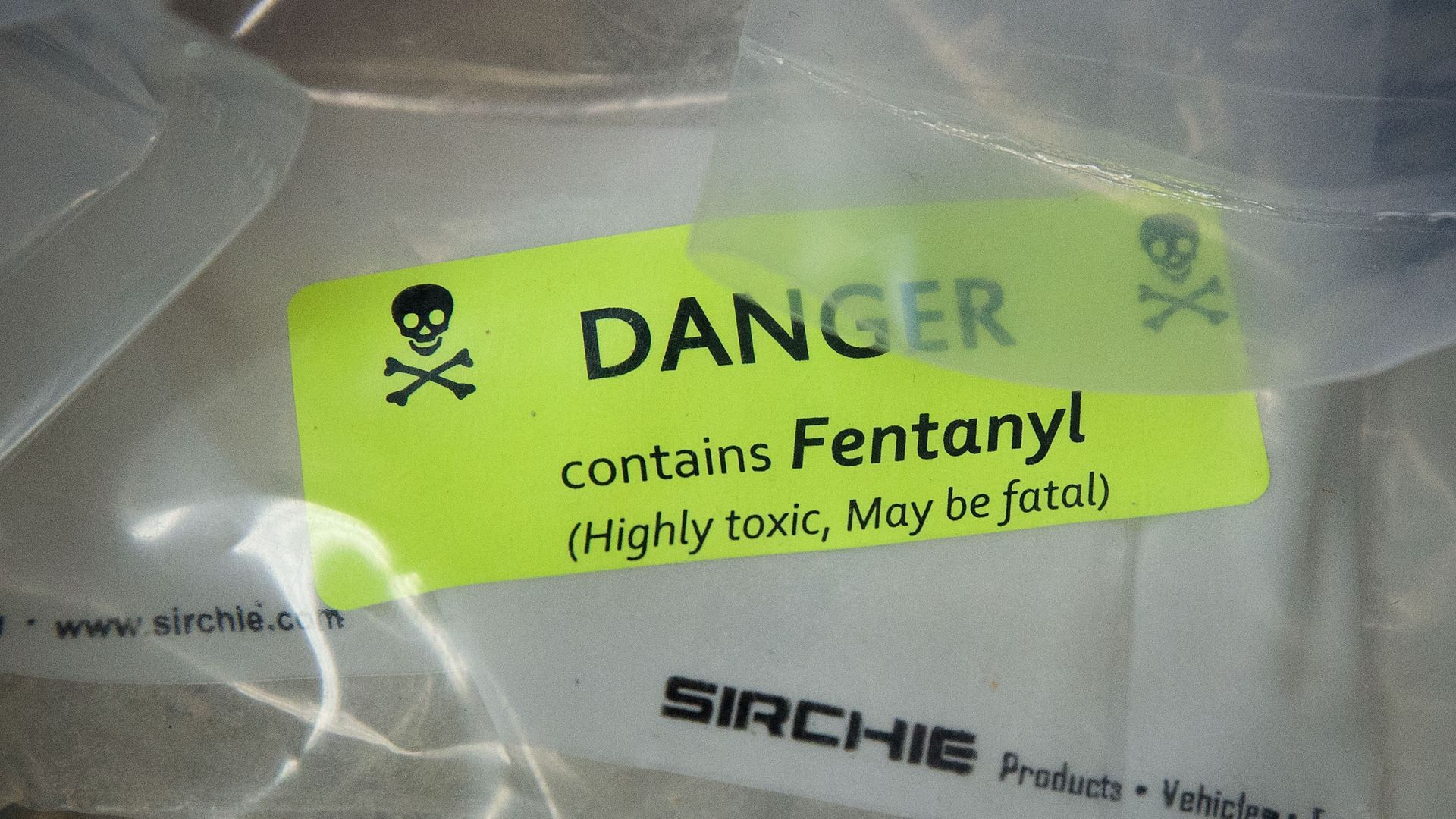
The big picture: "The dominant factor is the changing drug supply," epidemiologist Brandon Marshall told the N.Y. Times' Margot Sanger-Katz. The synthetic opioid fentanyl is increasingly found mixed with other drugs, and its potency is a factor in the uptick in overdoses.
Last year saw a 10% rise in overdose deaths, totaling more than 72,000 people. The increase came largely from a spike in fentanyl and other synthetic opioid overdoses, according to new preliminary estimates from the Centers for Disease Control.
Between the lines: The opioid epidemic has evolved from being primarily driven by prescription drugs and heroin into being driven by synthetics. However, trends vary across the country, with overdose rates dropping in some states and rising in others, per the New York Times.
Large employers from the Rust Belt to Silicon Valley are turning inward as they try to find cheaper, higher-quality health care, embracing ideas like onsite clinics or direct contracts with specific hospitals.
Why it matters: Employer-based benefits are the backbone of the U.S. health care system. But for all the talk about revolutionizing the system, some of their most popular strategies for dealing with rising health care costs are old ideas that don’t exert much pressure on the system overall.
Nebraska became the first state to use fentanyl as part of a lethal injection cocktail on Tuesday, executing a 60-year-old inmate who was convicted for double homicide in 1979, reports WashPost.
Why it matters: Fentanyl is a synthetic opioid 50 to 100 times more potent than morphine, according to the CDC. With 20,000 deaths from fentanyl and related compounds in 2016 alone, the drug has driven the opioid epidemic in the U.S. to new heights.
Dan is joined by Seema Verma, Administrator for the Centers for Medicare & Medicaid Services (CMS), to talk about how patients should be given control over their data and medical records. Also, in the "Final Two" Dan talks about how Turkey is trying to ban US electronics and the latest on Elon Musk and Tesla.
A new Kaiser Family Foundation brief finds that, among people with employer-based coverage, almost one in five patients admitted to the hospital end up getting a bill from an out-of-network provider.
Why it matters: Patients have to pay more out of their own pockets for out-of-network care.