Wall Street still mostly believes President Trump's drug pricing blueprint doesn't present any immediate, large-scale disruptions to the industry as the Trump administration remains focused on changing things like rebates instead of lowering net prices.
What they're saying: "Successful efforts at lowering out-of-pocket spend for patients could ultimately help boost volumes and be a positive for the [pharmaceutical] group, but at minimum things seem to be heading in a direction that is at least neutral for the group and likely much better than previously feared." — Vamil Divan, pharma analyst at Credit Suisse, in a note to investors this month
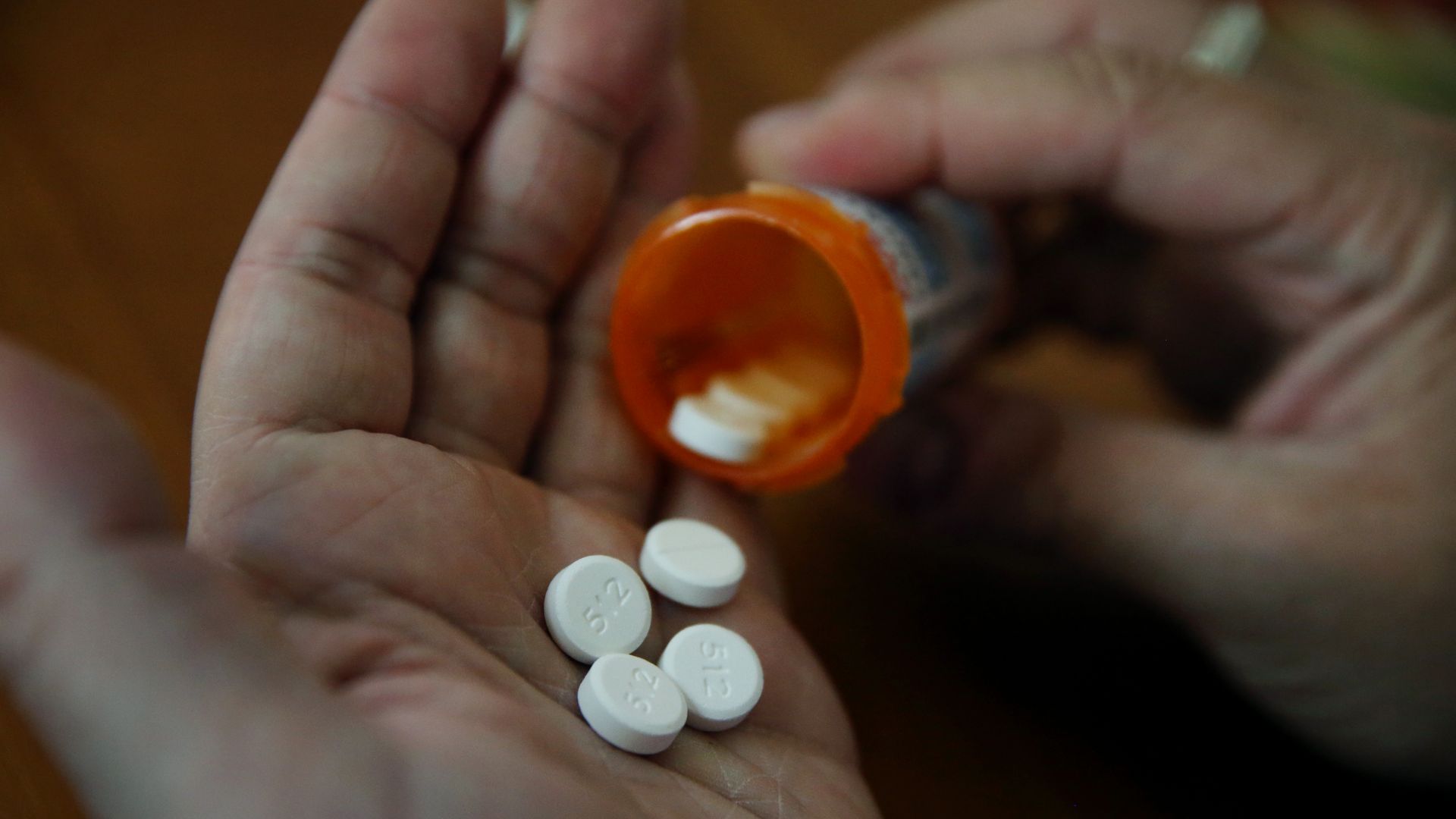
The areas most flooded with prescription opioids are mostly represented by Republicans. The opioid crisis has taken a steep toll nationwide, but the South and Appalachia are particularly inundated with highly addictive prescription painkillers.
What's next: The House passed roughly 60 opioid-related bills in June; a timeline for getting a full package all the way to President Trump's desk is not yet clear. The administration — most notably the Food and Drug Administration — has also embraced new steps to help combat the addiction epidemic.
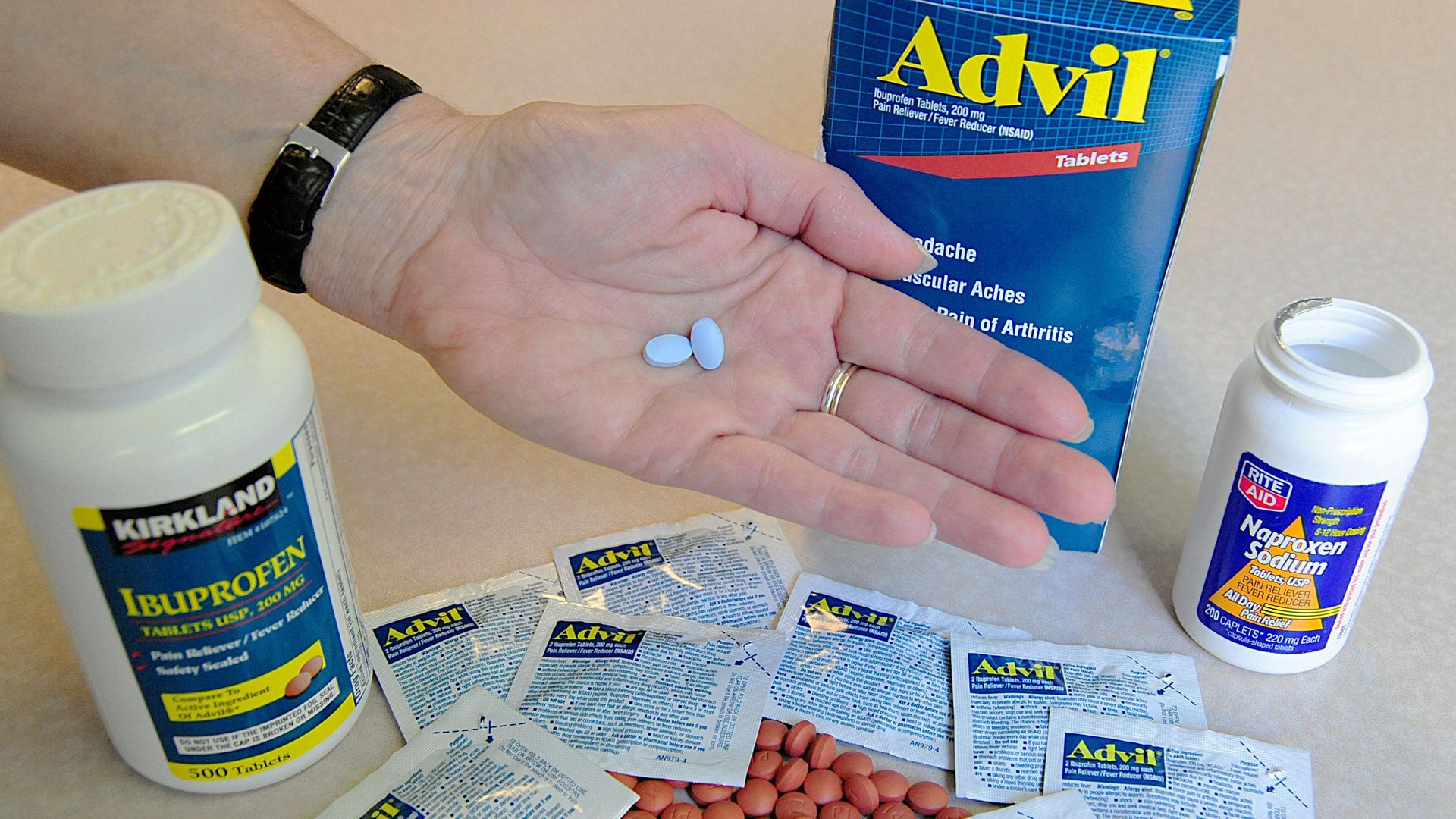
Common medications like ibuprofen or naproxen don't cost a lot on their own. But in several instances, drug manufacturers blend those kinds of medicines into one tablet and then sell the combined drug for hundreds or even thousands of dollars.
Why it matters: Patients and the public are paying huge sums of money for cocktails of old medications that are cheaper when bought separately. Experts say the system is loaded with perverse incentives, and that pharmaceutical companies and intermediaries like pharmacy benefit managers have worked in tandem.
Senate Democrats are running on health care, but it's not just against the GOP's Affordable Care Act repeal agenda. They're also finding health care attack angles unique to their opponents.
Why it matters: Polling shows that health care is at the top of voters' minds, and Democrats are hoping that piling onto last year's unpopular Republican effort gives them that much more of an edge in November.
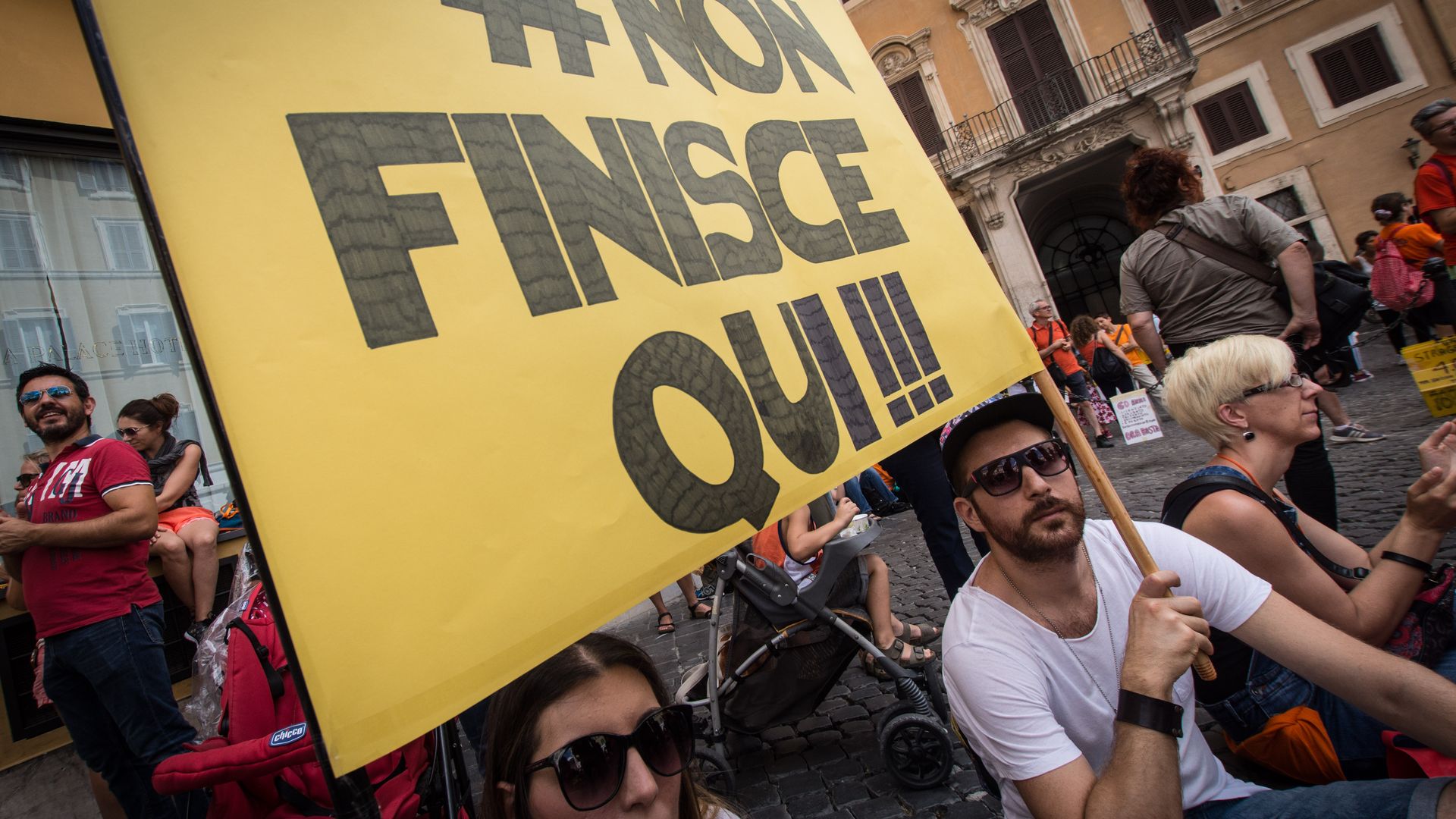
Experts worry that a bill to suspend compulsory vaccination of children in Italy could spread the anti-vaxx movement across borders, posing a serious global health threat. Pushed by Italy's populist government, the bill will become law if approved by the lower house of its parliament.