Wednesday's health stories

How Bernie might pay for "Medicare for All"
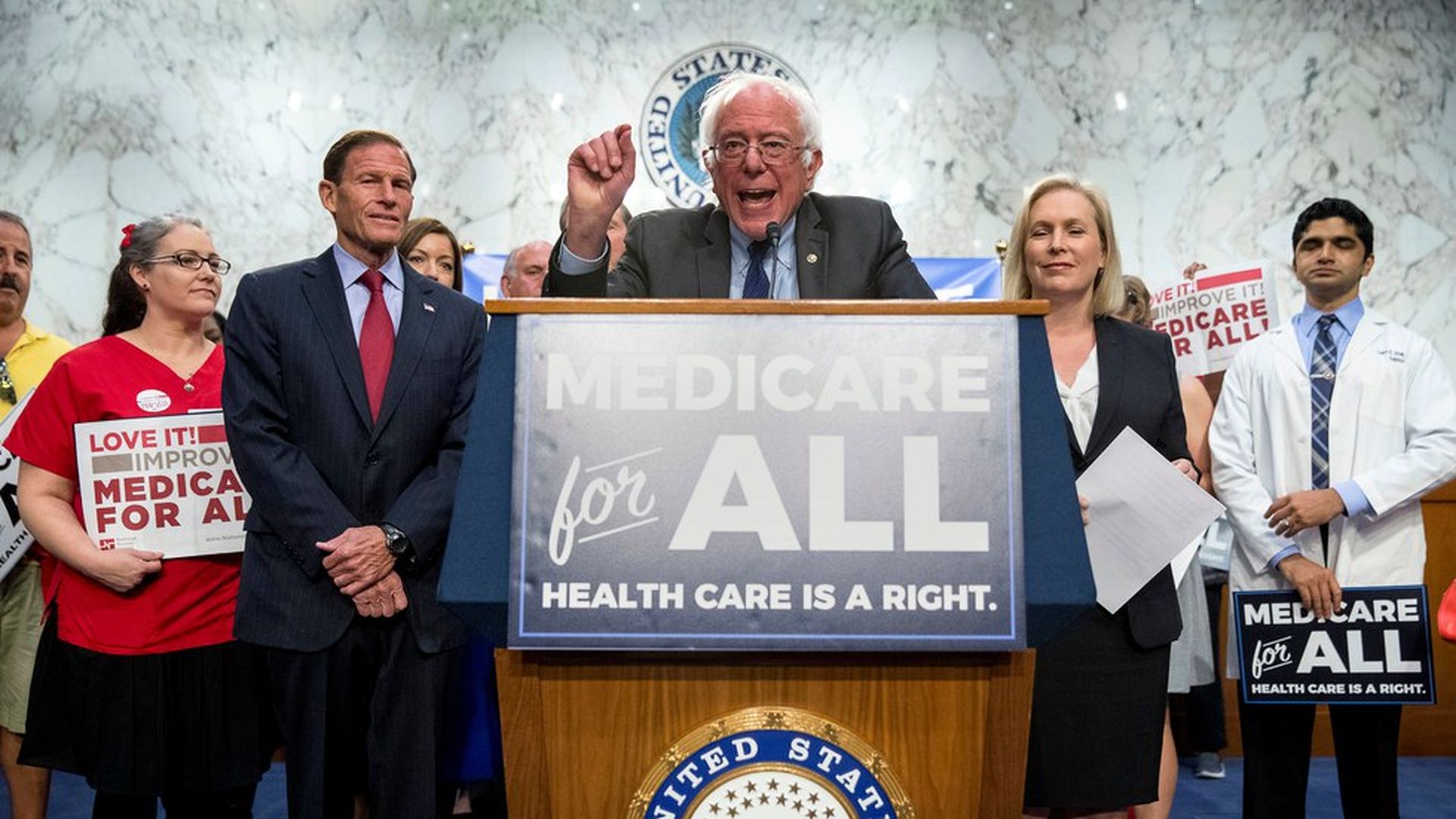
Sen. Bernie Sanders introduced his "Medicare for All" bill Wednesday afternoon, alongside a group of 16 cosponsors that includes some of the party's leading contenders for 2020.
The biggest obstacle facing Sanders' proposal is that it would be a big revenue suck. Sanders suggested that "there needs to be vigorous debate" about how to raise revenue to back it, "unlike the Republican leadership in Congress which held no hearings on their disastrous bill" that didn't pass through Congress.

GOP Senators' pitch for block grant health care funding
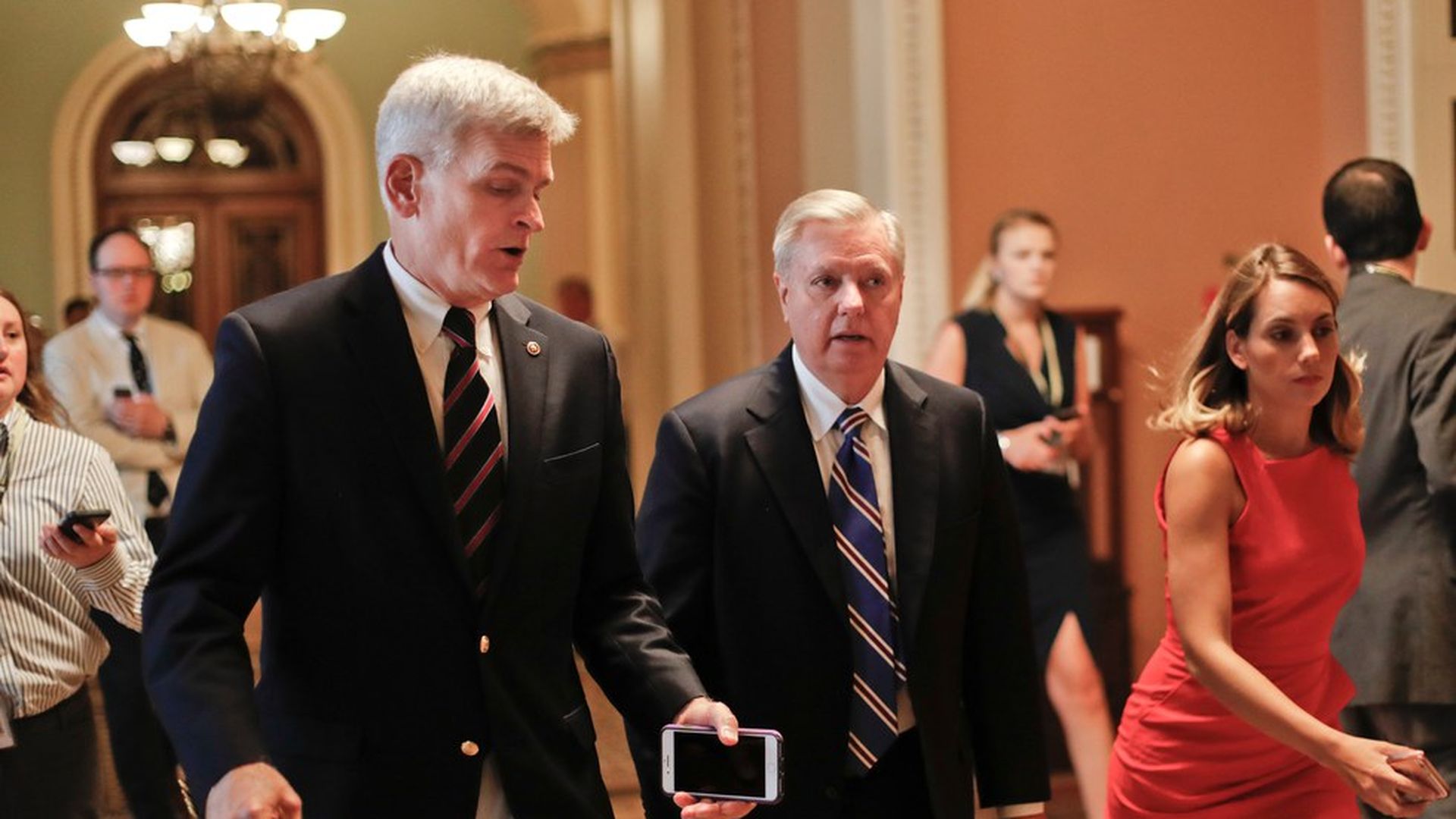
Sens. Lindsey Graham and Bill Cassidy pitched legislation Wednesday to block grant federal health care spending, rolling Medicaid and Affordable Care Act money into a fixed payment to each state. Graham said this would allow people to make their own decisions about their health care "instead of some bureaucrat in Washington."
"If you want a single health payer system, this is your worst nightmare. Bernie, this ends your dream," Graham said, referring to Senator Bernie Sanders' "Medicare for All" proposal.
Be smart: This is Republicans' last-ditch effort to repeal and replace the ACA before the clock runs out at the end of this month. So there's going to be a lot of chatter over the next few weeks about this, but it is almost certainly not going anywhere. Leadership isn't talking seriously about it, and it's very doubtful it has the 50 votes needed to pass.

The effect of Medicaid expansion on the uninsured
In 2012, the Supreme Court ruled the Affordable Care Act could not mandate each state to expand Medicaid eligibility. That decision, in effect, created a nationwide experiment to see how uninsured rates would change when states opened up the program to more low-income people.
The bottom line: States that didn't expand Medicaid have much higher uninsured rates compared with states that expanded Medicaid, according to the latest Census Bureau data. Hospitals and doctors in Medicaid expansion states consequently recorded more patient visits, although that has tapered off.
Newsworthy: Texas and Florida, states that did not expand Medicaid and are grappling with the aftermath of two massive hurricanes, have two of the highest uninsured rates in the country (16.6% in Texas and 12.5% in Florida).

Trump meeting with more moderates tomorrow
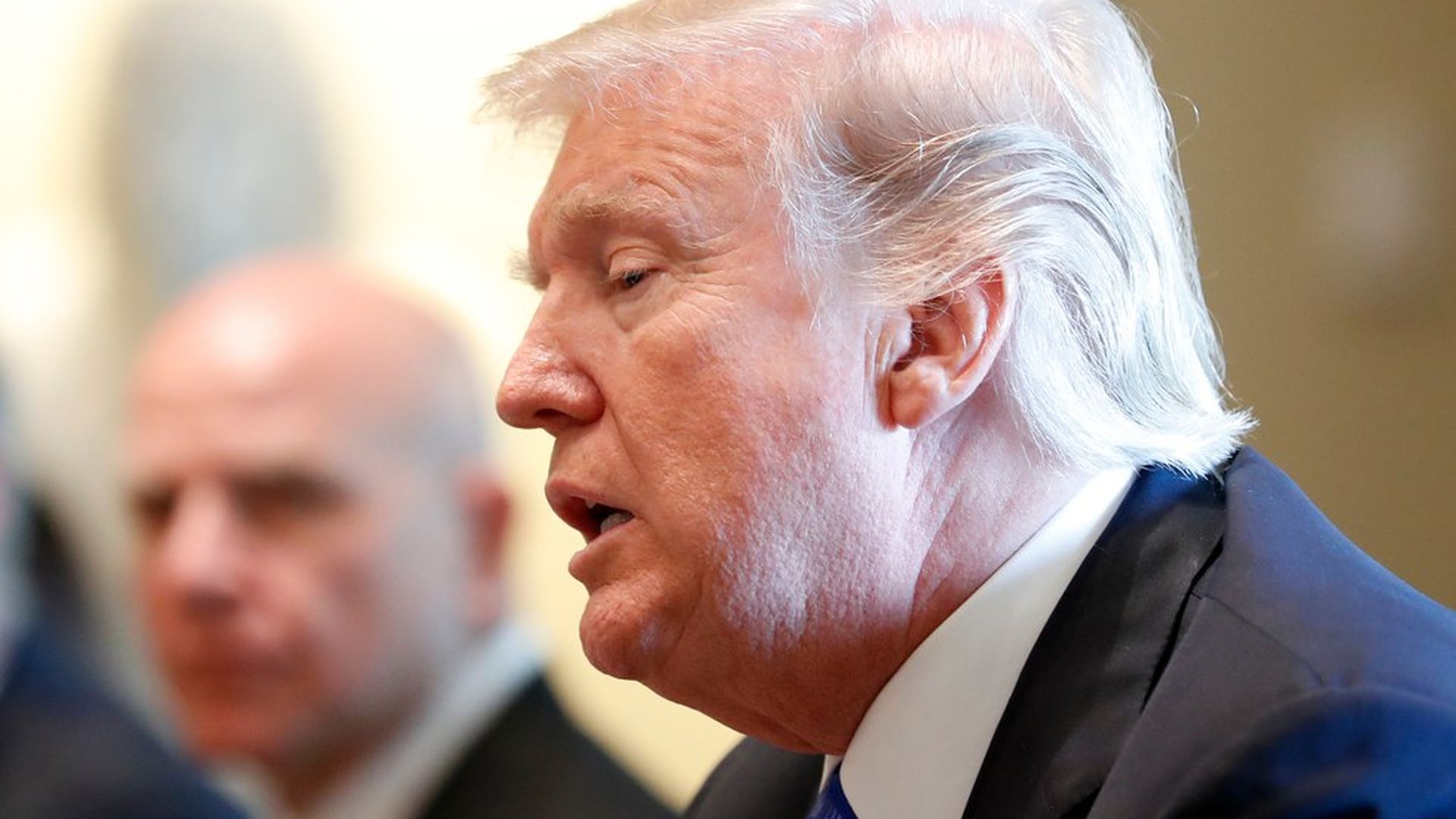
Trump will be meeting with Rep. Tom Reed (R-NY) and Josh Gottheimer (D-NJ), co-chairmen of the bipartisan Problem Solvers Caucus, in addition to nearly 10 more bipartisan members of Congress to talk DACA and tax reform, Politico reports. USAToday first reported on the meeting, also noting infrastructure and health care would be on the table, citing congressional sources familiar with the meeting.
Trump is also meeting with a group of bipartisan senators tonight, including Democrats Joe Manchin of West Virginia, Heidi Heitkamp of North Dakota, and Joe Donnelly of Indiana, per Bloomberg.
Why it matters: Both these meetings reflect Trump's recent willingness to buddy up with Dems and moderates, not just Republicans, as he begins his push on tax reform.

Centene buys Fidelis Care for $3.75 billion
Centene is acquiring Fidelis Care, a health insurance company sponsored by Catholic dioceses in New York, for $3.75 billion. The deal would give Centene its first presence in New York and immediately beef up Centene's already large Medicaid, Medicare Advantage and Affordable Care Act exchange businesses.
Why it matters: Centene bought Health Net in 2016, and it's expanding rapidly on the ACA marketplaces. Centene is one of the largest health care companies most people have never heard of, mostly because it covers low-income people and has numerous subsidiaries with different names.
The big question: Whether the deal will change Fidelis Care's policy of not providing abortion and other reproductive services within its health benefits.

Uninsured rate dipped to 8.8% in 2016
The number of Americans who did not have health insurance was at another all-time low last year, according to new data from the Census Bureau. The numbers:
- 8.8% uninsured rate (a decrease of 0.3 percentage points from 2015).
- 28.1 million Americans still had no health coverage.
- 16% of Hispanics don't have health insurance, the highest of all races.
- 55.7% of insured people get health insurance through their job.
The big takeaway: The number of Americans that don't have health insurance has mostly plateaued. The Affordable Care Act wasn't designed to cover everyone. But the ACA's coverage provisions, especially the expansion of Medicaid, have contributed to the record-low uninsured rate.