Friday's health stories

Backlash builds over Verma comments on maternity health benefits

Seema Verma, President Trump's nominee to head the Centers for Medicare and Medicaid Services, has triggered a big lobbying backlash with her suggestion in her Senate testimony yesterday that maternity health coverage should be optional. The March of Dimes is circulating an online petition denouncing the comments, saying: "ALL families should be able to have a healthy baby without planning a year or more in advance."
Why it's an issue: Maternity coverage is one of the required categories of health benefits under Obamacare, and Republicans are looking for ways to relax those rules to bring down the cost of health insurance. Verma told the Senate Finance Committee that while some women want maternity coverage, "some women might not choose that."
Why it matters: It's a sign of how much lobbying will take place to keep Obamacare's required benefits in place, pushing back against customers who have complained that they don't want all of the coverage the law requires.

The divergent finances of two merging health systems

Catholic Health Initiatives and Dignity Health, two massive not-for-profit hospital systems exploring a merger (they call it an "affiliation"), are sitting on very different financial foundations right now.
The numbers: Dignity Health reported Thursday a $165 million operating surplus in the first six months of its fiscal year, which ended Dec. 31, on $6.6 billion of revenue. CHI, meanwhile, lost $384 million on $8.1 billion of revenue in the same time period. CHI has struggled to manage its health insurance company, which it is selling, and the system has been weighed down by bloated expenses and fewer patients with commercial insurance.
Why this matters: This is one of the largest potential deals in the health care industry right now, and both sides are still evaluating the pros and cons. A combined CHI-Dignity system would have almost $30 billion in annual revenue, making it larger than companies like McDonald's or Macy's. But a glaring issue is whether CHI can stop the bleeding.
Big questions on House Republican Obamacare plan still unresolved
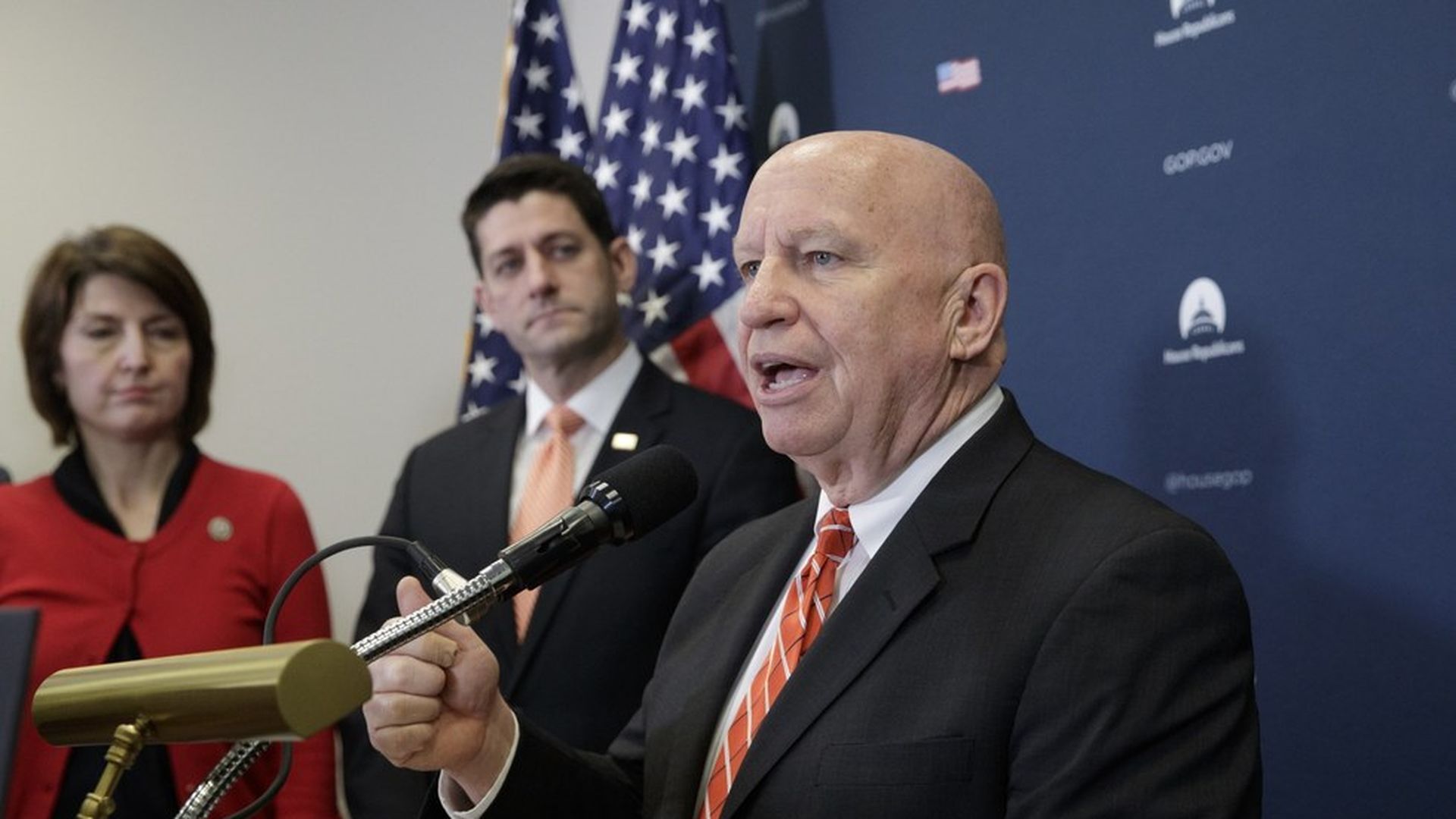
The House Republican briefing on their most likely Obamacare replacement plans was a bit of an anticlimax. Republicans who emerged from the briefing said there were major elements still under discussion, like what kind of Medicaid reform it would include and how they'd pay for the package.
House Ways and Means Committee chairman Kevin Brady said he and Energy and Commerce Committee chairman Greg Walden gave their colleague "a very in-depth view of what the replacement will be," including health savings accounts, high-risk pools to cover sick people, and "greater state control of health care."
But he said a basic question — whether Medicaid would be restructured as a block grant or as per-person funding limits — was "still under discussion," as were the possible ways to pay for the package. (A briefing document says the Medicaid package will include both per-capita caps and block grants.)

The leading candidates for the GOP Obamacare replacement plan
Republican leaders in the House and Senate, despite the objections of conservative members, are pushing ahead with their plans to include pieces of an Obamacare replacement plan in the repeal bill. We have a pretty good idea of what the most likely pieces will be, but Republicans are still talking about them and there's still time for them to change before House committees take them up after the recess.
With that in mind, here are some of the leading policy ideas based on my conversations with Republican staff members, and the pros and cons of each.