DALLAS — House Republican leadership will bring the Ratepayer Protection Act — bipartisan legislation aimed at preventing data centers from driving up Americans' electricity bills — to the House floor next week, Axios has learned.
Why it matters: Republicans want to show voters they're taking rising electric bills — and the massive power demands of new data centers — seriously.
Renewed inflation risks are complicating the economic outlook on both sides of the Atlantic.
In the U.S., wholesale prices accelerated in August, boosting expectations for a Fed rate hike next week.
In Europe, the European Central Bank raised rates for the second time since June as the Iran war keeps inflation risks tilted to the upside.
Why it matters: Inflation pressures were already building in August, and the latest surge in oil prices suggests there may be more to come. Brent crude blew past $105 a barrel, while the U.S. benchmark, West Texas Intermediate, topped $100 a barrel for the first time since May.
What they're saying: "The longer energy prices stay high, the more likely they are to drive up broader inflation through indirect and second-round effects," ECB president Christine Lagarde told reporters this morning.
Lagarde said eurozone growth has held up better than expected, helped by AI-related activity that the ECB expects will contribute to slightly higher core inflation.
By the numbers: U.S. wholesale prices rose 0.4% in August and 5.4% from a year earlier, largely reflecting higher energy costs.
Goods prices jumped 1.1%, reversing two months of declines.
Diesel surged 24% in a single month, accounting for more than a third of the goods increase and raising costs for moving goods.
Transportation and warehousing costs gained 2.3%, a sign higher fuel costs may be bleeding into shipping.
Perhaps more troubling for the Fed is that some components that feed into its preferred inflation gauge, the Personal Consumption Expenditures Price Index, including airfares and hospital care, were firmer than expected.
As Axios reported Tuesday, next week's Fed decision could hinge on a few hundredths of a percentage point in August core PCE inflation.
What to watch: After Wednesday morning's Producer Price Index data, Bank of America now estimates that core PCE could rise by 0.26% — enough in its view to green-light a rate increase, though tomorrow's Consumer Price Index data could shift that estimate.
CME's FedWatch tool puts the odds of a rate hike at the meeting concluding on Sept. 16 at about 70%, up from 60% before the PPI data.
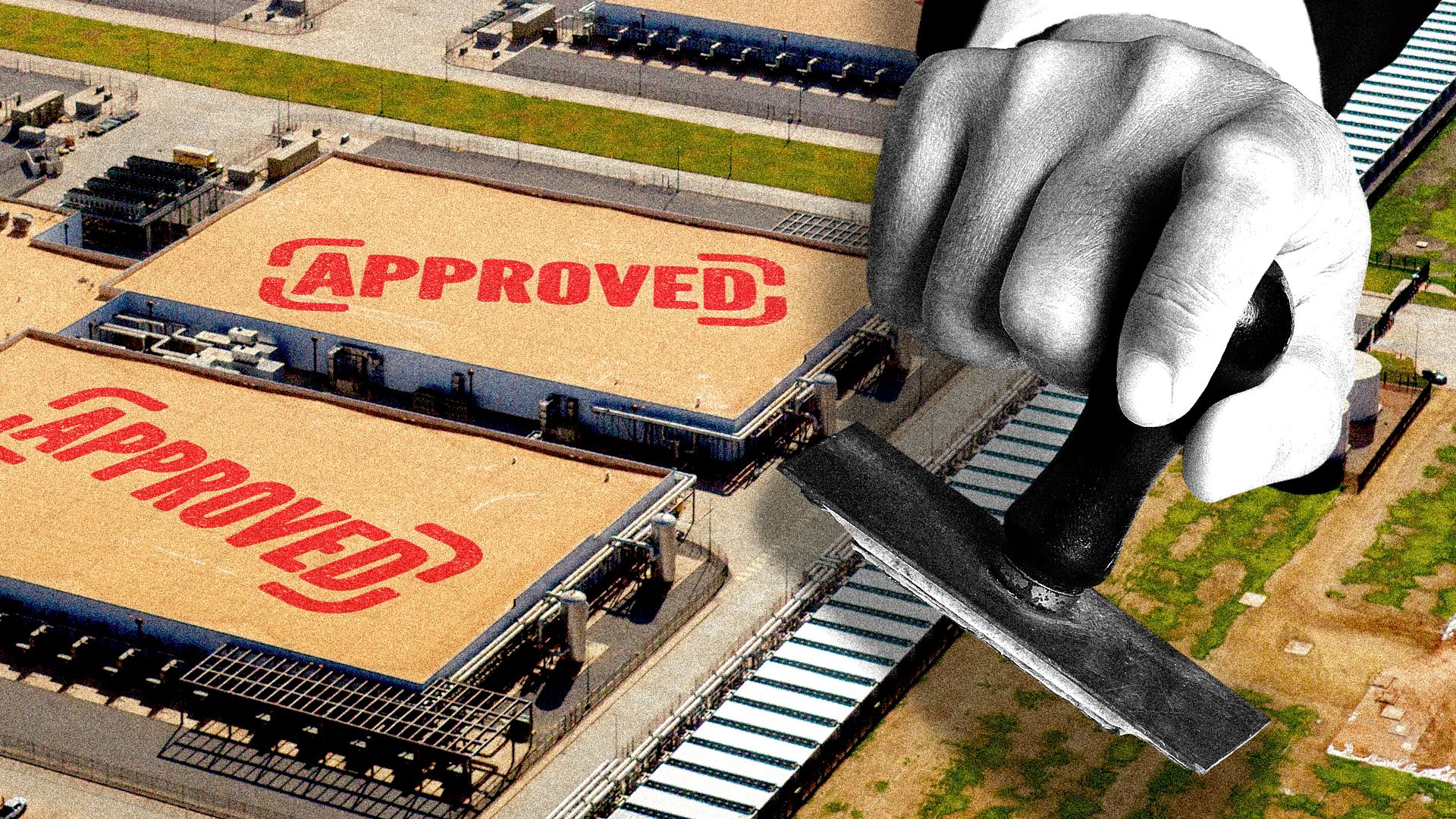
The Trump administration is reshaping regulations to make data centers — and the fossil-fuel power fueling them— easier to build. Critics say the changes could increase pollution and reduce public input.
Why it matters: The moves risk inflaming an already fierce and bipartisan backlash to data centers, the backbone of the AI boom.
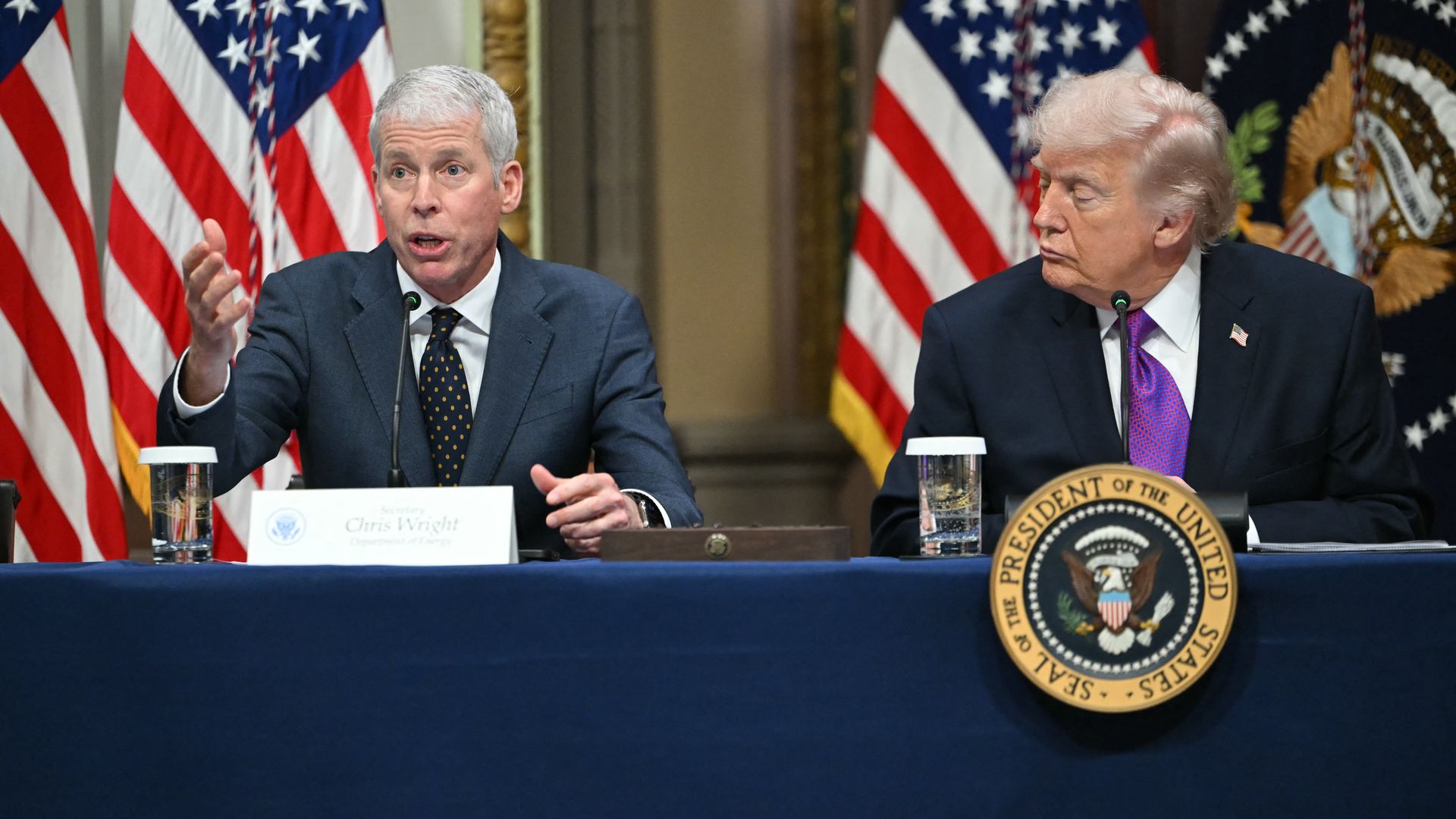
The Energy Department's statistics arm on Wednesday sharply raised its forecast for U.S. diesel prices next year as tight global supplies keep domestic inventories unusually low.
Why it matters: The outlook suggests Americans could face elevated fuel costs well into 2027, as President Trump acknowledged Wednesday that oil prices may not fall until after November's midterm elections.
Tesla's traditional do-it-yourself instinct could be tested by its nationwide robotaxi ambitions.
The big picture: Manufacturing self-driving taxis is one thing. Financing, parking, charging, cleaning and maintaining enough of them to blanket the country is another — and Tesla is signaling that it might want entrepreneurs to help shoulder the load.
Major banks are upping their oil price estimates for the months and even years ahead.
Why it matters: Despite White House claims that it controls the Strait of Hormuz, the status of the vital energy chokepoint and other regional shipping could be messy for a long time.
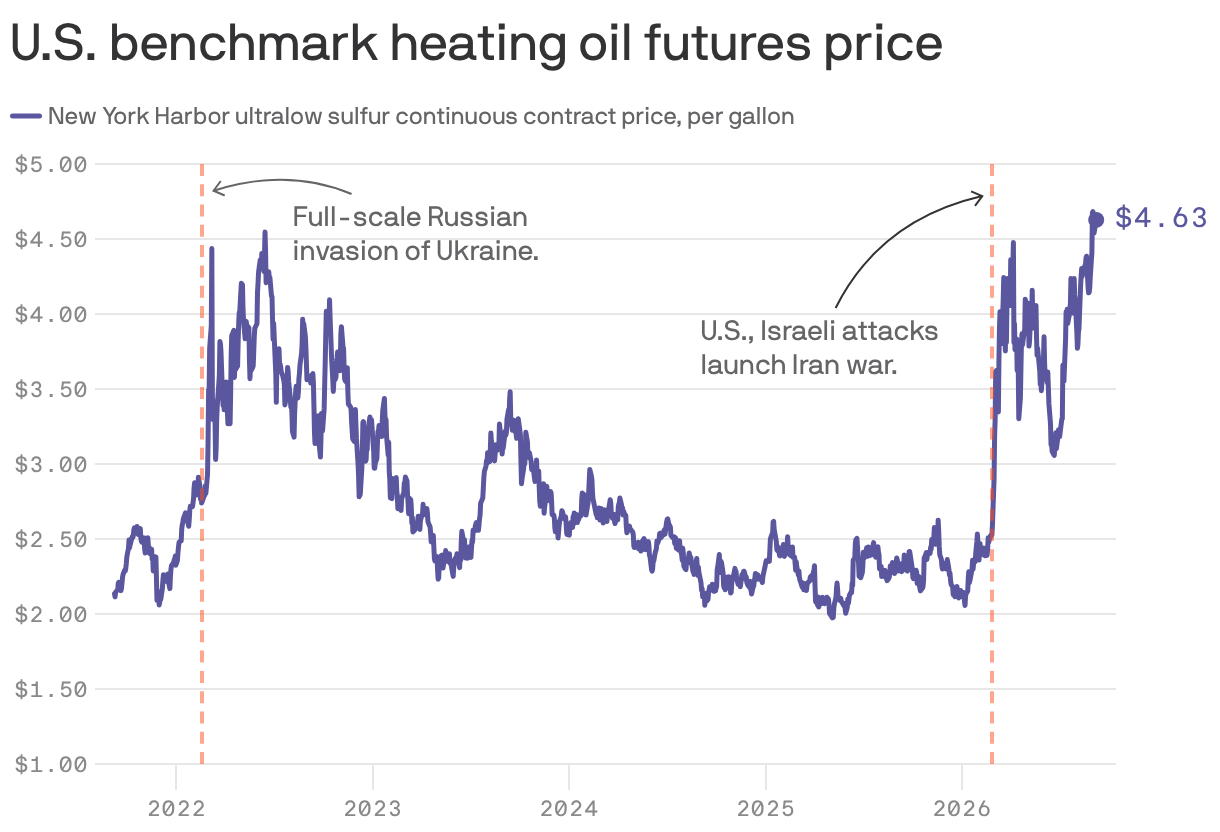
Home heating oil bills are likely to be massive this winter in the Northeast — and as one such homeowner, I am terrified.
Why it matters: Beyond my ability to keep my daughter and dog alive through the long, dark suburban winter, the looming shadow of the oil delivery truck underscores the costs consumers are bearing as a result of parallel wars in Iran and Ukraine.
U.S. gasoline prices averaged $4.15 for a gallon of regular on Tuesday, according to AAA.
Diesel hit an all-time high price of $5.90 a gallon on Monday and stayed there on Tuesday.
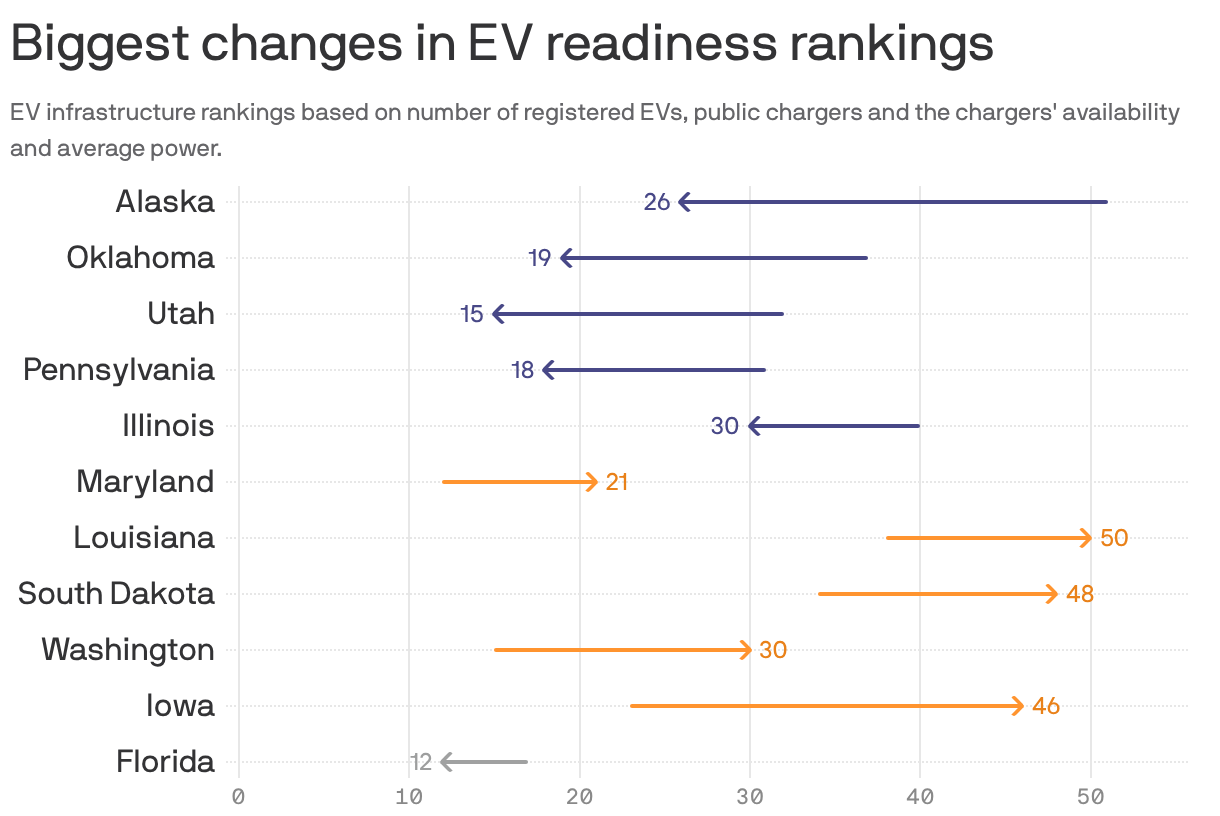
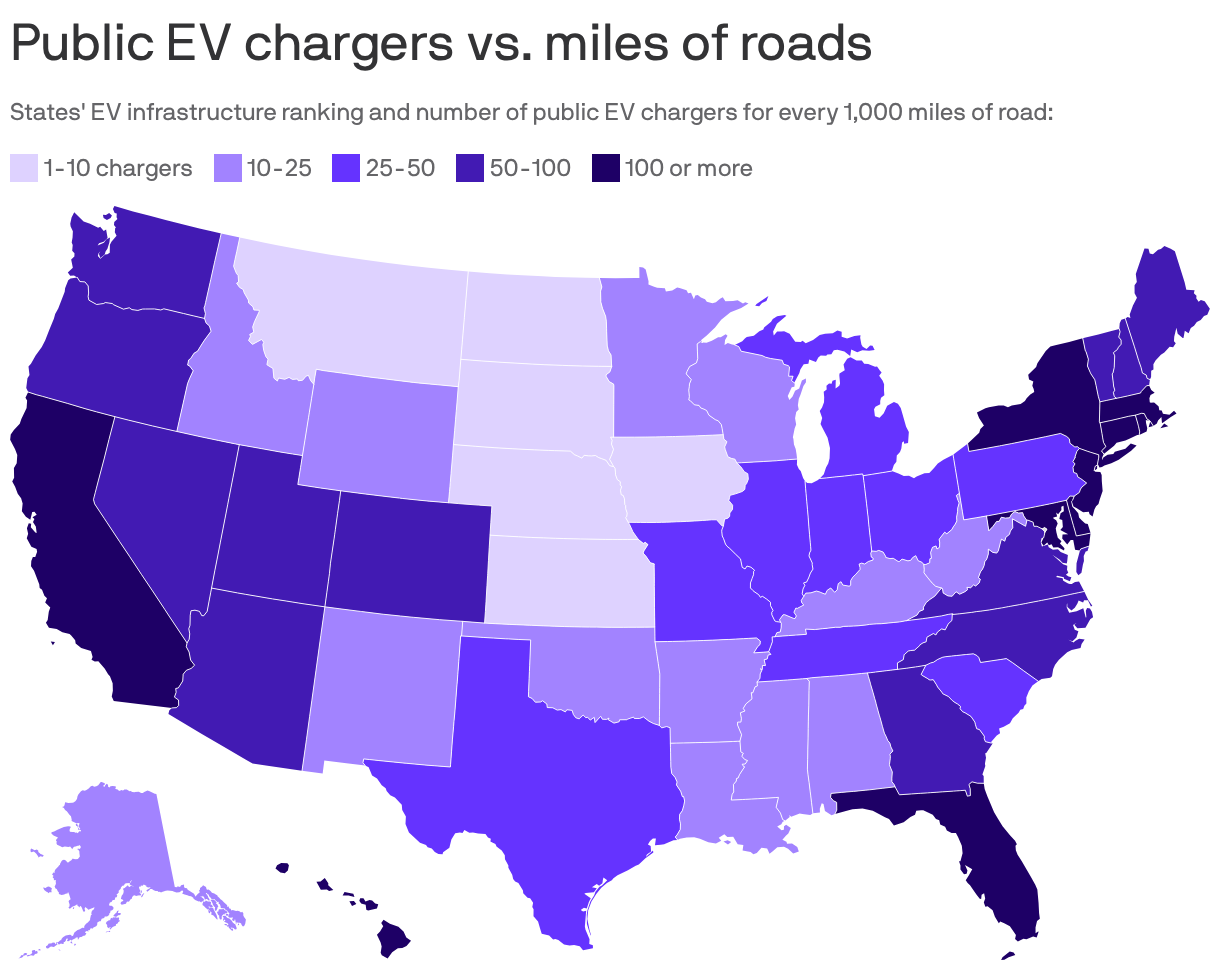
Data: HERE Technologies-SBD Automotive 2026 survey; Chart: Jim Sergent/Axios
The chances of finding a public EV charger are much better in the Northeast compared to the Great Plains.
Why it matters: While U.S. public charging options grew 13% since last year, that growth hasn't been evenly distributed, according to HERE Technologies and SBD Automotive's annual ranking.