The record price of diesel threatens to stoke inflation at a time when consumers are already price-sensitive and businesses are reeling from higher costs due to trade tensions.
Why it matters: Diesel is a key cost throughout the supply chain, meaning soaring prices could eventually show up in what consumers pay for everything from groceries to household goods.
Headline CPI rose 0.4% in August, its biggest monthly increase since May, with gasoline accounting for more than a third of the increase.
The Fed typically looks through temporary supply shocks, but a sustained energy surge risks spilling into other prices — and energy price pressures have only escalated further in September.
Zoom out: Central banking orthodoxy would suggest not responding to energy price shocks directly, but responding to the extent that swings in fuel prices are filtering through to broader prices.
Unfortunately for anyone seeking lower borrowing costs, there is evidence that this is indeed happening, risking energy-driven inflation becoming more entrenched.
Soaring diesel fuel prices are affecting the price of transportation of all sorts of goods, with the biggest effects on bulky or heavy items.
Airline fares were up 2.7% in August alone and are up 23.4% over the last 12 months.
Between the lines: If energy price relief were in progress, it would be easier to look through those price surges. No relief is in sight, however.
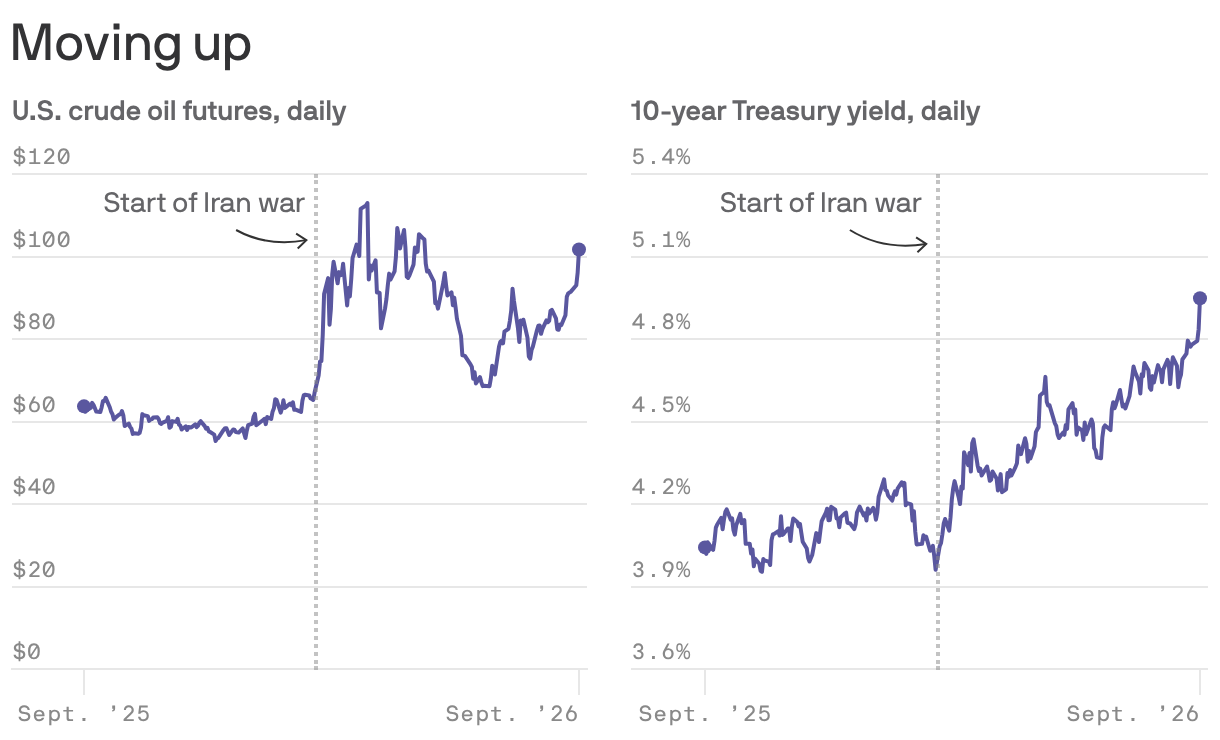
Those figures are already backward-looking. The energy shock has since worsened this month, with oil prices around $100 a barrel and diesel topping $6 a gallon for the first time on record — all pointing to more inflation pressure still to come.
Consumer prices remained elevated in August as the Iran war's energy shock fueled a fresh burst of inflation.
Why it matters: The renewed price pressures are squeezing household budgets, with signs that underlying inflation is proving stubborn across the broader economy.
The data could strengthen the case for the Federal Reserve to raise interest rates next week.
SPENCER GLACIER, Alaska — Sure, seeing is believing, but sometimes seeing leaves you in disbelief. That happened to me while kayaking among icebergs here recently, as the landscape transformed before my eyes.
Why it matters: I began the excursion certain of what I was seeing. I ended it with my mind blown — by the sheer scale of nature and by how much perspectives can change.
DALLAS — House Republican leadership will bring the Ratepayer Protection Act — bipartisan legislation aimed at preventing data centers from driving up Americans' electricity bills — to the House floor next week, Axios has learned.
Why it matters: Republicans want to show voters they're taking rising electric bills — and the massive power demands of new data centers — seriously.
Renewed inflation risks are complicating the economic outlook on both sides of the Atlantic.
In the U.S., wholesale prices accelerated in August, boosting expectations for a Fed rate hike next week.
In Europe, the European Central Bank raised rates for the second time since June as the Iran war keeps inflation risks tilted to the upside.
Why it matters: Inflation pressures were already building in August, and the latest surge in oil prices suggests there may be more to come. Brent crude blew past $105 a barrel, while the U.S. benchmark, West Texas Intermediate, topped $100 a barrel for the first time since May.
What they're saying: "The longer energy prices stay high, the more likely they are to drive up broader inflation through indirect and second-round effects," ECB president Christine Lagarde told reporters this morning.
Lagarde said eurozone growth has held up better than expected, helped by AI-related activity that the ECB expects will contribute to slightly higher core inflation.
By the numbers: U.S. wholesale prices rose 0.4% in August and 5.4% from a year earlier, largely reflecting higher energy costs.
Goods prices jumped 1.1%, reversing two months of declines.
Diesel surged 24% in a single month, accounting for more than a third of the goods increase and raising costs for moving goods.
Transportation and warehousing costs gained 2.3%, a sign higher fuel costs may be bleeding into shipping.
Perhaps more troubling for the Fed is that some components that feed into its preferred inflation gauge, the Personal Consumption Expenditures Price Index, including airfares and hospital care, were firmer than expected.
As Axios reported Tuesday, next week's Fed decision could hinge on a few hundredths of a percentage point in August core PCE inflation.
What to watch: After Wednesday morning's Producer Price Index data, Bank of America now estimates that core PCE could rise by 0.26% — enough in its view to green-light a rate increase, though tomorrow's Consumer Price Index data could shift that estimate.
CME's FedWatch tool puts the odds of a rate hike at the meeting concluding on Sept. 16 at about 70%, up from 60% before the PPI data.
The Trump administration is reshaping regulations to make data centers — and the fossil-fuel power fueling them— easier to build. Critics say the changes could increase pollution and reduce public input.
Why it matters: The moves risk inflaming an already fierce and bipartisan backlash to data centers, the backbone of the AI boom.