Friday's energy & climate stories

Experts in Georgia emphasize disaster recovery starts long before the storm
As hurricane season begins, emergency response leaders resoundingly agree: Storm preparedness isn't just about weather forecasts — it's about building trust, strengthening infrastructure and ensuring vulnerable communities aren't left behind after disaster strikes.
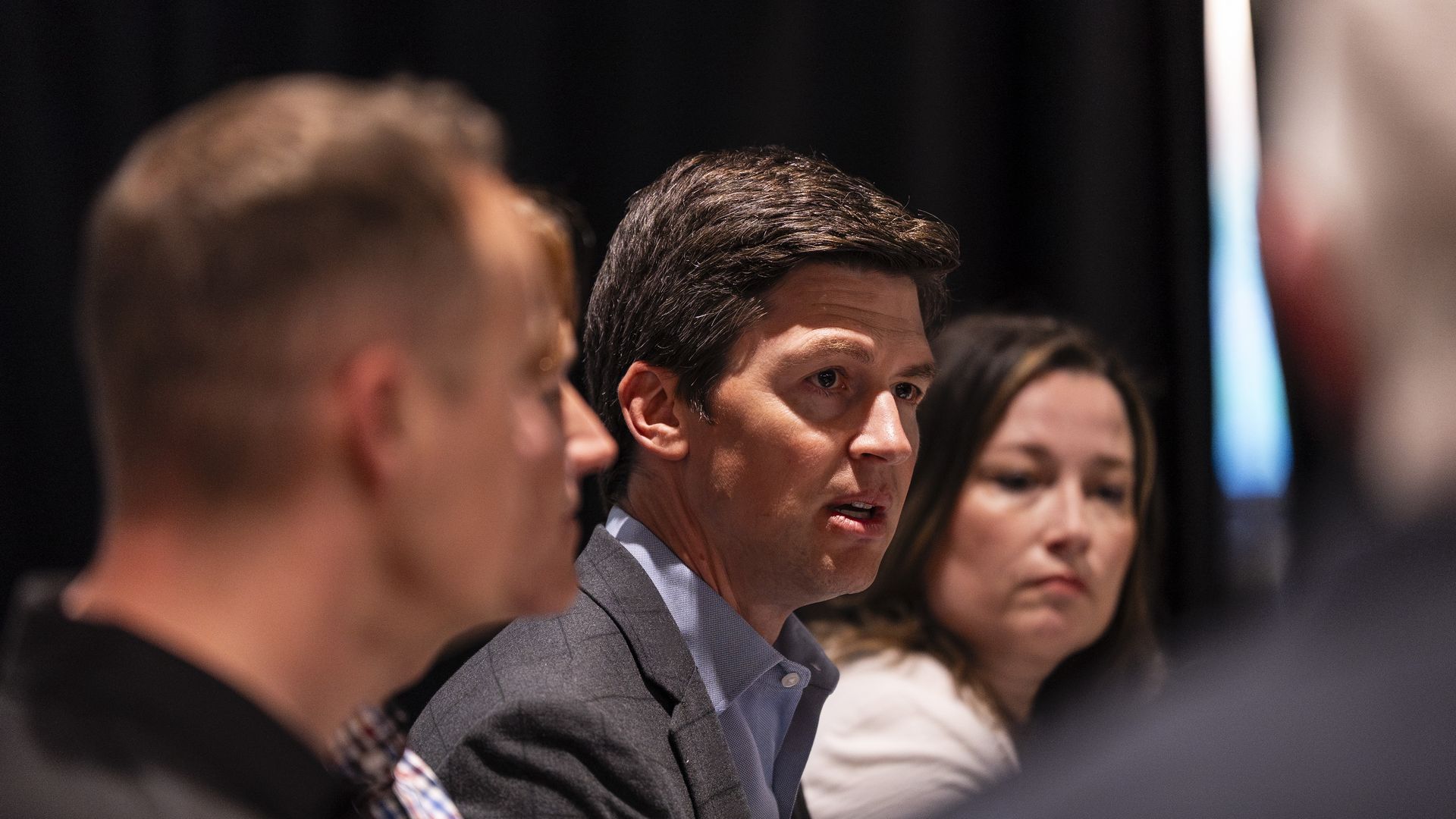
Axios Live: Arizona is booming. Its power grid is sweating.

PHOENIX — Arizona's power grid took more than 100 years to build. Now the state needs to double it in just four to five years, leaders said at an Axios Live event.
The big picture: Data centers, new residents and factories are pouring into Arizona — and the electric grid is struggling to keep up.
- "What took our utilities 100-plus years to build, need[s] to double that within the next four to five years," said Kevin Thompson, a member of the Arizona Corporation Commission, which oversees the state's utilities.
- Axios' Jessica Boehm, Jeremy Duda and Amy Harder moderated discussions with Thompson; Maren Mahoney, director of the Arizona Governor's Office of Resiliency; and Danny Seiden, president and CEO of the Arizona Chamber of Commerce and Industry. The June 16 event was sponsored by Shell.
By the numbers: Arizona's biggest utility, APS, runs about 8.3 gigawatts of power — enough to keep millions of homes and businesses running. But companies are already asking for nearly 17 gigawatts of new power. The other major utilities face the same problem, Thompson said.
- The rule Thompson's commission has set: Companies that need the power have to pay for it. Regular households won't foot the bill.
- Big tech companies are playing along, Thompson said. One deal in Tucson even required the company to post a $25 million guarantee in case the project fell through.
Between the lines: Data centers that were once seen as power and water guzzlers are now helping pay for the infrastructure they need.
- This is seen as a key factor in offsetting costs for everyday customers.
Yes, but: This growth is changing how and when Arizonans use electricity.
- More people are charging electric cars at night, which is pushing the state's busiest power hours later into the evening.
- Also, data centers that use less water end up using more electricity instead.
Context: Foreign investors used to ask Arizona, "Do you have the talent?" Seiden said. "Now it's energy" — and right behind it, water.
- Arizona's electrical grid is reliable, its water management is among the best in the country and Arizona State University is home to one of the nation's largest engineering programs, Seiden said. The ASU programs feed companies like TSMC, which is putting $165 billion into Arizona chip factories.
- To keep residents informed, the chamber is urging companies planning new data centers to hold community meetings before breaking ground, citing Intel in Chandler as the model.
The bottom line: Arizona has a strong case for why companies should establish data centers there, the panelists agreed. Whether it can build the power, water and trust to back it up is the real test.
- Mahoney said companies are looking for "fast power," which Arizona can provide if it can expand and "build out" the grid.
Content from the sponsor's segment:
In a View from the Top conversation, Shell's Mobility Americas senior vice president Barbara Stoyko talked about the company's push to build EV charging hubs across the country.
- "I thought permitting a gas station was hard. It turns out EV stations are even harder," she said — mostly because a single hub can pull as much electricity as 1,200 homes.
- In Houston, the surprise has been who's pulling up to charge: "Our No. 1 customer is Waymo," Stoyko said. "Who thought that we would be actually servicing a customer that's not even human?"

Energy regulators push for faster AI data center grid connections
Federal regulators on Thursday ordered grid operators across a vast swath of the country to show how they will speed connection of AI data centers to transmission systems.
Why it matters: The Federal Energy Regulatory Commission's orders aim to enable the AI boom, but without making power grids less reliable or raising consumer costs.

Gas dips below $4 a gallon after months of pump pain


The U.S. national average gas price has dropped back below $4 a gallon, per AAA, a sign of Americans' pain at the pump easing after months of war in Iran.
The big picture: Iran's squeeze on oil traffic through the Strait of Hormuz battered the global economy. But crude prices in June fell to their lowest levels in over three months on news of an extended ceasefire agreement between the U.S. and Iran.

Arizona emerges as test case for AI's energy and water crunch
PHOENIX — This desert region has become a bellwether for the nation's data center growth as the tech sector grapples with rising temperatures and scarce resources.
Why it matters: Arizona is an extreme microcosm of the challenges the AI boom is running into across the country as tech companies race to build data centers demanding massive amounts of power and testing local water supplies.

Trump settles for Iran deal that falls short of his promises
President Trump made the case for his deal with Iran during an hour-long press conference Wednesday, while seeming to lower his own bar for success and warning he could bomb Iran again if nuclear talks fail.
The big picture: For two months, Trump has been seeking a deal to end the war, reopen the Strait of Hormuz, and stabilize global energy markets. This deal should achieve that. But some of Trump's critics argue that making concessions just to return to status quo ante shows the war itself was a costly mistake.