Trump settles for Iran deal that falls short of his promises

Add Axios as your preferred source to
see more of our stories on Google.
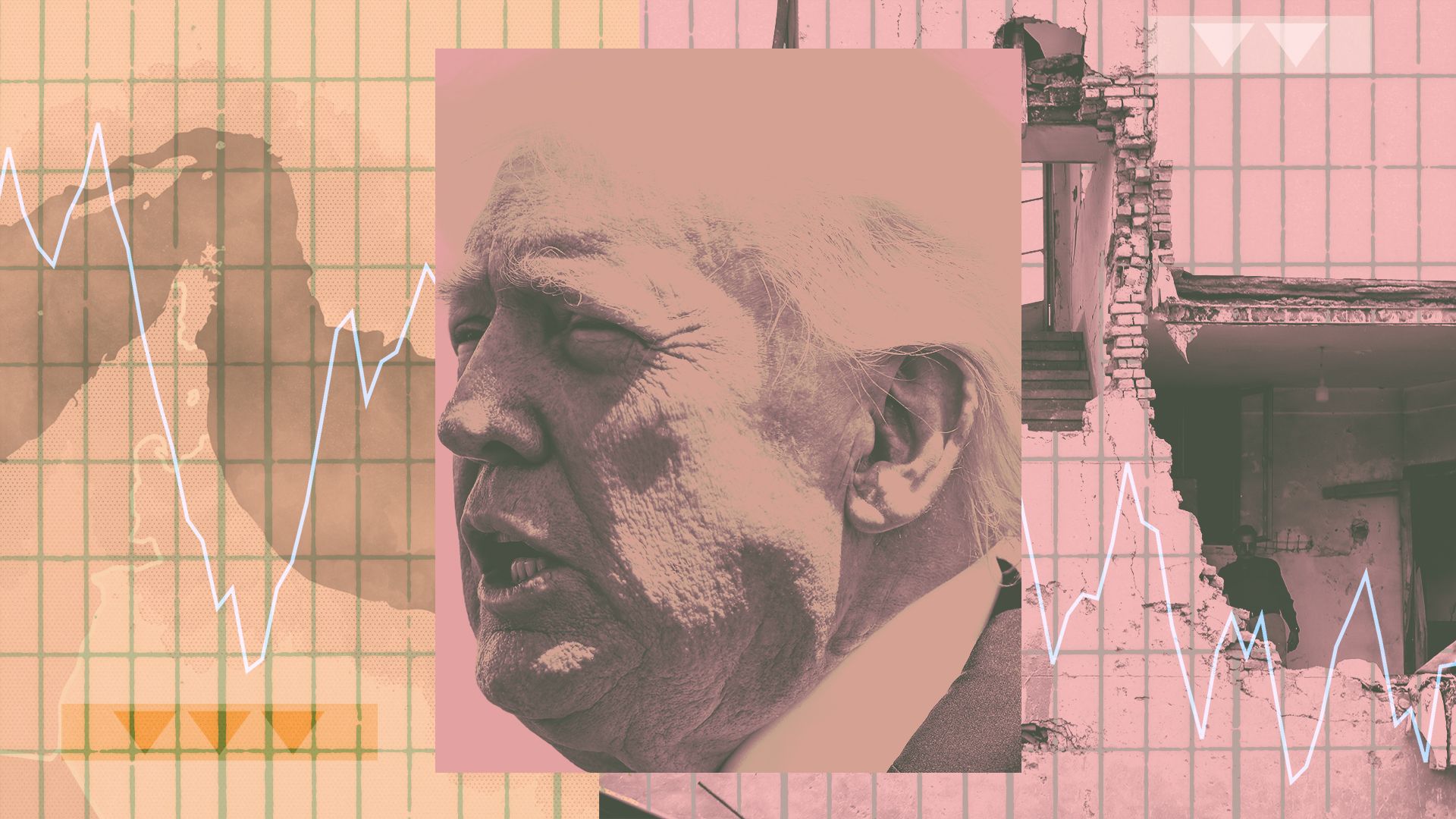
Photo illustration: Sarah Grillo/Axios; Photos: Win McNamee and Majid Saeedi/Getty Images
President Trump made the case for his deal with Iran during an hour-long press conference Wednesday, while seeming to lower his own bar for success and warning he could bomb Iran again if nuclear talks fail.
The big picture: For two months, Trump has been seeking a deal to end the war, reopen the Strait of Hormuz, and stabilize global energy markets. This deal should achieve that. But some of Trump's critics argue that making concessions just to return to status quo ante shows the war itself was a costly mistake.
Reality check: Before and soon after the war began, Trump laid out highly ambitious parameters for any successful resolution with Iran.
- Those included "total surrender" and the full dismantlement of Iran's nuclear program. No enrichment, no ballistic missiles, no funding for proxies. Trump even wanted a say in picking Iran's supreme leader.
- The memorandum of understanding (MOU) — which Trump signed Wednesday and senior administration officials finally unveiled in full in a call with reporters — is a much more modest agreement.
Breaking it down: Iran gets sanctions relief to sell oil, the strait reopens, the blockade lifts.
- The parties also gave themselves 60 days to negotiate a nuclear deal. Iran could see all sanctions lifted and receive billions in frozen funds and investments if it agrees to limit its nuclear program and "dispose of" its stockpile.
- Trump and his team acknowledged a final deal may never happen. But he claimed Wednesday that "if it doesn't get done in 60 days, we go back to bombing." He later said the deadline could shift.
- Uncharacteristically, Trump downplayed the deal somewhat, noting that it was just a memorandum. He also further enraged hawks by expressing sympathy for Iran's desire to possess missiles and pursue nuclear energy.
Between the lines: Trump has been under fire from Democrats and Republican hawks ever since details of the MOU began leaking out.
- A senior administration official told reporters that Iran had requested the document not be published until it was formally signed and that the delay "caused a lot of consternation" in the White House.
- Trump's team won over one critic, Sen. Lindsey Graham (R-S.C.), who endorsed the deal after an hour-long phone call with White House envoy Steve Witkoff on Wednesday morning.
- Sen. Bill Cassidy (R-La.), on the other hand, claimed "Reagan is rolling over in his grave" over "the worst foreign policy blunder in decades."
- Referring to the circling hawks, Trump said, "The tough guys ... would take the country down the tube" and were "stupid" for wanting to continue bombing Iran.
What he's saying: In recognition of the bind Iran had put him in by closing the strait, Trump said he didn't want to kick off an economic "catastrophe" and become another Herbert Hoover, who presided over the Great Depression.
- Trump argued that U.S. military objectives, such as pummeling Iran's navy, had been achieved.
- He said the MOU creates a path to limit Iran's nuclear program for the long term.
- And he said U.S. allies in Europe and the Middle East — with the possible exception of Israel — wanted to see the war end and the deal signed.
Friction point: There's plenty in the deal for critics to sink their teeth into.
- It only calls on Iran to open the strait without restrictions for 60 days, leaving open the possibility of tolls after that.
- A senior U.S. official told reporters that wouldn't happen because Gulf countries wouldn't sign any deal that allowed it.
- The MOU also calls for a plan to establish a $300 billion fund to rebuild Iran.
- Trump denied the U.S. would contribute money to such a fund, and U.S. officials said it was more about the potential for investments after a nuclear deal — such as allowing the UAE to build a power plant in Iran.
- Despite the administration's claims that this was entirely a "pay for performance" deal, the text makes clear that Iran will receive sanctions waivers to sell oil freely as long as negotiations are ongoing.
- The U.S. officials claimed the practical implications will be limited because Iran is already exporting oil to China.
- The MOU says nothing about Iran's ballistic missiles or support for terrorist organizations and militias in the region, despite Trump's insistence — dating back to his first term — that any deal with Iran would have to cover those issues.
- "They have to have some because other people have some," Trump said. "Missiles aren't the problem."
What to watch: A senior U.S. official said the meeting in Switzerland on Friday between a U.S. delegation headed by Vice President Vance and an Iranian delegation headed by Parliament Speaker Mohammad Bagher Ghalibaf would be "critical" to shifting into nuclear talks.
- The official claimed that a "gentleman's agreement" had been reached around Iran's planned nuclear concessions and that the U.S. would know "within days or weeks" whether Tehran was serious about implementing it.
- Some on Trump's top team — including CIA Director John Ratcliffe — are highly skeptical that the Iranians intend to make those concessions.
- "If we think that they're just dragging us along and kind of bullshitting us, then we'll be very quick to pull the plug on it and go back to tightening the screws on them very, very aggressively," the U.S. official contended.
